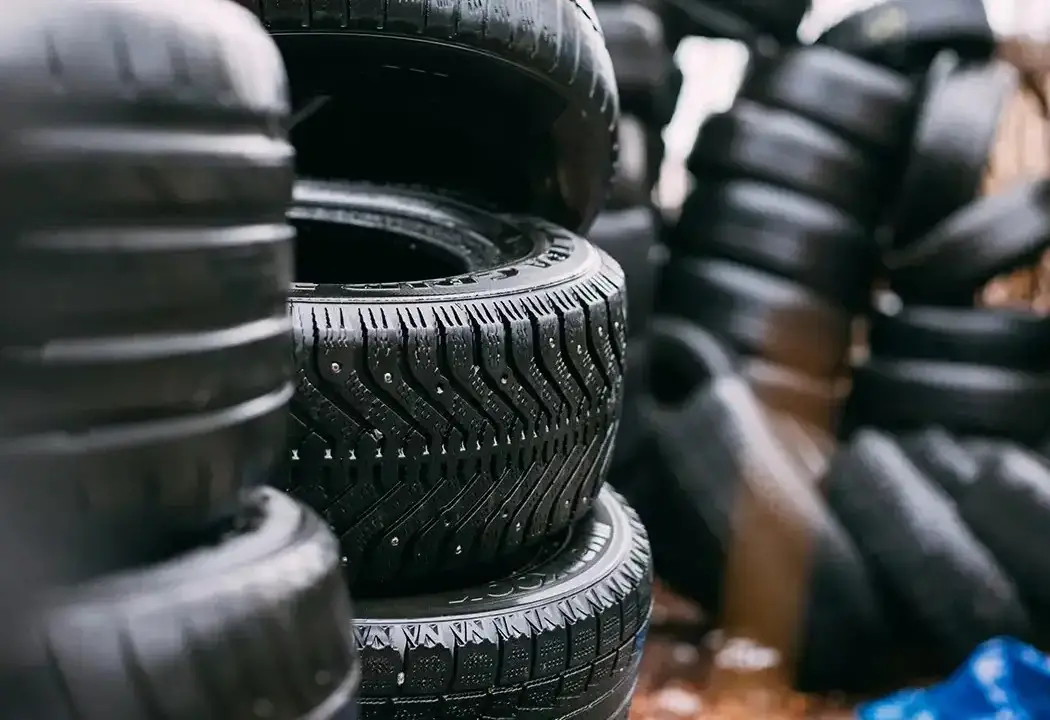

The tire industry operating in Mexico will stop buying and importing rubber from Indonesia, and will now source it from Veracruz, Tabasco, and Chiapas, the major producers of the raw material for manufacturing tires and other industrial products, according to the president of the National Chamber of the Rubber Industry (CNIH).
“We want tire manufacturers to start buying Mexican rubber, instead of rubber (from Indonesia and Guatemala), but today the main problem is certifications,” says Juan Pablo Ríos y Valles Boysselle.
Currently, the tire industry imports 20 percent of its rubber from Indonesia because tires have a synthetic component that is produced in Mexico, he told Forbes Mexico.
“If you sell any food produced in Mexican fields in Europe today, such as coffee, meat, cocoa, oranges, cotton, and tires, you need certification that the agricultural producers did not cause deforestation,” he explained.
“Today, we are working to ensure that Mexican farmers obtain certifications, which will allow the tire industry to acquire natural rubber from Chiapas, Tabasco, and Veracruz,” said the businessman.
He noted that rubber is a naturally occurring resource and that, fortunately, there is a harvest of the raw material for tires in Chiapas, Tabasco, and Veracruz.
He explained that the rubber produced in Chiapas, Tabasco, and Veracruz is used and demanded by the automotive, medical device, and mining industries.
He said that the automotive industry uses a lot of rubber for the manufacture of O-rings, door seals, and seats, and that medical device manufacturers use the raw material in the production of hemodialysis tubing and syringe plungers.
He added that rubber is used in all industries; it is even part of conveyor belts in mines.
He stated that rubber has diverse and varied uses, requiring specific quality and blends for its application in Mexican industry.
He acknowledged that rubber production in Mexico is insufficient to meet 100% of the demand from the tire, automotive, mining, and medical device industries.
“We are working closely with the Ministry of Economy (SE) to increase rubber production according to international standards,” he said.
One of the main standards focuses on ensuring that the rubber is free from deforestation: “It demonstrates that planting a rubber tree does not harm the environment.”
The certification will also validate that rubber production is not based on monocultures, thus preserving the soil’s fertility, and that there is no child labor or damage to flora and fauna.
“We are working on this as an industry association so that Mexican rubber production can grow and we can increasingly reduce rubber imports from Indonesia or Guatemala,” he noted.
He highlighted that the tire industry meets its rubber needs by importing 20% of its raw material, harvested from Indonesia and Guatemala.
The production of car and light truck tires is not as intensive in its use of natural rubber, but rather more intensive in synthetic rubber: “The industry that is intensive in the use of natural rubber is the manufacture of syringe plungers, packaging, and gym mats. All these industrial uses tend to use more natural rubber, and the rubber produced in Mexico is consumed.”
“We want to develop Mexican agriculture because (buying rubber in Veracruz, Chiapas, and Tabasco) is a very worthwhile project that starts with small producers,” he emphasized.
He said that the rubber is produced on small plots of land in Veracruz, Chiapas, and Tabasco, and these are not large producers or ranches: “They are small producers who take the rubber to a packing plant, which is part of a cooperative. It is a very worthwhile social project that we are supporting.”

Source: forbes