Journalists Ricardo Ravelo and José Luis Montenegro explained that the expansion and consolidation of criminal power in Mexico has penetrated political structures to the point of operating as a parallel power in large regions of the country, reaching its peak after 2018.
In an interview with Aristegui en Vivo, they stated that this evolution, spanning more than four decades, is explained in their book, The Fourth Transformation of Organized Crime, which was presented last Saturday at the Guadalajara International Book Fair. Ravelo said there was extensive debate at the fair about the book’s central arguments.
He affirmed that the work offers a historical reconstruction showing how “organized crime in a large part of the country becomes the government, has territorial control, influences politics, appoints candidates, legislates, and wields significant control—an evolution that has taken years but culminated in 2018.”
For his part, Montenegro explained that the investigation stems from the four historical transformations that Andrés Manuel López Obrador outlined as symbolic pillars of his political project, and contrasts this narrative with the evolution of organized crime.
He explained that, for the authors, Morena’s rise to power coincided with a moment when criminal organizations had already mutated into dynastic structures.
“They seem like dynasties of drug traffickers,” he stated, listing the lineages of the Sinaloa Cartel and the Jalisco New Generation Cartel, and pointed out that in this context, “the only losers in these battles continue to be the Mexican people.”
The journalist emphasized that the investigation maintains that, while under PRI governments the cartels operated as “employees of the State itself,” under PAN governments they became “criminal partners,” and with Morena they reached an even greater level of power.
“With Morena, they are practically the heads of the Mexican state,” he stated, adding that this process led to “the consolidation of the Mexican narco-state.”
Ravelo described the book as “an X-ray of organized crime” that reveals the territorial and political expansion of criminal groups since the PRI’s loss of presidential control.
He explained that, after the political transition, the cartels established local alliances with mayors, trustees, council members, and governors, which allowed them to maintain their illegal businesses.
He recalled that during Felipe Calderón’s six-year term, the possibility of eliminating the free municipality system was even considered due to criminal infiltration.
He also pointed out that the Sinaloa Cartel’s project achieved particular consolidation during the Calderón and Peña Nieto administrations.
Referring to the recent period, Ravelo maintained that “López Obrador, in order to come to power, had to make deals with all the forces, and organized crime was not exempt from these negotiations.”
He argued that the “hugs, not bullets” policy functioned as a form of “payment” in the form of impunity and permissiveness because, he said, “it handed over territories to them.”
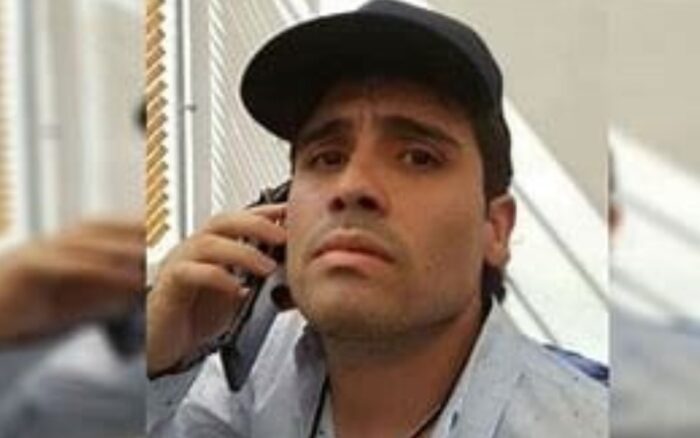
He also emphasized that the release of Ovidio Guzmán was interpreted by experts as “the first time a territory was handed over to a criminal group.”
Both agreed that the evidence shows an unprecedented level of penetration.
“Eighty percent of Mexico’s municipalities and a good portion of its governorships are headed by individuals with direct or indirect ties to some form of organized crime,” Ravelo said, citing the case of Sinaloa Governor Rubén Rocha Moya as an example of the normalization of criminal support for accessing power.
Montenegro agreed that the Sinaloa case is central to understanding this phenomenon and recalled the interview in which Governor Rocha Moya admitted to having had to “knock on the door” of criminal groups to compete politically.
He added that the state has been experiencing an internal war for over a year between “the local gangs” and “the indigenous gangs,” with incursions by the Jalisco New Generation Cartel and an increase in violence without clear responses from the authorities.
“How many Sinaloa cartels are there in the country?” he asked, noting that this model also operates in Durango, Michoacán, and Mexico City.
Source: aristeguinoticias