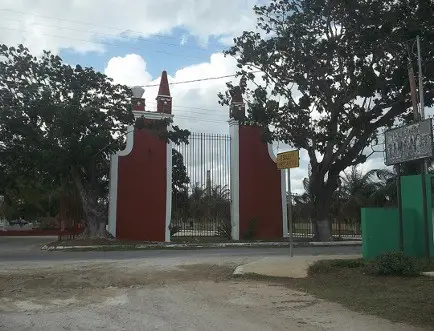

In Tamanché, north of Mérida, daily life unfolds on a fragile foundation: the complete absence of legal certainty regarding their homes. Despite the fact that the settlement is part of the former hacienda grounds, neither the National Agrarian Registry (RAN), nor the Agrarian Court, nor the City Council has been able—or willing—to resolve the true status of the properties. Meanwhile, dozens of families have lived for years without titles, without official addressing, and without any guarantees regarding the assets they inherited from their parents and grandparents.
The situation, as explained by those affected in Tamanché, is so complex that it seems designed to prevent anyone from making any claims. According to testimonies, it all began when former ejido commissioners failed to register the town’s documents with the RAN, leaving the inhabitants without formal recognition as an agrarian community.
“The truth is that in Tamanché, nothing was ever registered. Not a single commissioner registered it with the RAN or the Public Registry of Property,” one resident recounts. That omission halted any attempt at land titling and opened the door to decades of confusion, internal disputes, and private business dealings involving lands that, legally, remain communal (ejido).
According to the account, in May 2003, when the Procede program arrived in the town, the acting ejido commissioner, Baltazar Muñoz, decided not to register Tamanché as an agrarian community. The witness claims that she found documents at the Agrarian Attorney General’s Office indicating that the commissioner had made an agreement with Arturo Millet regarding the purchase of part of the old hacienda.
“Part of it was sold… the ejido members were paid at the time, but the commissioner kept more money,” she recalls.
That sale—about which the residents never received clear information—resulted in large areas appearing in the names of people from outside the town. Today, it is even rumored that some houses are listed as belonging to Millet’s first wife. However, the exact name could not be confirmed because the properties lack official addresses, preventing searches in the land registry.
These irregularities have also allowed outsiders to attempt to buy houses for extremely low prices. A witness claims that a man identified as Carlos Erosa has acquired several homes paying prices far below their real value, taking advantage of the legal uncertainty. He asserts that he was offered a mere 200,000 pesos for his grandmother’s house, which was valued at much more.

Source: solyucatan