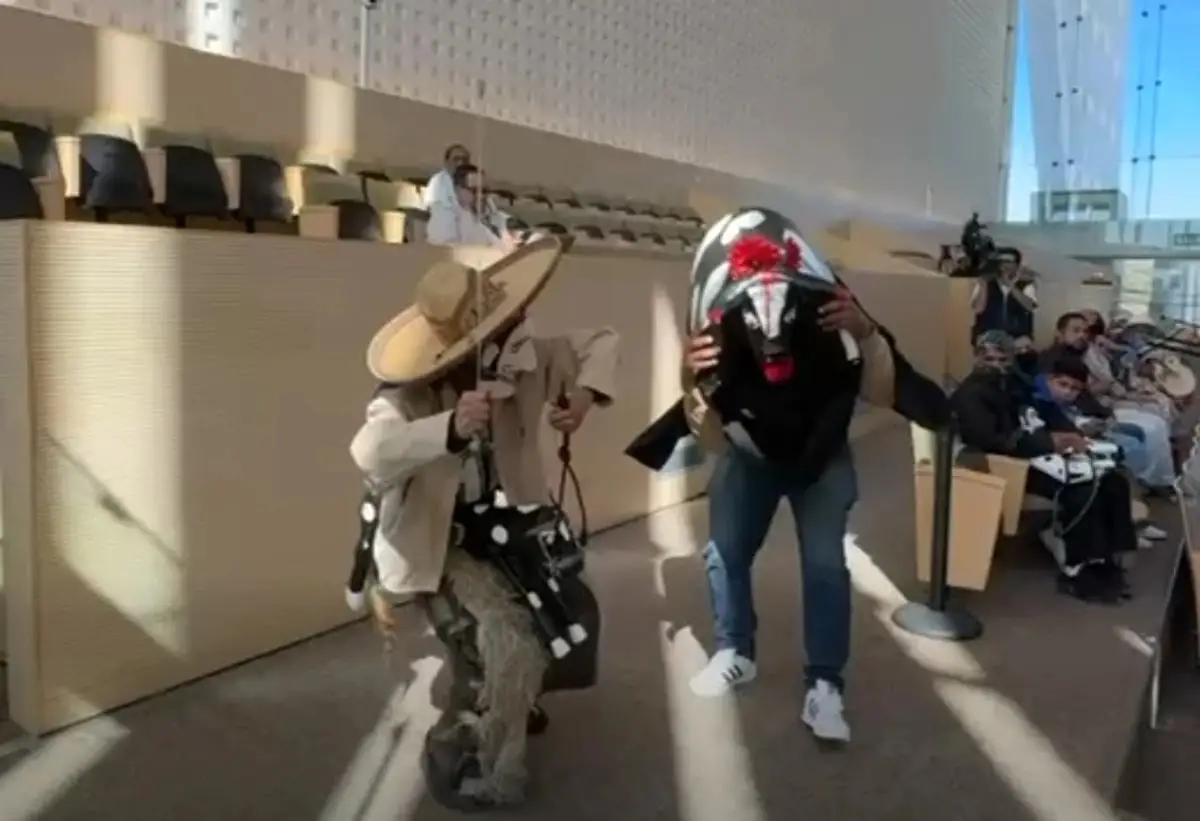

The Congress urged Governor Libia García Muñoz Ledo to declare the Dance of the Little Bull (Danza del Torito) an Intangible Cultural Heritage of the State of Guanajuato. “Dance is a human expression that communicates feelings, ideas, and traditions through bodily movement; for it to exist, the space where it is performed, the movement the dancer makes, and the time in which it takes place must be linked,” states the opinion of the Committee on Education, Science, Technology, and Culture.
It adds that dance in Mexico is an art that combines indigenous and European rhythms with colorful costumes and a unique stage design found nowhere else in Latin America.
In Guanajuato, the traditional dances of the Little Bull (Danza del Torito), the Barbarians (Danza de Bárbaros), the Wild Indians (Danza de los Indios Broncos), the Matlachines (Danza de los Matlachines), the Aztec Conchera, the Brutos Indians (Danza de los Indios Brutos), and the Miners’ Torteros (Danza de Torteros Mineros) are well-known, the opinion listed. The Dance of the Little Bull (Danza del Torito) may have originated at the Sopeña Hacienda, where fighting bulls were raised. The document states that the story dates back to the early 17th century, when the municipality of Silao was founded as a hacienda to benefit Guanajuato. According to historian José Luis Zúñiga, when the agricultural work was finished, a festival was held in honor of Saint James the Apostle as an act of gratitude for the bountiful harvest.
“While the townspeople were celebrating, something went wrong, and a bull escaped from the corrals and headed toward the festivities,” the report recounts. It relates that they tried unsuccessfully to lasso the bull, and from this encounter arose the character of “the little horse”; then the farmhand—the mule—enters the scene, along with the landowner’s daughter—La Maringuía—and the drunken servant who tries to help control the bull, giving rise to the character of “The Drunkard.”
The “Old Man” enters the fray, attempting to calm the bull with a measured pace and prayers, the report continues. “Just as he was about to lead the bull back into the corral, the devil appears, the “With his whip, he lashes out and enrages the bull, and that’s when Death appears and causes the bull to begin killing each of the participants in the festivities, leaving only Death standing,” he explains regarding the origin of the dance.
In the municipality of Silao, a patron saint festival is inconceivable without the whistle of the chirimía (a type of oboe) and the resounding drum that accompany the Torito (Little Bull), they emphasize. In the same session, the Congress requested that the governor declare the Rondalla Voces y Guitaras (Voices and Guitars Serenade) of the Benemérita y Centenaria Escuela Normal Oficial de Guanajuato (Distinguished and Centennial Official Normal School of Guanajuato) as Intangible Cultural Heritage.

Source: jornada