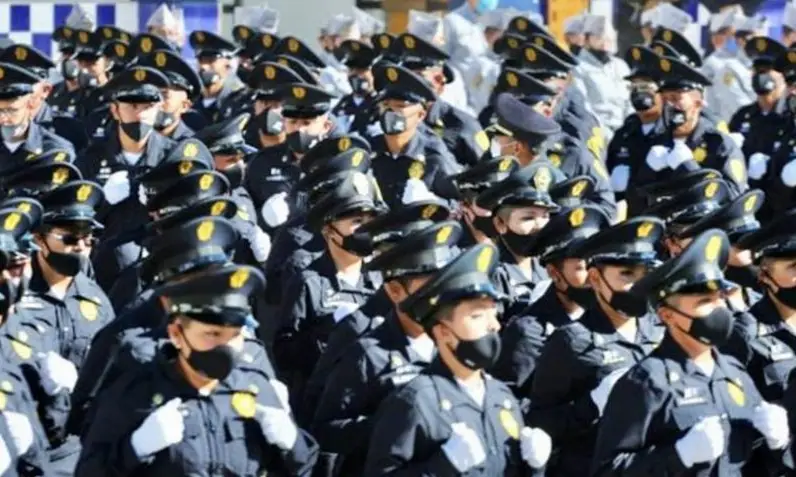

The Secretary of Public Security for the People of Chiapas, Óscar Alberto Aparicio Avendaño, reported that as part of the fight against corruption, more than 500 police officers—municipal, state, and investigative—have been arrested for various crimes, as part of a zero-tolerance policy and the purging of security forces.
He reiterated that they maintain a permanent security deployment in all 124 municipalities, with an institutional presence in areas previously inaccessible, and that the results have placed the state among the top in the nation for security.
Surveillance will continue throughout the state. Photo: Archive
He highlighted that 750 members of the Pakal Immediate Reaction Force are currently operating, in addition to state and federal agencies, which has allowed them to eradicate robberies and highway blockades, with not a single case reported in the last year.
He emphasized that these results stem from coordination among the three levels of government, with the participation of the Mexican Army, National Guard, Navy, State Attorney General’s Office, and federal agencies, under a joint security strategy.
Regarding the border, he stated that the area is completely secured, with a deployment of more than 500 personnel, air support including helicopters, manned aircraft, surveillance drones, and continuous monitoring technology. Finally, he reiterated that operations will continue throughout the state and that security will not be relaxed, especially during this season when many visitors from across the country come to the state for leisure.
Combating corruption within the Chiapas police forces requires a comprehensive, sustained, and coordinated strategy among the three levels of government, with an emphasis on prevention, punishment, and professionalization. First, it is essential to strengthen police vetting processes by implementing regular background checks, asset assessments, and continuous monitoring of officer performance. These mechanisms allow for the identification of misconduct and the removal from the force of those who do not meet ethical and legal standards.
Another key element is zero impunity. The arrest and prosecution of police officers involved in crimes sends a clear message that the law is applied without exception. To achieve this, it is crucial to strengthen coordination among security agencies, prosecutors’ offices, and the judiciary, ensuring thorough investigations and effective sanctions.
Police professionalization also plays a central role. Better salaries, ongoing training, access to labor rights, and career development plans reduce the incentives to engage in corrupt practices. This, coupled with training in human rights, public ethics, and community policing, contributes to restoring public trust.
Likewise, the use of technology and supervision, such as body cameras, monitoring systems, drones and anonymous reporting platforms, allows for greater transparency and internal control; finally, citizen participation is indispensable: encouraging reporting, protecting whistleblowers and promoting accountability strengthens the fight against corruption.

Source: heraldodemexico