
During Adán Augusto López’s governorship of Tabasco, the criminal group La Barredora consolidated its power in that state and then expanded into neighboring states, according to an analysis by researcher Víctor Sánchez Valdés, a professor at the Autonomous University of Coahuila.
The public security expert told the online newspaper La Silla Rota that the group, headed by Hernán Bermúdez Requena, Tabasco’s Secretary of Public Security, continued operating during the term of Carlos Manuel Merino Campos, López’s interim successor.
In an interview, Dr. Sánchez Valdés explained that the turning point for the organization came once it consolidated its control in Tabasco, where it established a presence in 14 of the state’s 17 municipalities.
According to the specialist, it operated in municipalities such as Centla, Cárdenas, Huimanguillo, Comalcalco, Paraíso, Nacajuca, Jalpa de Méndez, Cunduacán, Centro, Jalapa, Teapa, Jonuta, Macuspana, and Tacotalpa.
From that point on, an expansion process began into neighboring states, particularly in areas bordering Chiapas, Veracruz, and Campeche.
A document from the Ministry of National Defense (Sedena) lists the names of security officials who worked for the CJNG.
La Barredora in Family Territory
In the case of Chiapas, La Barredora expanded mainly into the northern part of the state, in municipalities bordering Tabasco, during the period when Rutilio Escandón, brother-in-law of Adán Augusto López, served as governor.
In Campeche, the criminal group established a presence in Palizada and, notably, in Ciudad del Carmen, a strategic area due to its importance in the oil industry.
In Veracruz, the expansion occurred in the southern region, particularly in municipalities near Tabasco and Chiapas, such as Minatitlán, Coatzacoalcos, Moloacán, Acayucan, and Las Choapas, explained Sánchez Valdés.
According to the researcher, this territorial growth was not spontaneous, but rather linked to the political and security conditions in Tabasco during the administrations of Adán Augusto López Hernández and Carlos Manuel Merino Campos. In that context, Hernán Bermúdez Requena, then the state’s Secretary of Public Security, played a central role.
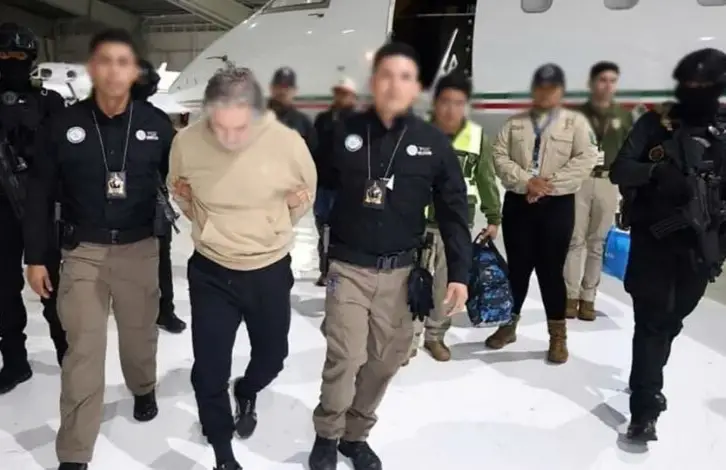
According to Sánchez Valdés, Bermúdez Requena, currently imprisoned at the Altiplano maximum-security prison on charges of criminal association, extortion, and kidnapping, forged an alliance with the Jalisco New Generation Cartel (CJNG) and used La Barredora as a local organization to carry out criminal activities such as fuel theft, drug trafficking, and extortion.
This relationship allowed La Barredora to operate with high levels of impunity in Tabasco, since, according to the expert, the state security apparatus did not act against it and, in some cases, even helped displace rival criminal organizations.
As a result, La Barredora expanded its operational capacity, increased its revenue, and extended its territorial presence, reaching, at its peak, 38 municipalities in four states: Tabasco, Chiapas, Veracruz, and Campeche, the researcher explained.
The Decline of the Organization
The weakening began after the arrest of Hernán Bermúdez Requena and other key leaders, as well as due to media and public pressure on state authorities, particularly in Tabasco and Chiapas. This was compounded by the breakdown of the alliance with the CJNG, which led to territorial disputes and episodes of violence in Tabasco.
“El Abuelo” (The Grandfather) was sidelined in January 2024, following a wave of crimes that culminated in the burning of vehicles and convenience stores in Villahermosa.
Regarding the future of La Barredora, Víctor Sánchez Valdés indicated that several scenarios are possible, including its disappearance in the medium term, a prolonged decline without growth, or its fragmentation into smaller groups that could change their names or seek new criminal alliances.
For now, he explained, it will be necessary to observe the evolution of criminal activity in the states where La Barredora had a presence to determine which of these scenarios ultimately materializes.
Context:
According to the Intelligence Fusion Center of the Ministry of Defense (Sedena), Hernán Bermúdez did not fight crime, as was his duty, but instead became the head of a CJNG cell in Tabasco and was in charge of attacking other groups that rivaled that organization.
Since 2021, this intelligence group warned army commanders that “El Abuelo” (The Grandfather) had placed other members of the CJNG in positions of authority within the Ministry of Public Security, and that these individuals were ordering the elimination of their rivals and that the bodies be left in Chiapas to avoid creating a perception of violence in their state.

Source: laparadoja