
When the National Regeneration Movement (Morena) party came to power in 2018, its members, primarily former president Andrés Manuel López Obrador (AMLO), asserted that they would change many things where previous governments had failed, including freedom of expression.
In November 2018, as president-elect, AMLO affirmed that he would respect freedom of expression in all its forms, stating that he did not aspire to become a dictator, although he assured that he would always exercise his right of reply.
The former president pledged, on that occasion, to respect freedom of expression.
More recently, on November 13, current mayor Claudia Sheinbaum Pardo stated that the Mexican government does not repress, censor, or limit freedom of expression; on the contrary, it defends it, since “without freedom there is no democracy, and without democracy there is no justice.”
However, during these seven years, several events have occurred that have cast doubt on these statements.
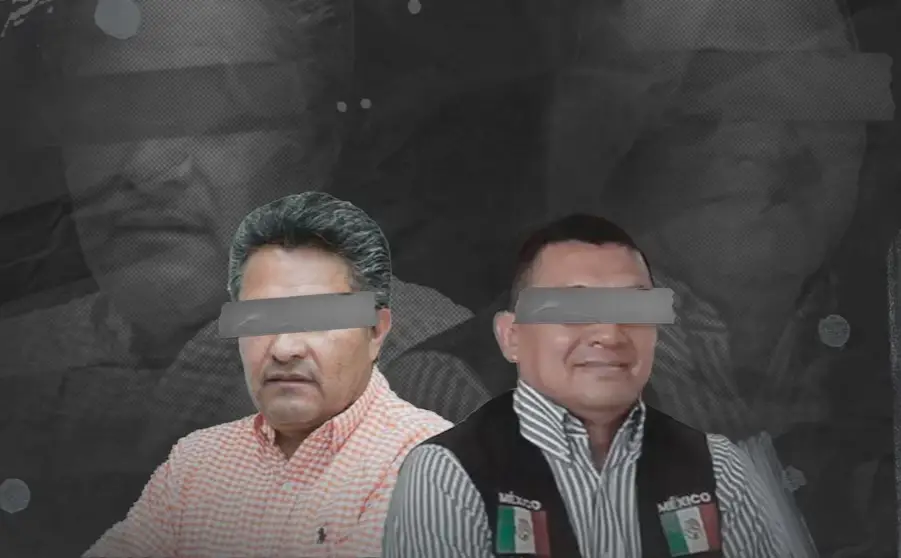
Currently, there are two specific cases that cast doubt on this promise of the Fourth Transformation (4T). These cases are occurring in Veracruz and Puebla, states governed by Rocío Nahle and Alejandro Armenta, respectively, both members of the Morena party.
Last Thursday, it was reported that journalist Rafael León Segovia, known as Lafita León, was arrested by agents of the Ministerial Police and the Secretariat of National Defense (Defensa). He was subsequently charged by the Veracruz State Attorney General’s Office (FGE) as the alleged perpetrator of the crimes of terrorism, obstruction of justice, and crimes against public security institutions.
These accusations were strongly condemned by Article 19, an organization that promotes and defends the rights to freedom of expression and access to information.
In a statement, the Article 19 Mexico and Central America office reported that it had documented León Segovia’s arrest and strongly condemned the “criminalization he faces for his work as a journalist.”
It was reported that on December 24, the reporter was formally charged with extremely serious crimes: terrorism and organized crime. The organization asserted that the investigation stemmed from events directly linked to his crime reporting in Coatzacoalcos, Veracruz.
It explained that, for now, León Segovia is being held in “preventive detention while his legal status is determined” through a hearing scheduled for December 30.
“Cases like this have a chilling effect on journalism, especially in contexts of extreme violence and where organized crime networks operate. The use of the criminal justice system as retaliation for the work carried out by journalists is an abuse and has no place in a democracy,” Article 19 stated.
Although the State Attorney General’s Office has not released the specific facts supporting the accusations against the journalist, media outlets in the state have reported on the potential charges contained in case file 718/2025.
The arrest was carried out based on a court order, although journalists’ organizations have questioned the measure and suggest it could be linked to León Segovia’s professional work.
The charges against him are related to activities inherent to journalism, specifically taking photographs and conducting interviews at crime scenes.
The journalist is known for covering police events and collaborates with various local media outlets, where he documents scenes of violence and conducts on-site interviews.
It is worth noting that the crime of terrorism, for which León Segovia is accused, must be related to ideological or religious issues, according to an explanation given by the head of the Secretariat of Security and Citizen Protection (SSPC), Omar García Harfuch.
Harfuch made this statement last October, after two car bombs exploded in Acámbaro and Jerécuaro, Guanajuato, which were considered a terrorist act by various sectors of society.
“These attacks in Guanajuato stem from a territorial dispute, from drug trafficking; terrorism has ideological, religious, and other undertones.
“This is a dispute between two criminal groups fighting amongst themselves to intimidate the authorities, either because a local official is involved with another group or because the authorities themselves are fighting them. (…) In other words, they are simply fighting over drug sales and fuel sales, and these are two criminal groups confronting each other,” the Secretary of Security stated at the time.
Source: infobae