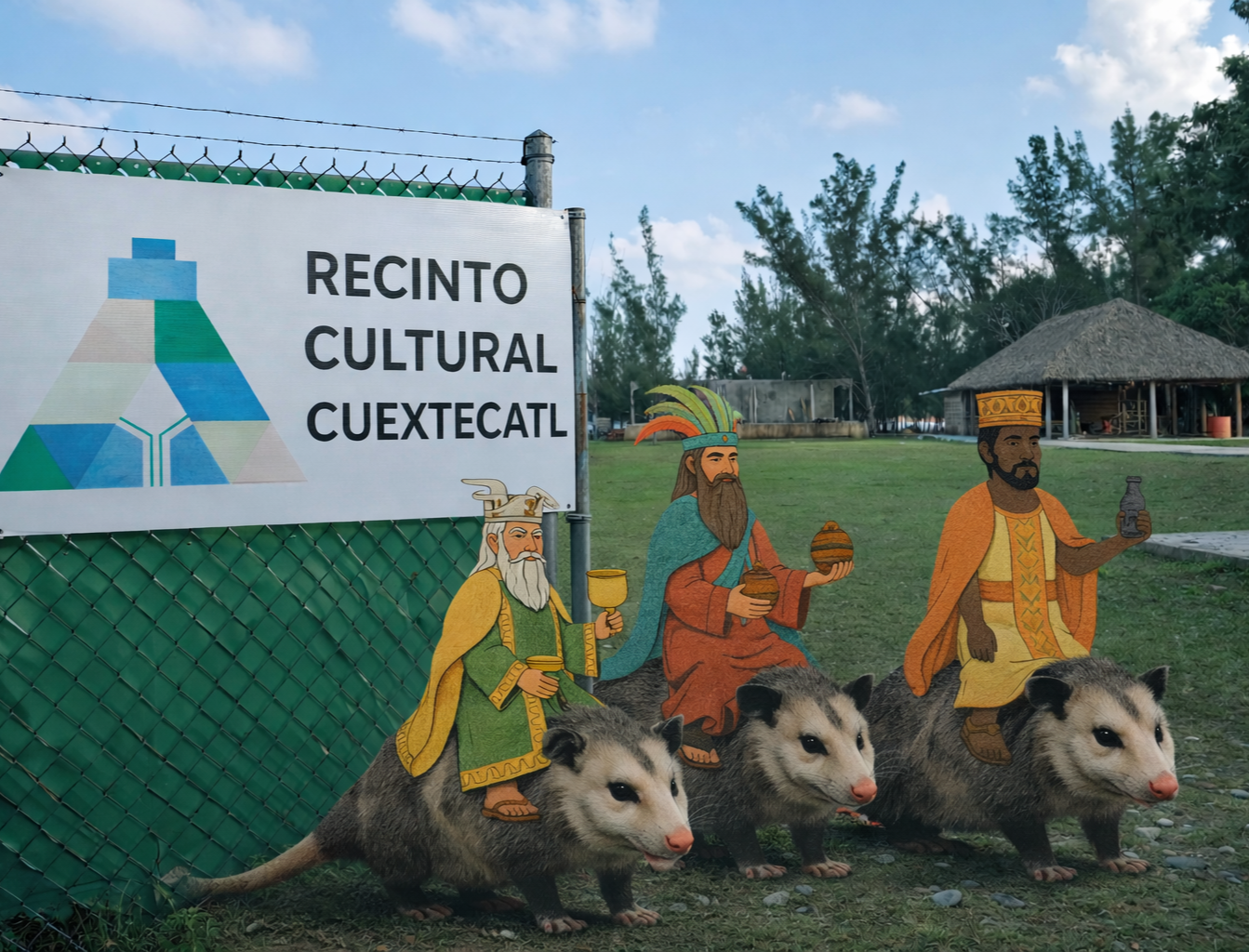

Cultural promoter Gabriel Cruz Reyes announced an event to be held on January 6, 2026, in the town of La Mata, where he will present a public lecture in which he claims to reveal previously unpublished evidence regarding the supposed pre-Hispanic origin of the Three Wise Men.
The event, officially titled “The Morning Star of the Three Towns,” is scheduled to take place at the Cuextecatl cultural center—”Yes! He Convinced the Biologist that the Three Wise Men Were Pre-Hispanic”—… near the La Mata riverfront. According to the organizer, the space will be transformed into a ceremonial venue, complete with nighttime lighting, candles, and a Mesoamerican-themed setting.
The invitation, which circulated primarily through social media and messaging apps, mentions that candles, referred to by the organizer as “Huastec-Babylonian,” will be lit during the event. It also references three symbolic figures known as:
“Melchior of Maize”
“Gaspar of Copal”
“Baltasar of Cacao”
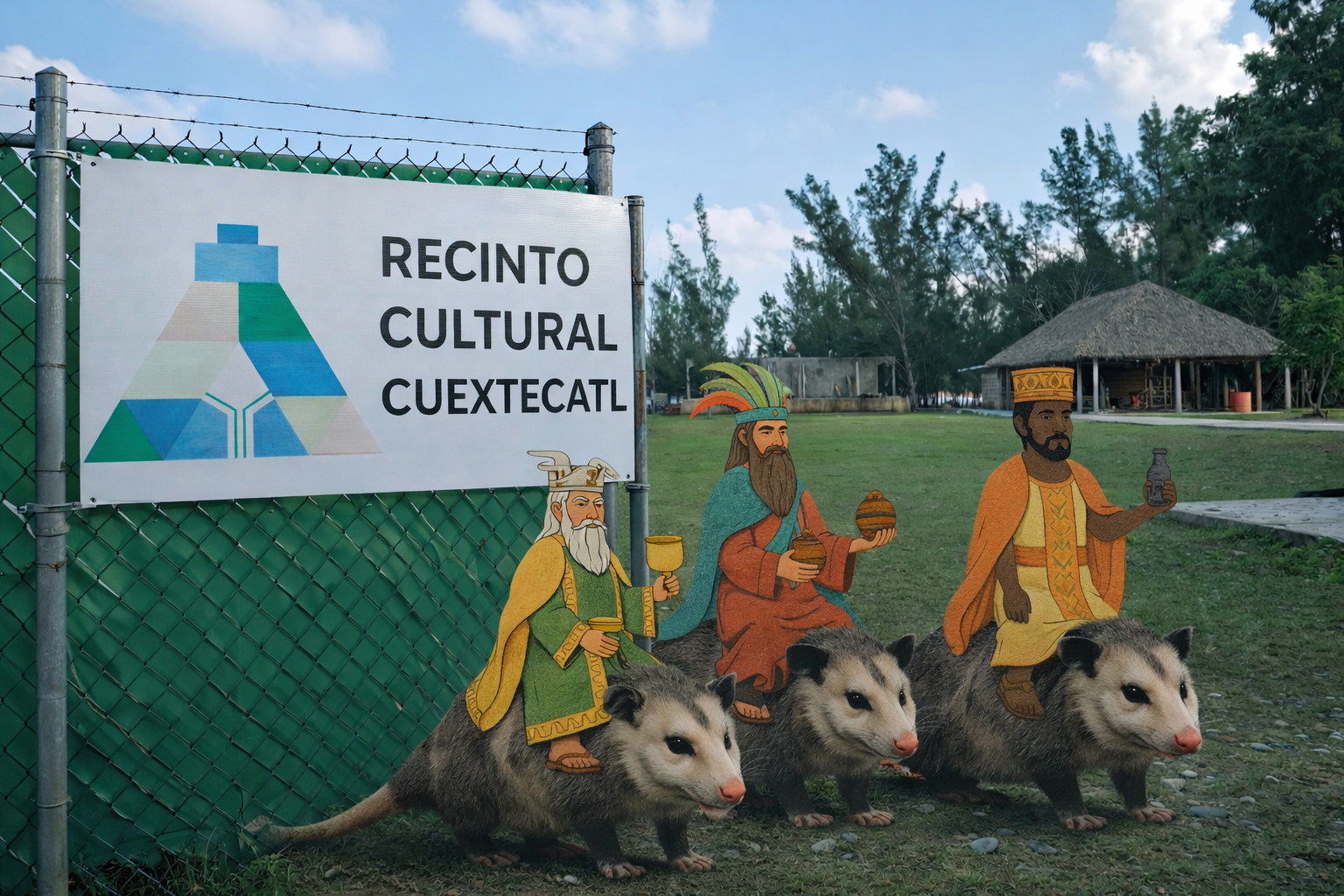
The promoter has indicated that the public will witness an artistic performance in which three characters dressed as ancient sages will arrive riding opossums, replacing the camelids traditionally mentioned in the biblical narrative. This, according to the promoter, “reaffirms the connection with the Mesoamerican worldview.”
The central conference argues that the Three Wise Men did not come from the East, but rather departed from Mesoamerica bound for Bethlehem, bearing symbolic gifts of gold, frankincense, and myrrh, with a regionalized reinterpretation:
Myrrh, described in the invitation as a “conurbated” variant. The announcement does not detail formal documentary sources, historical archives, or verifiable archaeological evidence, although it does emphasize a narrative discourse that the organizer has promoted as “a historical reinterpretation never before presented.”
The event has generated local conversation, mainly due to the use of cultural symbolism and reinterpretations that have attracted the attention of community groups, artists, chroniclers, and the general public interested in regional heritage.
This publication recognizes and respects the creativity and drive to create cultural spaces in Tuxpan and its surrounding communities. Innovation in cultural offerings is welcome, provided it is presented clearly and without imprecise historical attributions that could generate confusion regarding deeply rooted community traditions.
Source: forotuxpan