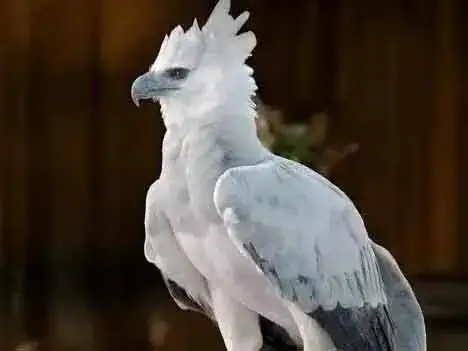

In 1997, the harpy eagle (Harpia harpyja) died at the Miguel Álvarez del Toro Zoo (ZooMAT). It was the last living specimen to set foot on Chiapas soil. For 29 years after its death, visitors saw it only stuffed in a display case in the zoo’s museum: a taxidermied reminder of a lost past. Each visitor who gazed upon those perpetually folded wings, those glassy eyes fixed on the infinite, wordlessly absorbed a silent message, as Don Miguel Álvarez del Toro himself captured it: “This is what Chiapas was like,” this is what the jungle was like.
Now, as 2025 draws to a close, after three decades of absence, a male harpy eagle awaits its reintroduction in quarantine to the same zoo where it was once a symbol of local extinction. A female will arrive soon. This is not simply an administrative act by the Chiapas Ministry of Environment and Natural History. It is an act of redemption.
Just a century ago, the harpy eagle was a common inhabitant of the rainforests of Chiapas. It wasn’t unusual; it was simply part of the landscape, respected by the indigenous peoples, a predator of the canopy that the untouched rainforest sheltered.
The harpy eagle is the largest eagle in the world. The male can weigh between 5 and 8 kilograms; the female, up to 10 kilograms. Its wingspan reaches two meters. Short, powerful wings, specialized for maneuvering through the dense rainforest canopy, pursuing its prey: birds, squirrels, monkeys, and other animals that live in the highest branches.
Its reproductive cycle makes it vulnerable, as it reaches sexual maturity around five years of age. When it reproduces, there is a two-year interval between offspring, and a pair in the wild can spend years caring for a single young bird. This means that each individual is irreplaceable from a population standpoint. Every death is devastating.
When deforestation arrived in Chiapas at an industrial pace, the harpy eagle faced a cruel irony: it needs intact rainforest, it needs large, mature trees to build nests, it needs prey that exists only in well-preserved forests. As the rainforest disappeared, the harpy eagle simply vanished. For thirty years, only two or three isolated sightings were documented, sporadic sightings that came from the rainforests of Guatemala.
It was a perfect example of what ecologists call local extinction: the disappearance of a species from a specific place, even though the species may still exist elsewhere. Chiapas lost its harpy eagle not because the species became extinct on the planet, but because we destroyed the kind of rainforest this species needs to live.
The taxidermied specimen at ZooMAT is an intentional reminder: zoos have an educational responsibility that goes beyond exhibiting animals; they have a responsibility to tell the story of the consequences.
Generations of Chiapas residents grew up gazing at the harpy eagle through glass, knowing they would never see a live one in its natural habitat. It was a kind of anticipatory mourning for something we technically never knew but intuitively understood we had lost.
What most zoo visitors don’t know is that the harpy eagle’s arrival in Chiapas required years of complex negotiations. The first attempts were made in Mexico City, then in Venezuela and Brazil. Finally, through international collaboration, two available specimens less than a year old were identified. This is crucial: they are young enough to adapt to captivity, but young enough to eventually be candidates for breeding programs. ZooMAT isn’t just receiving two birds: it’s receiving genetic carriers of the future, of hope.
To receive them, ZooMAT, with the advice of international specialists, built a special enclosure, where the space has been designed considering the species’ ethology: the innate behavior of an eagle that must feel it is in a jungle, even if it is a jungle contained within walls.
What distinguishes this moment from other reintroduction attempts in Mexico is that Chiapas is framing it within a comprehensive conservation program. It’s not simply about keeping two eagles in captivity to satisfy public curiosity. The explicit objective includes both reproduction and conservation.
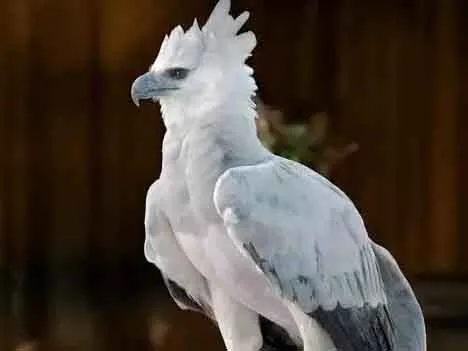
Source: diariodechiapas