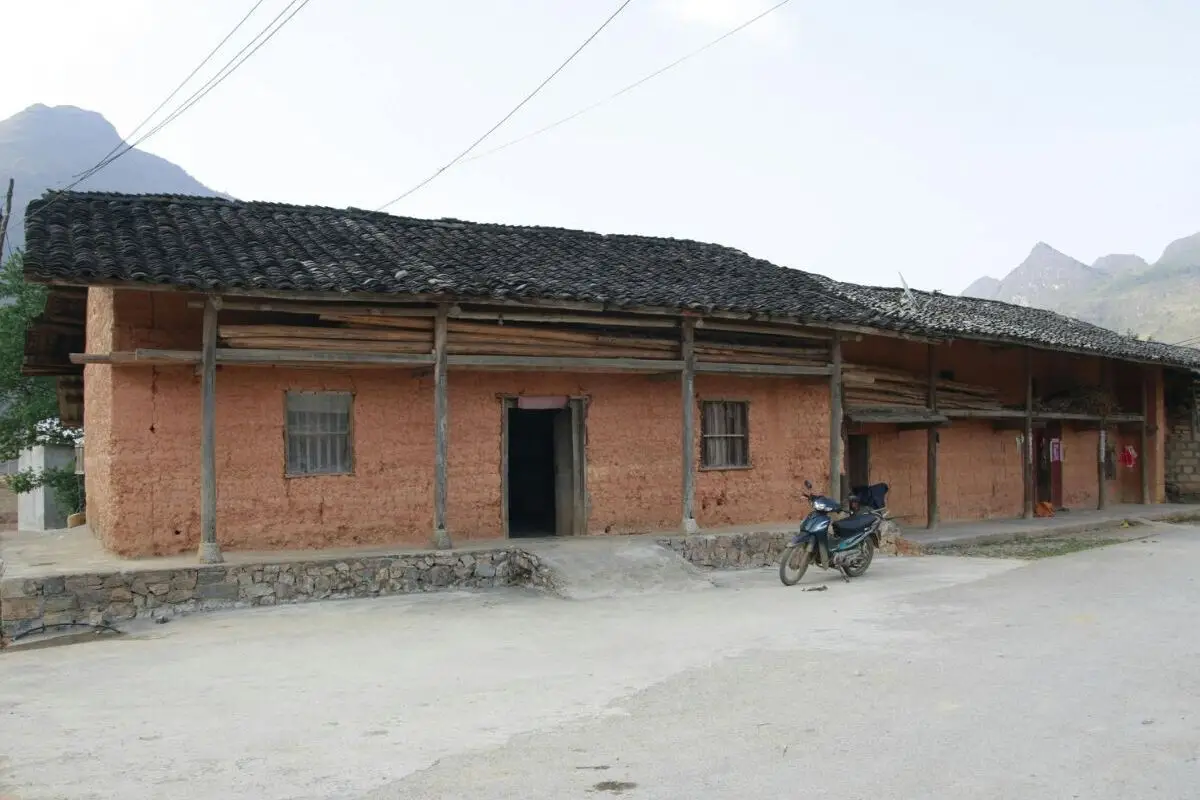

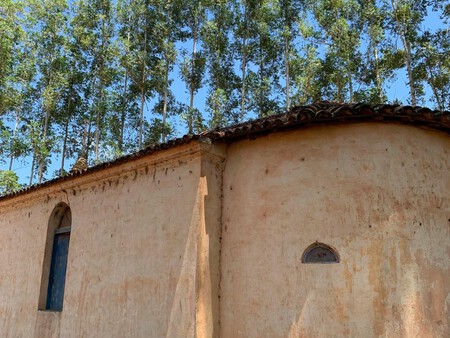
When a 6.5 magnitude earthquake struck Guerrero on January 2nd, with its epicenter in San Marcos, attention focused on the damage. However, in the rural area of Acapulco, something happened that shattered several prejudices: homes built with reinforced adobe withstood the quake without structural damage. According to a report by La Jornada, the houses built in communities within the Cacahuatepec Communal Lands, such as Las Cruces and El Cantón, passed the seismic test despite being made with earth, local materials, and tiles, not concrete.
This information was confirmed by the organization Cooperación Comunitaria (Community Cooperation), which supported the reconstruction of these homes over the past two years. Community promoters emphasized that the construction system met safety criteria and helped to dispel the notion that adobe is a precarious material.
Rebuilding After Otis: Earth, Local Knowledge, and Technical Reinforcement
The origin of these homes dates back to the devastation left by Hurricane Otis in October 2023. Following the event, families in Cacahuatepec began rebuilding their houses and kitchens with guidance from architects and rescue workers, through participatory processes based on traditional knowledge and technical reinforcements. According to La Jornada, 24 homes and kitchens have been rebuilt so far.
Eleven sustained minor damage after the earthquake: surface cracks, detachment of earthen plaster, and displacement of some roof tiles. Engineers from Grupo SAI determined that this damage does not compromise the structure and can be repaired with basic maintenance, without major reinforcements or risks to the residents.
This is not the first time these buildings have faced extreme weather events. According to the report, the reinforced adobe houses also withstood Hurricane John, a Category 3 storm that struck between September 23 and 27, 2024. For Cooperación Comunitaria (Community Cooperation), this confirms the system’s efficiency and the communities’ capacity for self-management, as they have mastered the construction techniques and the maintenance of their homes.
According to Cooperación Comunitaria, this approach strengthens community autonomy and reduces dependence on industrialized materials, in addition to lessening the environmental impact.
Working with adobe is not new in Guerrero. According to the organization, since 2013 it has been promoting a Comprehensive Habitat Reconstruction project in the Guerrero mountains following Hurricanes Ingrid and Manuel. The process has resulted in the self-construction of 68 reinforced adobe houses, community centers, classrooms, fuel-efficient wood-burning stoves, and ecological bathrooms, always using local materials and with the direct participation of the Me’phaa and Ñomndaa communities.
This model, they point out, has allowed for a renewed confidence in adobe as a system resistant to earthquakes, strong winds, and landslides, in addition to revitalizing social and productive organization.
Community experience aligns with academic evidence. According to a study published in Springer Nature, earthen constructions in seismic zones can have good structural performance when they incorporate adequate reinforcement and continuous maintenance. Similarly, according to the Journal of the American Institute for Conservation, the conservation of earthen architecture depends less on the material itself and more on the technique, design, and subsequent care.
According to México Desconocido, adobe has been used in Mexico since pre-Hispanic times and offers advantages such as low cost, thermal inertia, and sustainability. The problem is not its fragility, but rather the abandonment of the knowledge that makes it resistant. In Guerrero, earth and tiles have already demonstrated that, when used properly, they too can save houses.
Source: xataka