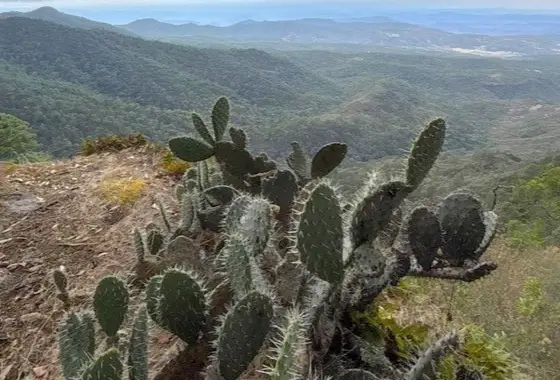

As part of the strategy to increase the protected area under different conservation schemes, the National Commission of Natural Protected Areas (CONANP) awarded Certificate CONANP-643/2025, recognizing the Sierra Mazati Natural Park, located in the municipality of Chiquilistlán in the state of Jalisco, as a Natural Protected Area (ANP) with the category of Area Voluntarily Designated for Conservation (ADVC).
The event took place at the Tapalpa House of Culture, with the participation of federal and state environmental authorities, municipal authorities, and representatives of the sponsoring company.
This ADVC safeguards fundamental environmental values: biodiversity, ecosystem services, ecological connectivity, and natural heritage. Its voluntary conservation is an inspiring example of shared responsibility and concrete action in the face of current environmental challenges.
Within its 1,069.97 hectares, pine-oak forests, ravines with abundant vegetation, and seasonal streams crucial for water capture and infiltration are conserved and protected.
The ADVC is home to the jaguar, ocelot, margay, puma, and bobcat—five of the six wild cat species found in Mexico. It also conserves and protects more than 20 species of flora and fauna in some category of risk, and more than 70 species endemic to Mexico (18 fauna and 58 flora).
Its high number of endemic species and species with restricted distributions makes it a valuable site for scientific research, particularly for the study of its diverse ecosystems.
Its Management Strategy includes actions such as:
Forest fire prevention and suppression
Biological monitoring and scientific research
Environmental education
Low-impact tourism
Currently, the National Commission of Natural Protected Areas (CONANP) has 617 Areas of Conservation and Voluntary Status (ADVC), with a certified area of 1,343,290.98 hectares. The state of Jalisco has 14 ADVCs, with a total certified area of 9,544 hectares.
Thus, the National System of Protected Areas is being expanded beyond federal decrees, building an inclusive and participatory model that integrates human well-being with biodiversity preservation; and is progressing toward goals such as conserving 30% of the territory by 2030.

Source: gob