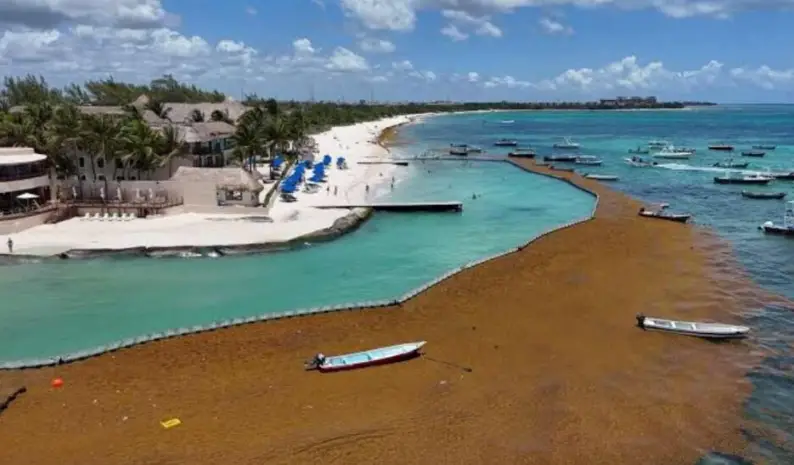

The Federal Maritime Land Zone Directorate (Zofemat) has been working since the beginning of the year on the installation and expansion of the sargassum barrier as part of a preventative strategy to address the 2026 season, reported its director, Irving Lili Madrigal.
The official explained that the work is being carried out in constant coordination with maritime authorities through in-person meetings and video calls, with the goal of refining the logistics for the expansion and installation of the barrier at strategic points along the coast.
Lili Madrigal detailed that recent cold fronts and weather events, including northerly winds and hurricane-related conditions recorded weeks ago, have required adjustments to the originally planned logistics.
However, he emphasized that Zofemat personnel are working continuously 24/7, which allowed them to handle the atypical sargassum influxes recorded in recent weeks without major complications.
“We have been prepared since the beginning of the year and will continue to be so until the end. Our staff is in the field and has responded immediately,” he stated.
The director of Zofemat explained that the implementation of the sargassum barrier will prevent widespread sargassum accumulation on all beaches and, instead, channel the seaweed to predetermined areas.
This will allow for a more efficient focus on cleaning efforts, machinery, and personnel, both along the coastline and in the open sea, through a system of mutual support between agencies.
Regarding resources, Lili Madrigal reported that, thanks to the support of Mayor Estefanía Mercado, a larger budget has been allocated for combating sargassum, which will soon allow for the acquisition of machinery, dump trucks, tools, and additional personnel.
Currently, Zofemat has approximately 100 employees, a number that could increase through temporary employment, depending on the sargassum accumulation during the peak season.
Although he did not specify the exact amount, he estimated that the investment allocated to combating sargassum increased between 30 and 40 percent compared to last year.
The official indicated that the first regular influx of the season is expected between the end of February and the beginning of March, with projections anticipating a possible massive arrival by July, similar to that recorded last year.
“We know it’s never enough, but we are starting earlier, with more resources and the possibility of expanding even further if necessary,” he stated.
Source: noticaribe