
The National Institute of Anthropology and History (INAH) announced this Friday the discovery of a Zapotec tomb dating back to 600 AD, meaning it is over 1,400 years old, located in San Pablo Huitzo, Oaxaca.
This is Tomb 10, located on Cerro de la Cantera (Quarry Hill) in San Pablo Huitzo, a Zapotec settlement from the Late Classic period (600 AD). It is notable for its architecture, which includes an owl at the entrance. The discovery came after an anonymous report of looting in 2025.
The discovery was described as “extraordinary” by Mayor Claudia Sheinbaum Pardo during her morning press conference this Friday: “It is the most significant archaeological discovery of the last decade in Mexico, due to its level of preservation and the information it provides,” she stated.
The National Institute of Anthropology and History (INAH) reported that, based on the tomb’s age, it is estimated to date back to 600 AD, created by the Zapotec people as a ritual or veneration of their ancestors.
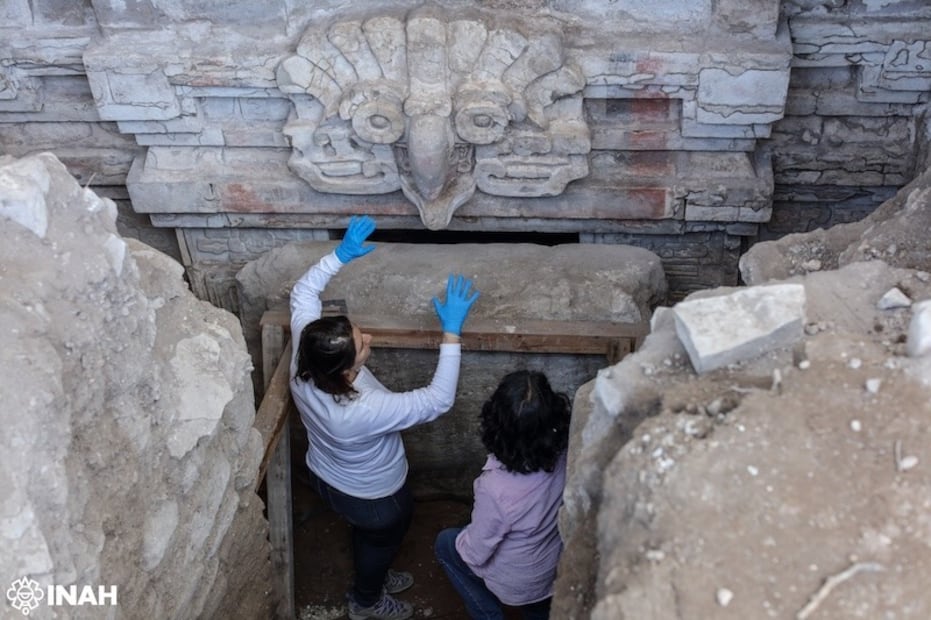
At the entrance is an owl, alluding to night, death, and power, according to the Zapotec worldview. Beneath the owl’s beak is the painted face of a Zapotec lord, possibly the portrait to whom the tomb was dedicated, “to whom his descendants turned as an intercessor with the deities.”
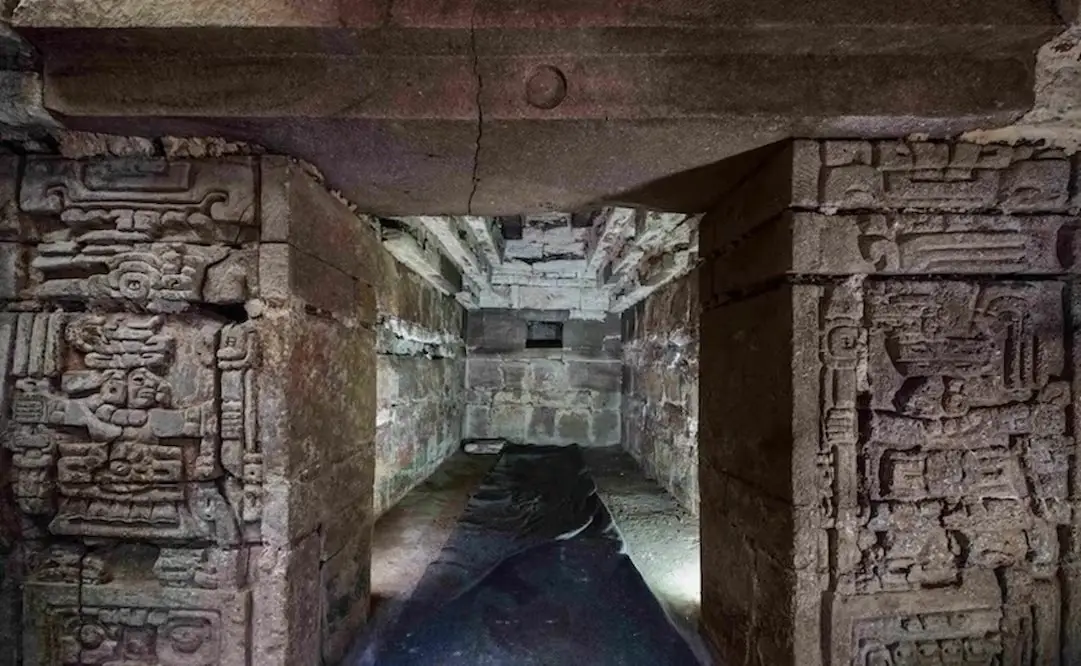
Furthermore, the entrance is flanked by male and female figures, who could be ancestors buried there. Inside, an antechamber or small room contains a frieze above a lintel, made up of various stone slabs engraved with calendrical names. At the back, the burial chamber has walls adorned with a mural in ochre, white, green, red, and blue, depicting a procession of figures carrying copal incense bags and walking toward the entrance.
In this discovery, the INAH (National Institute of Anthropology and History) reported that an interdisciplinary team from the INAH Oaxaca Center is on site carrying out conservation, protection, and research work on the structure, including stabilizing the mural paintings, “whose condition is delicate due to the presence of roots, insects, and abrupt changes caused by environmental conditions.”
The team is also conducting ceramic, iconographic, and epigraphic analyses, as well as physical anthropology studies, to deepen the understanding of the rituals, symbols, and funerary practices associated with the tomb.
This discovery comes just days after the discovery of more than 60 archaeological pieces in San Pedro Jaltepetongo, Oaxaca.
Source: oaxaca.eluniversal