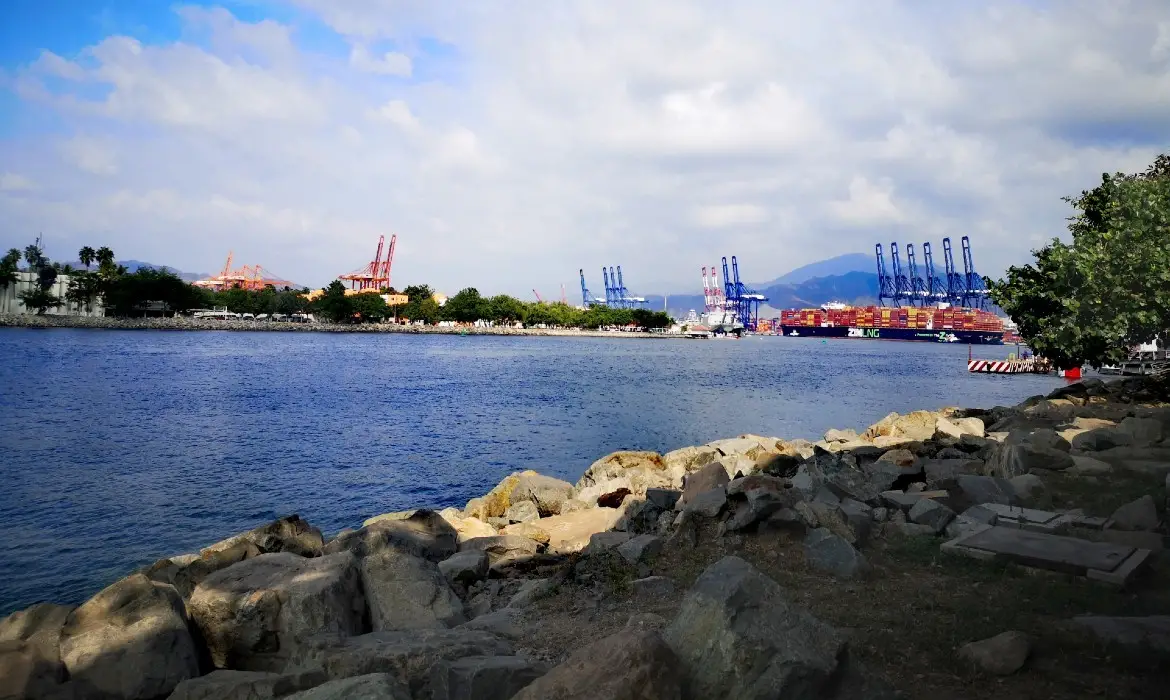

The Ministry of Environment and Natural Resources (Semarnat), through its General Directorate of Environmental Impact and Risk (DGIRA), has formally concluded the environmental impact assessment process for the project “Development of the New Manzanillo Port, in Basin II of the Cuyutlán Lagoon,” promoted by the National Port System Administration (Asipona) Manzanillo.
In Official Letter SRA/DGIRA/DG-10367-25, dated December 17, 2025, the environmental authority resolved to “conclude the Environmental Impact Assessment Process and order its filing as a concluded matter,” considering it materially impossible to continue evaluating the project under the existing file (code 06CL2025V0012).
The resolution does not imply a suspension or administrative precaution: it is a formal termination of the procedure, which legally extinguishes the ongoing environmental process and eliminates the possibility of the project continuing its evaluation under the originally submitted Environmental Impact Statement (EIS).
In practical terms, the DGIRA’s decision obliges Asipona Manzanillo to completely restart the environmental process if it intends to continue developing the new port. The resolution itself establishes that any modification or reconfiguration of the project must be processed through a new Environmental Impact Statement in the regional modality, with a new file, new technical studies, a new public consultation, and a new comprehensive evaluation.
The document is clear in its institutional scope: the Puerto Nuevo Manzanillo project, as presented in the procedure initiated in August 2025, ceases to exist from an administrative-environmental perspective. This is not a technical correction or an engineering adjustment, but rather the complete invalidation of the evaluation process.
The DGIRA concludes that the “alternative” presented by the proponent—a reconfiguration of the port design to reduce the impact on the mangrove and avoid direct intervention on Cocodrilo I and II islands—actually constitutes a new project, with environmental impacts different from those originally assessed.
Among the elements supporting this determination are the modification of docks, dredging, terminal platforms, navigation routes, and the hydrodynamic interaction of Basin II with the other basins of the Cuyutlán lagoon system (I, III, and IV), which generates cumulative and synergistic impacts not considered in the initial Environmental Impact Assessment (EIA-R).
The environmental authority points out that this reconfiguration implies the occupation of new areas, the alteration of hydrological flows and sediment transport, as well as the need for new specialized technical studies, including hydrodynamic modeling, sediment balances, flora and fauna inventories, and regional impact analyses.
One of the central points of the resolution is the impact on the mangrove ecosystem. The DGIRA (General Directorate of Environmental Impact and Risk) concludes that, even with the proposed alternative, the project still involves the removal and alteration of mangroves, an ecosystem subject to strict regulatory protection.
Furthermore, the document warns that port operations would modify the physicochemical conditions of the water, leading to progressive habitat deterioration, with additional mangrove loss, harm to associated species, and a weakening of the lagoon system’s ecological functionality in the long term.
The resolution also identifies risks of contaminant dispersal into basins III and IV of the Cuyutlán Lagoon, areas linked to the proposed creation of a Natural Protected Area, with potential impacts on fishing, resident and migratory birds, regional biodiversity, and salt production.
From an institutional perspective, Semarnat’s decision transforms the status of the New Manzanillo Port: it ceases to be a project under evaluation and becomes a project that can be restarted.
This means that any development attempt must be rebuilt from the ground up, starting with environmental planning, using new technical foundations, new studies, new social consultations, and a new comprehensive impact assessment, in an environment where the ecological component takes on decisive importance.
Strategically, the resolution reconfigures the horizon for port expansion in Manzanillo. The new port ceases to be a short- or medium-term project and shifts toward a long-term planning approach, subject to complex processes of environmental assessment, territorial governance, and social legitimacy.

Source: t21