
The litigation surrounding the Calica case in Playa del Carmen will have negative repercussions for our country during the review of the United States-Mexico-Canada Agreement (USMCA) in the middle of this year.
This was predicted by Ildefonso Guajardo, former Secretary of Economy and former head of the negotiating team for the North American trade agreement:
“I believe the Calica issue is going to be very important. Especially if the treaty review will have to go through legislative ratification in Washington; many American legislators are very angry with Mexico for the way the Calica issue has been resolved,” explained the current trade advisor.
Without entering into the environmental debate, the former federal official said that it is necessary for Mexico to adhere to the rule of law, respecting the original contract that the company had, which allowed it to extract limestone for export to the United States.
He asserted that the Calica issue is part of the 54 points that the United States International Trade Agency sent to the Mexican government as a prelude to the USMCA review table, along with other contentious issues such as violations of energy agreements and the tax treatment of other investments.
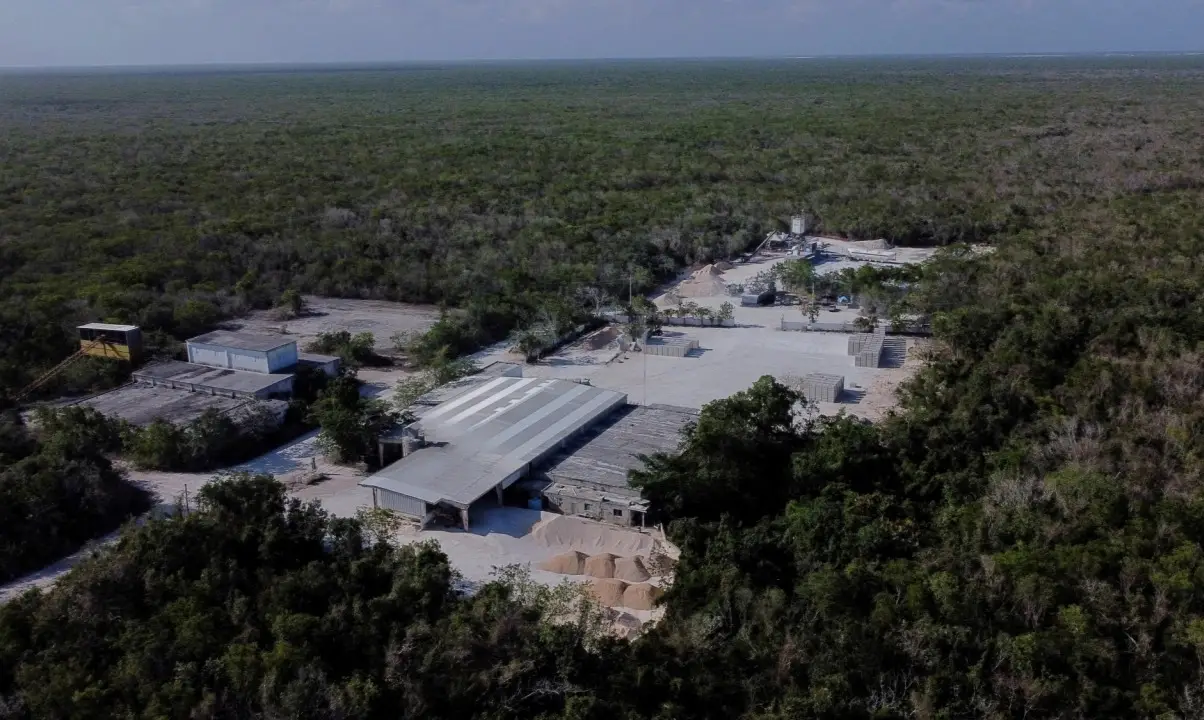
Calizas Industriales del Carmen, SA de CV (Calica) is a Mexican subsidiary of Vulcan Materials Company, founded in 1986. It was originally jointly owned by Vulcan Materials Company and Grupo ICA, but Vulcan Materials Company acquired Calica from Grupo ICA in 2001.
Until 2022, the company produced construction aggregates for the Mexican and, primarily, US markets. It also provides maritime terminal and cargo services for regional industry at the Punta Venado dock.
The Federal Attorney General’s Office for Environmental Protection (Profepa) shut down limestone quarrying activities below the water table for the first time in January 2017, following a topographic survey that revealed alleged non-compliance with terms one, four, six, eleven, and twelfth of the environmental impact authorization.
In 2022, the mine and the Punta Venado pier, from which the stone was exported to the United States, were completely closed.
In late 2023, U.S. Senators Bill Hagerty and Tim Kaine sent a letter to then-President Andrés Manuel López Obrador urging him to halt the “harmful actions against U.S. companies,” referring to the closure of the Calica-Vulcan open-pit mine in Playa del Carmen and the Punta Venado pier, from which stone was exported to the United States.
In subsequent communications, legislators from the neighboring country have warned that if the land and port of Punta Venado are confiscated by the Mexican government, “we will be forced to consider all available resources to ensure that no entity or individual benefits from the theft of this property.”
Vulcan Materials took the case to the International Centre for Settlement of Investment Disputes (ICSID) tribunal, due to actions by the Mexican government that prevent the company from operating in Playa del Carmen.
The litigation, initiated in 2018, stems from government actions dating back to 2009, when the Solidaridad municipality modified the Local Ecological Zoning Program (POEL) and changed the land use designation of the La Adelita and El Corchalito properties, two of the four belonging to Vulcan Materials in Playa del Carmen. This change in land use designation has prevented the company from carrying out extractive activities on these properties ever since.
Another of the claims that prompted Vulcan to initiate international arbitration is the closure of another of its properties, El Corchalito, in 2017, prior to filing a lawsuit for 1.5 billion pesos against the Mexican government.
These claims are in addition to the closure of the La Adelita property, carried out in May 2018 by the Federal Attorney for Environmental Protection (Profepa), as well as the cancellation of permits to operate the Punta Venado dock, from where the company shipped the rock material extracted from Calica to the United States.
The company requested an expansion of its claim, which was granted by the ICSID, increasing the compensation Vulcan is demanding from the Mexican government to 1.9 billion dollars.
Source: eleconomista