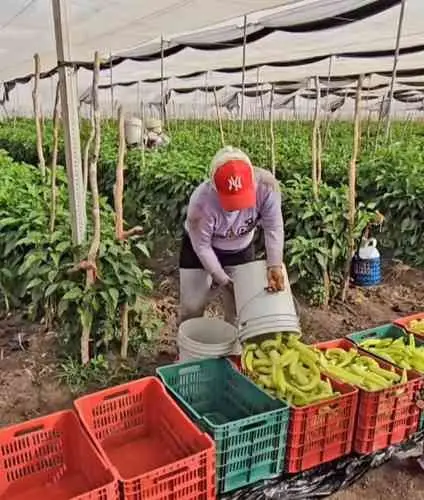

Respiratory infections, especially tuberculosis, are among the main health problems affecting agricultural workers in San Quintín, according to the report “Living Conditions and Perception of Health Services in the Community: A Qualitative Study in San Quintín, Baja California,” presented at the International Congress on Tuberculosis and Other Mycobacteriosis Research.
The document highlights inequalities in access to healthcare in the area, due to factors such as poor working conditions, overcrowding, lack of public services, and institutional mistreatment, which hinder the prevention, diagnosis, and timely treatment of diseases.
In 2024, the report indicates, 83 cases of tuberculosis were reported in the region, representing an increase of more than 150 percent compared to those detected during the pandemic. Cancer and diabetes are also among the most common illnesses in the area.
According to the study, San Quintín is an agricultural hub populated by a large migrant population, with at least 80 percent of its workforce coming from other states, primarily Oaxaca, Guerrero, Veracruz, Chiapas, and Mexico City.
The study emphasizes that workers from these states seek better job opportunities; however, they face adverse conditions such as limited access to public services, making them vulnerable to infectious diseases.
The study specifies that more than 16 indigenous groups live in this region, including Mixtec, Triqui, and Yuman peoples, whose cultural and linguistic barriers further complicate their access to medical care.
Various analyses have recorded periods when up to 40 percent of the population suffers from Mycobacterium tuberculosis infection.
The transmission and resistance of this latter disease is favored by its high mobility, coupled with socioeconomic vulnerability and cultural diversity in the area, according to researchers Liliana Guadalupe Villa, Lenin Escobar, Héctor Javier Sánchez, Cristina Gordillo, Bruno Girón, and Raquel Muñiz Salazar, from the Autonomous University of Baja California, El Colegio de la Frontera, and the San Quintín City Council.
The study emphasizes that the main deficiencies in health services are the inadequate treatment by public servants in that sector, the lack of medical personnel, the scarcity of healthcare centers, and the shortage of medications.
The objective of this work was to explore and describe the community’s perception of this situation in San Quintín, identify frequent problems, document needs, and make recommendations to improve care.
Therefore, the researchers urged the authorities to implement intercultural strategies and inclusive policies to reduce these gaps of profound inequality and neglect of the health of San Quintín residents.
According to official data, the state also registers a high incidence of tuberculosis, with 3,000 new cases detected annually, primarily among the 25-49 age group. Risk factors include drug use, smoking, and malnutrition.
The migration to Baja California from southern states, Central America, and South America is one of the factors contributing to the prevalence of this disease, the Ministry of Health acknowledged. Other contributing factors include overcrowding and poverty.
A research project entitled “Genomic, Epidemiological, and Cultural Profile of Tuberculosis in Mexico: An Analysis of Transmission and Drug Resistance in Highly Vulnerable Contexts, 2026-2028” is underway. Its approach recognizes that tuberculosis transmission is not solely a biological phenomenon, but rather the result of the interaction between structural, cultural, and migratory factors, particularly in Indigenous and agricultural worker communities, such as San Quintín, Baja California.

Source: jornada