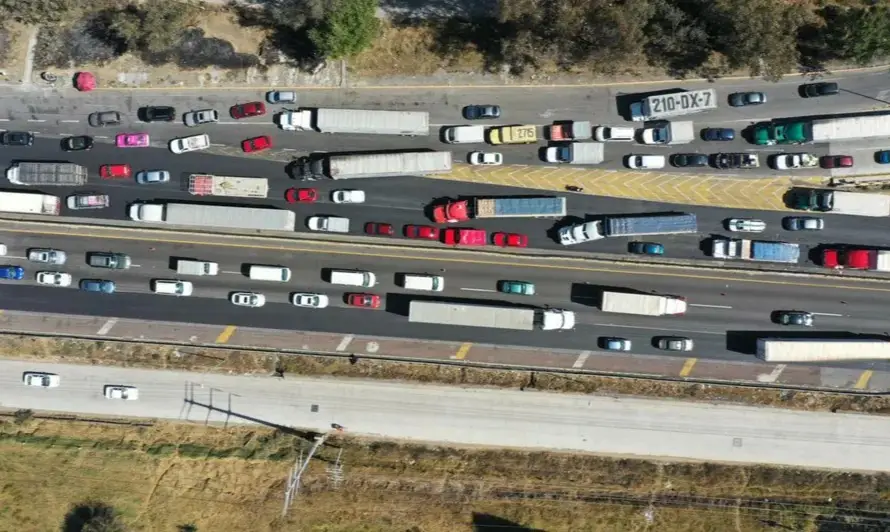

The governor of the state of Puebla, Alejandro Armenta Mier, announced that the “5 de Mayo” Peripheral Highway will be built within two years. Its objective is to alleviate traffic congestion on the Mexico-Puebla and Puebla-Tehuacán highways.
This new road will begin in the Outlet area, pass behind the Volkswagen assembly plant, through the auxiliary towns of La Resurrección and San Miguel Canoa, and reach San Salvador Chachapa in the municipality of Amozoc de Mota.
The project will be carried out using machinery from the State Government and materials from the state-owned oil company Petróleos Mexicanos (Pemex), with the aim of optimizing construction costs for the new 28.7-kilometer road.
Therefore, the construction of two circuits is planned:
The first from the Outlet area, Volkswagen, La Resurrección, and Chachapa.
The second section runs from Flor del Bosque, the University of Police Sciences, and the Miguel E. Abed Racetrack.
The existing road from San Miguel to the University of Police Sciences will be widened to a dual carriageway with a dedicated bike lane; according to the governor, it will be the largest bike path in Mexico. From the University of Police Sciences to the Amozoc racetrack, it will serve as an alternate route to the Puebla-Tehuacán highway.
This segment will be called the “Southern Circuit” and will connect the Periférico Ecológico (Ecological Ring Road) with the racetrack. Later, the “Northern Circuit” will connect the Amozoc-San José Chiapa federal highway with the Finsa industrial park.
Governor Armenta Mier announced that he will soon meet with the mayors of the municipalities along this new roadway to request their cooperation in securing the necessary right-of-way. Meetings are expected with the mayors of Amozoc, Cuautinchán, Cuautlancingo, and Puebla City.
He added that a public consultation will be held to determine whether the name of the road will remain Periférico “5 de Mayo” or be changed to its initial proposal as Arco Norte “Manuel Bartlett Díaz,” referring to the former governor of Puebla who proposed the project more than 30 years ago.

Source: milenio