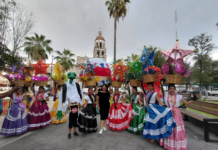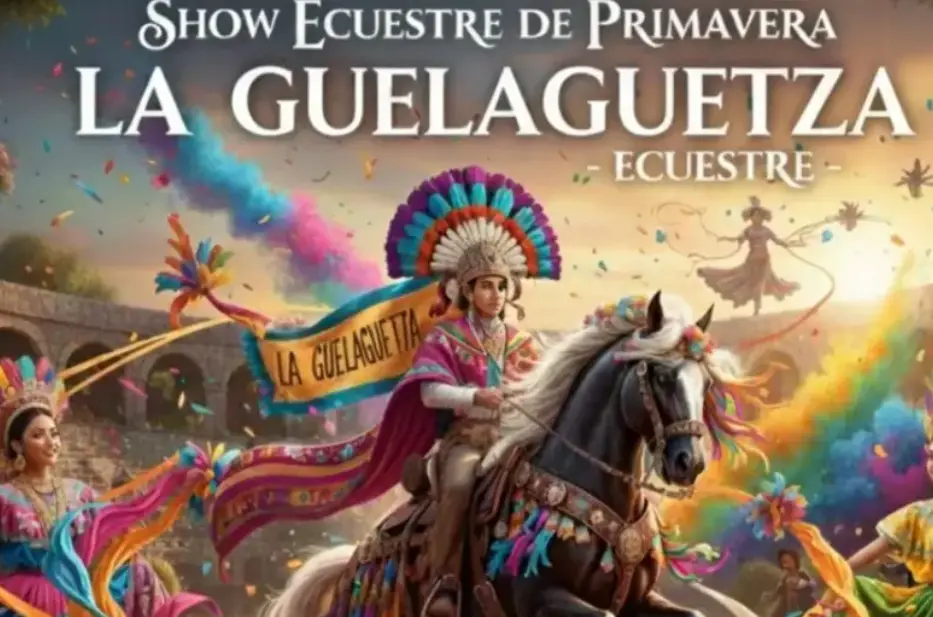

The promotion of the show “La Guelaguetza Ecuestre, Tradition in Motion” by Casa Domecq has sparked a new legal dispute in Oaxaca over the use of the name and symbols of one of the state’s most representative cultural expressions. Authorities warned that the Guelaguetza cannot be used as a commercial resource, as it is a tangible and intangible cultural heritage protected by law, and its preservation belongs to the Indigenous and Afro-Mexican communities that have kept it alive.
After detecting the promotion of the event, the Oaxaca government, through the Ministry of Culture and Arts, ordered the immediate removal of the advertising from print and digital media. The agency reported that it is considering initiating legal and administrative proceedings, given that the unauthorized use of this celebration violates collective rights and contravenes constitutional provisions that obligate the State to protect the cultural expressions of Indigenous peoples.
This episode adds to a series of actions with which Oaxaca has taken a stand against the commercial appropriation of its cultural heritage. In recent years, the organization has faced several cases that have generated public debate and legal precedents, such as the agreement reached with Adidas and designer Willy Chavarría regarding the reproduction of the traditional huarache sandal from Villa Hidalgo Yalálag in the footwear called “Oaxaca Slip-On.” Other notable cases include the complaints against Sheinbaum for copying embroidery from the Isthmus of Tehuantepec, and the legal support provided to the Mixe people to halt the use of their identity in a mezcal brand.
At the national level, these disputes fall within a broader legal framework. Since 2022, the Federal Law for the Protection of the Cultural Heritage of Indigenous and Afro-Mexican Peoples and Communities has recognized the collective intellectual property rights of Indigenous peoples and established the obligation to obtain their prior, free, and informed consent for any commercial use of their designs, symbols, or cultural expressions. The law seeks to prevent misappropriation, guarantee respect for the communities that created these works, and lay the groundwork for more equitable relationships regarding the cultural and economic value of Indigenous heritage.
Source: nvinoticias