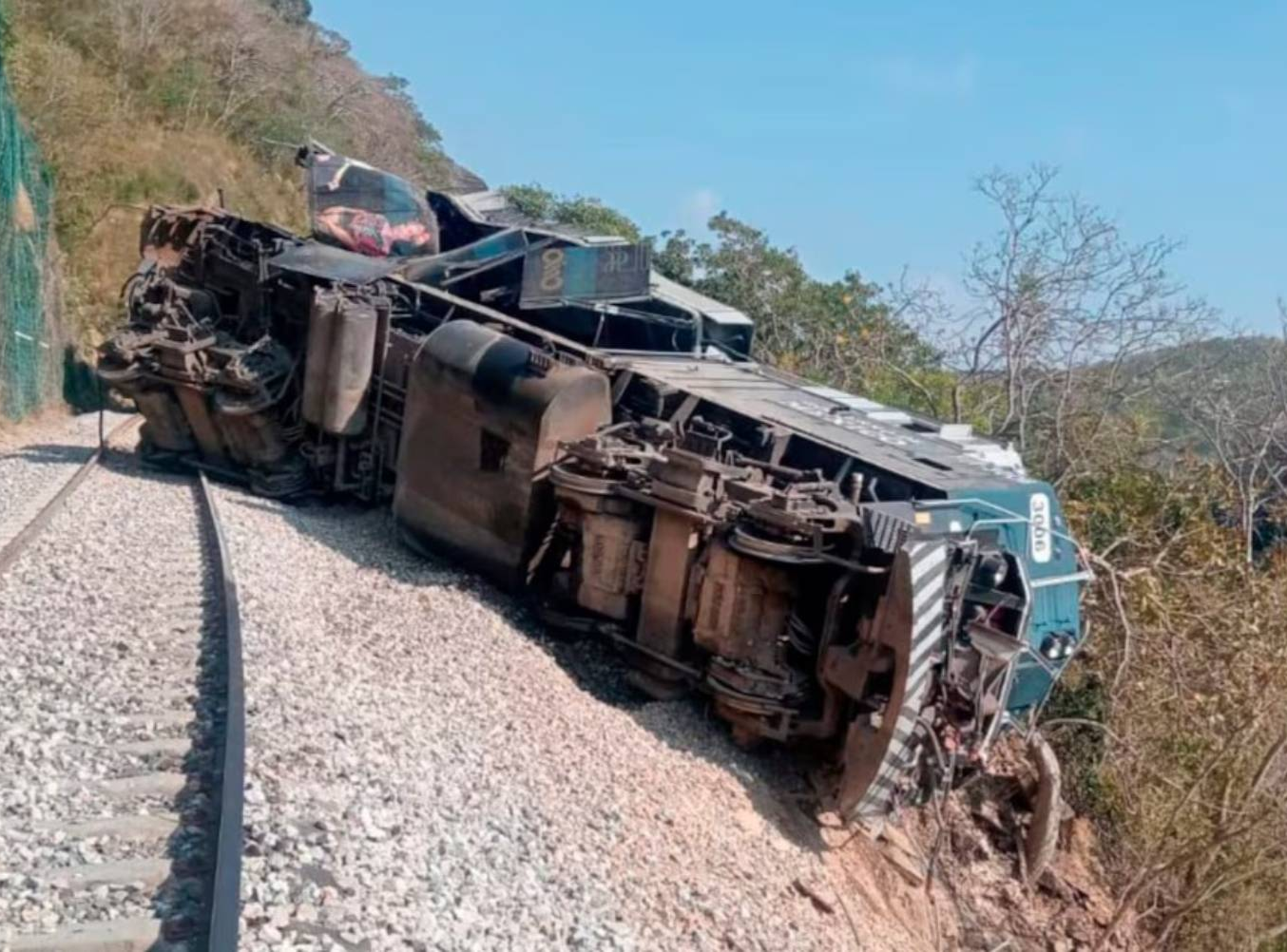

A technical report from the Attorney General’s Office (FGR) reveals that the tragic Interoceanic Train accident—which left 14 dead and more than 100 injured—could have been avoided. According to the FGR’s arrest warrant, inspections carried out just 11 days before the tragedy (on December 17) already warned of the “extensive wear” on the wheel flanges.
What are flanges and why do they matter?
They are the inner edge of the wheel that “hugs” the rail. Their primary function is to guide the train, especially on curves. If the flange is worn:
The wheel loses its ability to stay aligned.
The risk of the train overriding the rail increases.
The safety margin in the event of excessive speed is drastically reduced.
“Doomed” Train Cars and Locomotives on the Edge
The report details that locomotives 3006 and 3027, responsible for traction, and train cars 161102, 161207, 161211, and 161209 presented this defect. It was precisely car 161209 that ended up falling into the ravine.
Railway engineer Eduardo Ramírez denounces a chain of negligence:
Obsolete Equipment: The train cars used are over 40 years old, an age at which, under international standards (such as in the U.S.), they should be retired or “doomed.”
Official Omission: Prosecutor Ernestina Godoy initially stated that the equipment was “within regulations,” a version that the technical report directly contradicts.
A fatal combination: Worn-out parts, coupled with excessively long cars for such sharp curves and excessive speed, created the inevitable scenario for the derailment.
Although the Attorney General’s Office has focused its criminal case against three crew members for “human error,” the discovery of the train’s poor mechanical condition shifts responsibility to the operational chain of command.
Source: diariodecolima