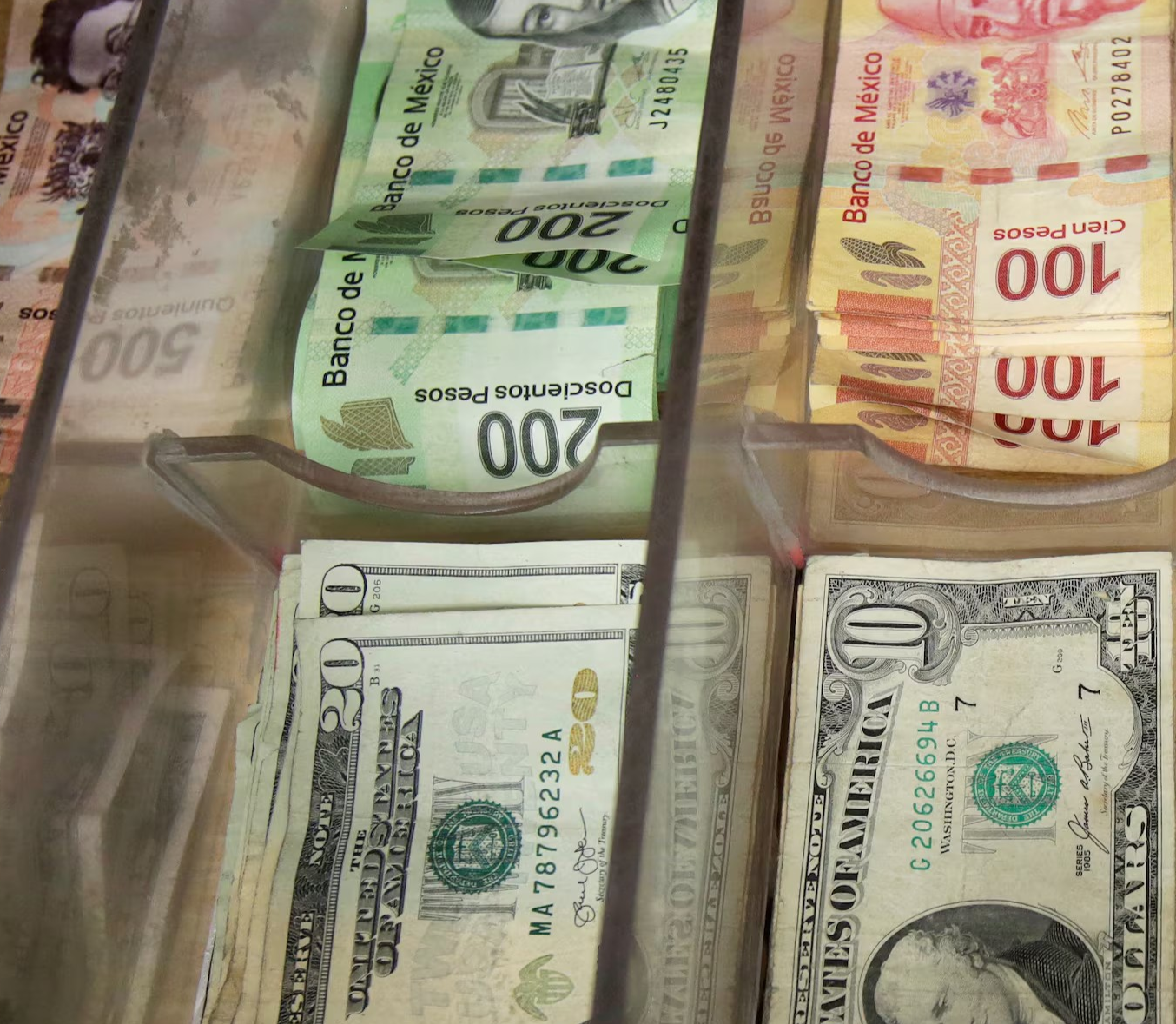

A friend who’s a businessman asks me if the depreciation of the US dollar affects or harms those of us in Nuevo León.
My friend is about to start the paperwork to export candy and is very confused. And I tell him he has every right to be.
Let’s see. As any economics student knows, the value of the US dollar (USD) isn’t fixed; it fluctuates like any currency in the global foreign exchange market.
When we say it’s “depreciating,” we mean that it has lost relative value compared to other major currencies, like the euro or the Japanese yen. For those who don’t know, this is easily measured with indices like the DXY (Dollar Index), which compares the USD to the six major world currencies.
In recent days, the USD has hit its lowest levels in four years, accumulating significant weekly losses.
“So the dollar’s worthless?” my friend asks, who, being from Guadalupe, is very anxious.
No. This depreciation isn’t a total collapse, but it is a symptom of deep tensions in the US economy. Is it Trump’s fault? Frankly, yes.
The value of a currency—and especially the dollar—is determined by supply and demand in the global market. If investors lose confidence, it’s bad news. If Trump tolerates ICE repression, it’s bad news. If he picks a fight with NATO, it’s bad news.
Every public action ends up in the vortex of investor confidence.
Government policies, interest rates, real or imagined geopolitical risks, unnecessary fights with the Federal Reserve (Fed)—which, if it were up to me, I would abolish as the good libertarian I am, but we have to be realistic—all influence that demand.
Confidence falls, and in two minutes, investors sell their dollars. Maybe even sooner. And they start buying gold. Whenever the dollar generates distrust, investors cling to gold like a lifeline, even if they’re in a kiddie pool.
The most ironic thing, I tell my friend from Guadalupe, is that the recent drop in the dollar isn’t even due to an acute economic crisis—the US economy remains as strong as an oak in many respects—but to something I call a “risk premium.” It’s as if the dollar, seen since I was a border kid in Reynosa as a “safe haven” in times of global turbulence, is losing that aura of traditional invulnerability.
But the worst is yet to come. The day before yesterday, Donald Trump declared that the dollar is “great” and that he, as president, can, “like a yo-yo,” make the dollar rise or fall at his presidential whim.
The market response was predictable: the “yo-yo” movement was interpreted as a sign that the government would not intervene to strengthen the dollar, breaking with the tradition of US presidents defending a “strong dollar.”
As they say in Guadalupe, Trump added insult to injury. Investors trembled at his erratic intentions, such as the attempted annexation of Greenland, the reckless imposition of tariffs, and a string of blunders—intentional or not—that erode the credibility of our neighbors to the north as a stable leader.
Now comes the hard part. Why should the people of Nuevo León worry about the dollar’s decline if it means we can spend more freely in McAllen? Because the dollar has been the cornerstone of the global financial system since World War II, including for countries like Mexico.
The dollar falls, and in the medium term, the peso will fall. Guaranteed. And since investors don’t have much faith in Mexican politics either—the evidence speaks for itself—we’re headed for disaster following the dollar.
At first, my exporter friend from Guadalupe will do great: a depreciating dollar will help exporters like him. But this downward spiral will also increase volatility and import costs, fueling national inflation.
The dollar loses, Trump loses, and we Nuevo León residents lose. It’s that simple. As for the Mexicans, I won’t even mention them.

Source: elhorizonte