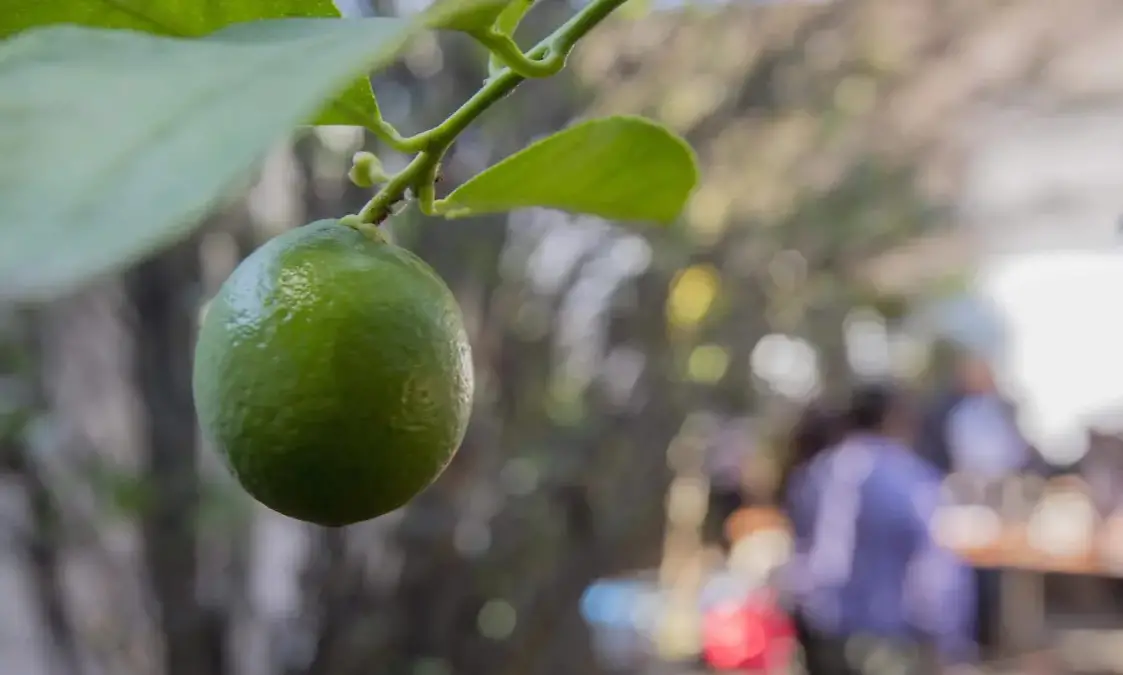

To combat the bacteria affecting lemons in Michoacán, the state’s Ministry of Agriculture and Rural Development (SADER) announced the installation of two laboratories. The head of the agency, Cuauhtémoc Ramírez Romero, stated that this project is part of the Michoacán Plan for Peace and Justice, implemented at the end of last year.
In an interview with El Sol de Morelia, the official explained that the laboratories will be located in the town of Antúnez in the municipality of Parácuaro, 22 kilometers from Apatzingán, and possibly at the Faculty of Agrobiology of the Michoacán University of San Nicolás de Hidalgo (UMSMH) in Uruapan, although this location has not yet been confirmed.
Two laboratories will be installed for the production of beneficial insects to control the Asian citrus psyllid (Diaphorina) and thus manage this problem in citrus crops in Michoacán, according to Cuauhtémoc Ramírez Romero, head of the Ministry of Agriculture and Rural Development (SADER).
He mentioned that the Michoacán Plan is promoting the production of this citrus fruit and the production of certified plants through two nurseries to replace plants infected by the bacterium known as HLV (Huanglongbing), which attacks lemons.
The federal and state governments are working together to improve producers’ incomes, stated the head of SADER in Michoacán.
Ramírez Romero also mentioned that five biofactories will be built to produce inputs for nutrition and pest and disease control. Specifically regarding lemons, 45 technicians hired by the federal government and seven from the state government will be working in the field, which he believes will improve crop conditions.
Finally, he added that sugarcane, mango, berry, and avocado crops are also included in the federal strategy implemented after the murders of former Uruapan mayor Carlos Alberto Manzo Rodríguez and Apatzingán lemon growers’ leader Bernardo Bravo Manríquez. For this sector, actions related to plant health are being reviewed to control pests and diseases.
Regarding loans for producers, he noted that the interest rate is set at 8.5 percent annually under the National Harvesting Sovereignty Program. According to the official, most banks charge interest rates between 18 and 20 percent.
Source: oem