
Is the Oaxacan tamale not from Oaxaca? The true story behind the Oaxacan tamale will leave you with your mouth open.
Oaxaca is a specialist in preparing tamales; they even have their own creation. This corn food, which is one of the most loved by Mexicans, has an intriguing history that comes from Mesoamerica.
It is said that tamales were cooked for the great festivals, to give thanks for the fertility of the land, and as an offering to the dead. The version of the pre-Hispanic tamale was much firmer, caked, made with vegetables such as pumpkin, chili, and corn.
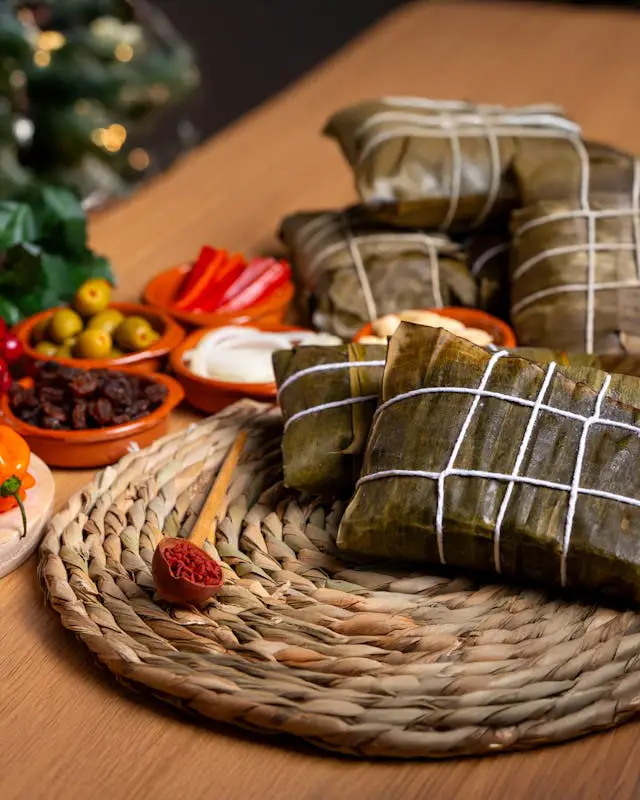
On this day of Candlemas Day, let’s talk about the Oaxacan tamale: while the traditional tamale, from the center of the country, is prepared with corn husk, in this beautiful state the use of banana leaf was perfected.
Not only does the leaf change, but it has a distinct flavor. The technique in Oaxaca involves the banana leaf being tatemed before wrapping the dough. This process releases oils that are impregnated in the corn, giving a silky texture and a particular aroma.
Oaxaca has a variety of tamales because, in addition to the Oaxacan ones that we know throughout the country, they have other varieties such as stone, tichindas, and chepil.
Is the Oaxacan tamale from Oaxaca?
In the past, the tamale was wrapped in corn leaves, maguey or santa, but not in banana leaves, since the latter ingredient grew only in Southeast Asia and arrived in Mexico in 1550.
Vasco de Quiroga, bishop of Michoacán, ordered that sealimas and cuttings be brought to his community as food support for the indigenous peoples of the area. A part of them was delivered to the Papaloapan Basin in Veracruz.
It was not until 30 years later (1580) that the Augustinian Juan de Medina y Rincón wrote that these leaves were an excellent food, so settlers began to use the leaves to make tamales and as a roof for their huts.
Later, Admiral Luis Fajardo, who transported the new viceroy Gaspar de Zuñiga in 1995 to Veracruz, ordered Captain López de Ulloa to move to the port of San Cristóbal y Alvarado to bring tamales wrapped in banana leaves, which would serve as an appetizer for the viceroy on his way to what is now Mexico City.
Until the second half of the nineteenth century, the commercial cultivation of this leaf was promoted throughout the country, thus reaching the Oaxacan and Guerrero coasts. It was precisely in Oaxaca that special fillings and dressings were added that gave it that unique flavor.
Source: El Universal