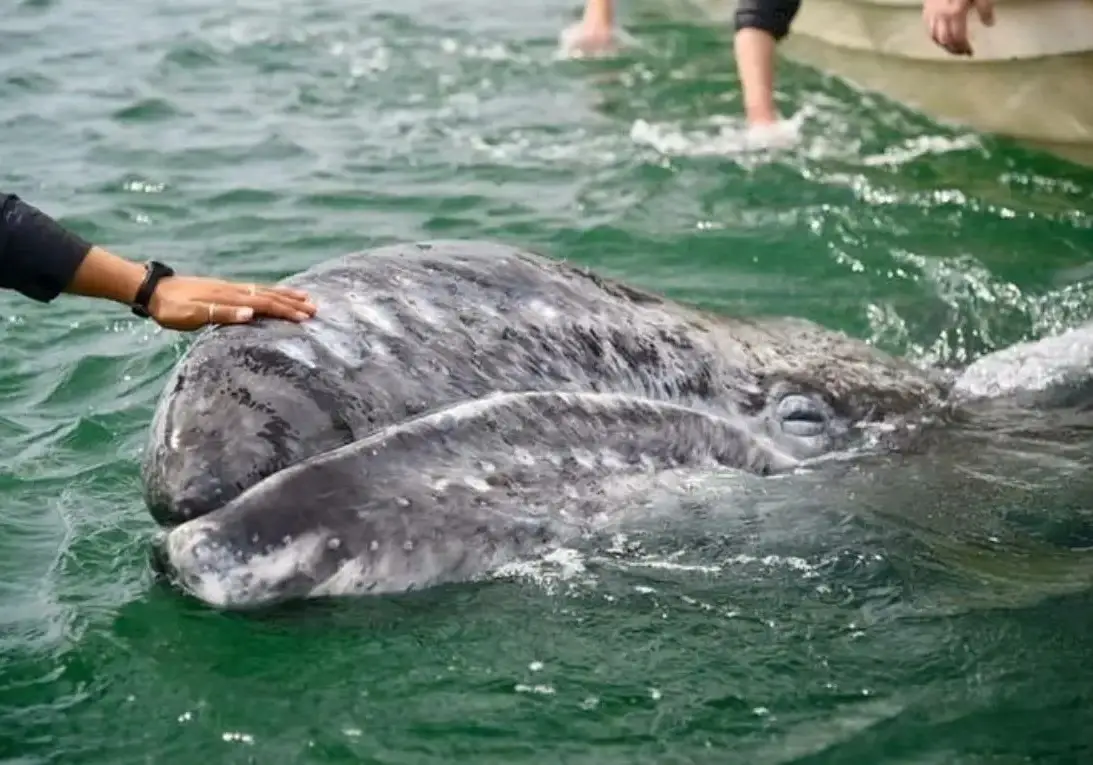

The gray whale, one of Baja California Sur’s most emblematic marine species, found in places like Puerto Chale, faces increasingly adverse conditions stemming from climate change and a decline in food in its feeding grounds.
This has led to high mortality rates and a decrease in reproduction, reported the Ministry of Environment and Natural Resources (SEMARNAT). Therefore, following the start of whale season, it is crucial to closely monitor their behavior.
According to Cristina González Rubio Sanvicente, SEMARNAT’s representative in the state, more than 100 gray whales died last season, a figure that confirms the worrying trend observed in recent years.
The official explained that, although a good season was expected, scientific data shows that marine conditions are seriously affecting the species.
She explained that changes in the ocean’s physical and chemical conditions are directly impacting gray whale populations.
“The marine environment is one of the most sensitive ecosystems, and its physical and chemical conditions are changing due to climate change,” he noted.
This situation leads to reduced food production in the areas where gray whales feed, resulting in individuals with thinner and weaker health.
“Food production decreases, and therefore, the calf reproduction rate also declines,” he explained. For this reason, SEMARNAT (the Mexican Ministry of Environment and Natural Resources) is responsible for regulating whale watching.
Regarding the presence of gray whales during the current season, González Rubio Sanvicente indicated that counts vary by region and that the data is still preliminary.
“In Puerto Chale, we have a count of over 100 whales; in Adolfo López Mateos, also over 100; and in Ojo de Liebre, where the most have been observed, around 200,” he detailed.
Regarding the calves, she noted that approximately 24 calves have been recorded in Ojo de Liebre, although she clarified that these are preliminary and unofficial figures.
Finally, the official emphasized the importance of responsible and sustainable tourism activities, especially whale watching.
“It is very important that we, together with the community, understand what is happening and take care in how we conduct tourism,” she stated.
SEMARNAT reiterated that the conservation of the gray whale depends on collaborative work between authorities, researchers, and local communities to guarantee the species’ continued presence in the waters of Baja California Sur.

Source: posta