
It has long since ceased to be one of the world’s best universities, ranking around one hundred among the world’s higher education institutions and struggling to maintain its place among the leading Latin American institutions. What triggered its progressive decline and fall from grace as an international benchmark in the training of highly qualified professionals for research, teaching, and the dissemination of culture? While it is true that it was not the first university founded by the Spanish on the continent, from its inception as the Royal and Pontifical University of Mexico, it distinguished itself through its scientific, philosophical, and humanistic training. Its contribution to global knowledge was undeniable. Great thinkers also passed through its halls, and numerous cultural figures enhanced the university’s prestige.
Even during the Porfiriato, the University contributed its best to enrich science, technology, and the training of personnel for public administration, in addition to producing great philosophers and writers who brought prestige to the country. The university district, stretching from the Holy Inquisition building to the vicinity of the National Palace, witnessed generations of exemplary men who shaped the nation pass through Donceles Street—the street where young men, or “donceles,” walked on their way to the University. Justo Sierra is a living example of support for the University, to whom we owe its status as a National University. It wasn’t necessarily a revolutionary who secured the autonomy of the National Autonomous University of Mexico (UNAM), but rather one of its rectors, José Vasconcelos, a humanist more than a politician.
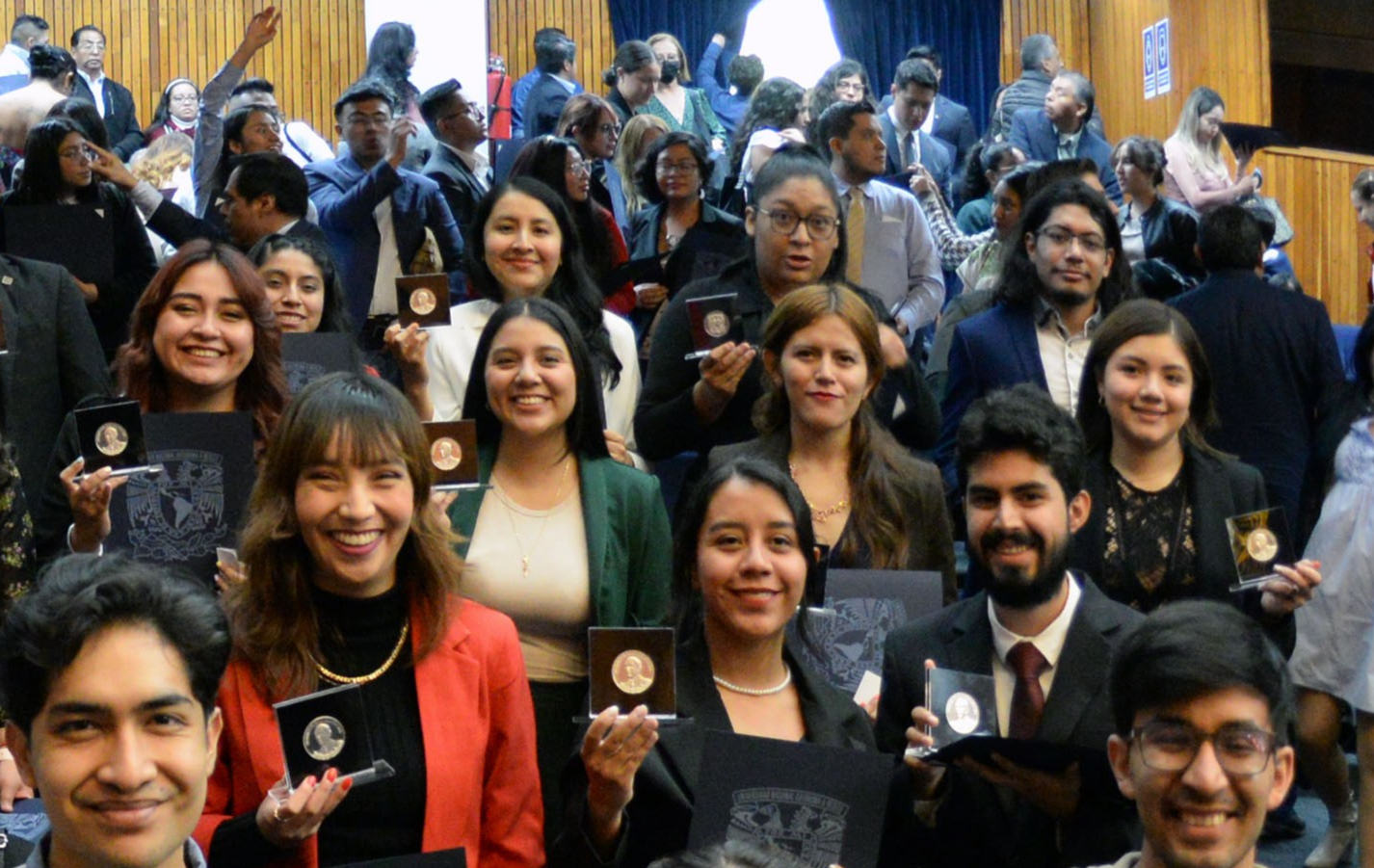
Since then, in 1929, the—forgive the cliché—the National Autonomous University of Mexico has become a true home of universality, a temple of diverse ideas, a convergence point for political pluralism, a sanctuary of academic freedom, an incubator of science and technology, a center of culture, and the recipient of hundreds of international awards. It is also the birthplace of the three Nobel Prizes awarded to our country. Autonomy and Rector Javier Barros Sierra withstood the onslaught of presidentialism and the student repression of 1968. However, a progressive, even leftist, rector, Pablo González Casanova, author of the book Democracy in Mexico, provoked the massification of university education. His brother, Henrique, not only supported him in maintaining automatic admissions but also created the CCHs (College of Sciences and Humanities) to promote technological education and block access for thousands of young people to undergraduate programs in faculties overwhelmed by enrollment. Cheap labor for the productive sector. There began the decline of one of the most important universities on the planet. Curiously, many of the figures at the top of the 4T (Fourth Transformation) emerged from the destabilizing movements at UNAM (National Autonomous University of Mexico), although most of its followers never even set foot in the University, and others resorted to fraudulent degrees or substandard schools. Today, the government is launching a new offensive to dismantle the University of Mexico, founded by José Vasconcelos, Ignacio García Téllez, Antonio Castro Leal, Gustavo Baz, Mario de la Cueva, Alfonso Caso, Salvador Zubirán, Nabor Carrillo, Ignacio Chávez, Javier Barros, Guillermo Soberón, Jorge Carpizo, José Sarukán, José Narro, and Enrique Graue, among others. The current administration wants an uncritical, unthinking, mass-produced university that only trains mediocre technicians grateful for free “education” to remain in mediocrity.
The role of the National Autonomous University of Mexico (UNAM) must be different. It should be that of a people’s institution fulfilling a social purpose: to make Mexico a great country, a world leader in science, technology, and culture. The University must transcend its mediocre administration and forge new, aspirational generations that will conquer a globalized world that demands high-quality professionals. There is no other standard than an excellent education. The challenge today lies with its authorities and students. Mexico deserves much more.
Postscript: Pascal Beltrán del Río, reporter, correspondent, columnist, commentator, host, and director of Excelsior, spoke with students at the Carlos Septién García School of Journalism, telling them that “freedom of expression isn’t lost overnight. It doesn’t disappear with a decree or an explicit reform. It erodes. It wears down. It shrinks. It becomes risky. And sometimes, most disturbingly, it becomes socially unpopular. In the Mexico of the Fourth Transformation, the main challenge isn’t that freedom of expression has been formally abolished, but that it has become fragile, selective, and increasingly conditioned.” He told the future journalists that the question is no longer whether freedom of expression exists, but what we are willing to pay to exercise it and what kind of journalists this generation wants to produce.
Sorce: billieparkenoticias