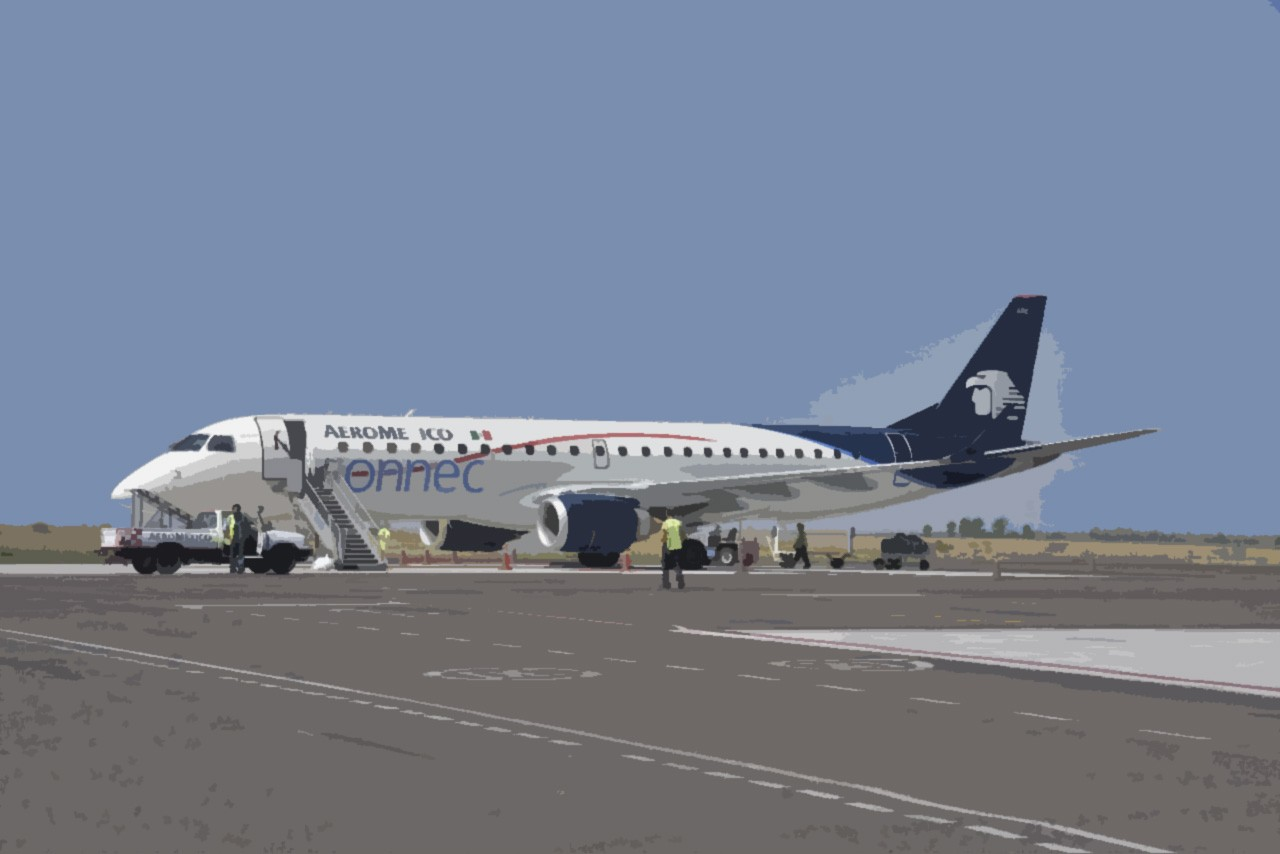

Airports drive economic development and require adequate connectivity with the metropolitan area, which depends on an efficient road network.
The Aguascalientes International Airport (AIA), inaugurated in 1971, is located 21 km south of the city and transported 914,879 passengers with 15,415 flight operations in 2023 (IMT). This study analyzes the connectivity of the Aguascalientes Metropolitan Area with the AIA using accessibility and road density indicators, employing Transportation Engineering tools.
This study builds upon aspects of the article “Regional Impact of the Aguascalientes International Airport with Transportation Engineering Methods,” which addressed the AIA’s area of influence.

Potential interaction (Iij) measures the probability that residents of a municipality will travel to the airport, considering population and distance. Road coverage indicates the extent of roads per unit area, while accessibility measures the ease of travel within the municipality.
To evaluate the influence of each municipality on the airport, a simplified Reilly’s Law was applied, considering the population and distance of the three municipalities in the Metropolitan Area of Aguascalientes (ZMA), as shown in the table.
This analysis shows that the municipality of Aguascalientes has the greatest interaction with the AIA (Aguascalientes International Airport), given its larger population and shorter distance to the AIA; this municipality is the largest generator of demand for the airport. Jesús María has a moderate interaction with the AIA. Meanwhile, the municipality of San Francisco de los Romo has the least interaction, given its small population and greater distance from the airport.
Next, the connectivity of the three municipalities was evaluated.
Connectivity is an indicator that measures the capacity for land-based communication within the municipalities… based on the two previous indicators: one referring to the quality and ease of travel within a municipality (accessibility), and the other to the quantity and density of transportation within the municipal territory (coverage). (Jalisco State Institute of Territorial Information, 2009).
To understand this table, road coverage was used, which measures the length of roads per unit area. A high value indicates greater physical coverage of the road network. Road accessibility, on the other hand, measures the ease of reaching different points from any location.

Road density measures the number of roads per area, while accessibility evaluates the ease of travel. A municipality can have an extensive but poorly accessible network if it lacks good connections or distribution. Conversely, moderate coverage with efficient interconnections achieves high accessibility. Thus, effective connectivity to the airport depends not only on the number of roads but also on their strategic design to expedite travel.
In the case of Aguascalientes, it has moderate coverage (0.3587) with high accessibility (33.1839) compared to the other two municipalities. Its connectivity (5.95) is the highest, given its high road accessibility. Therefore, the capital city has the best connectivity, given the configuration and extent of its road network.
Jesús María has greater coverage (0.4348) than Aguascalientes, but relatively low accessibility; that is, its configuration does not favor efficient travel. This is why it has a low coverage (1.14).
San Francisco de los Romo has the highest road coverage (0.8657) but the lowest accessibility (1.4361), indicating that its road network is not well interconnected.
The results show that Aguascalientes facilitates an efficient flow of passengers to the airport, while Jesús María and San Francisco de los Romo have accessibility limitations that could cause delays and affect urban mobility and the economic development of these areas.
The low connectivity of Jesús María and San Francisco de los Romo suggests the need to prioritize fast routes and efficient public transportation to facilitate access to the airport and improve metropolitan integration.
The municipality of Aguascalientes has the greatest connectivity and interaction with the airport, while Jesús María and San Francisco de los Romo require improvements to their road network to optimize access. It is recommended to coordinate metropolitan planning, invest in strategic public transportation routes, and evaluate infrastructure expansion to improve mobility and foster regional economic development.

Source: pasajero7