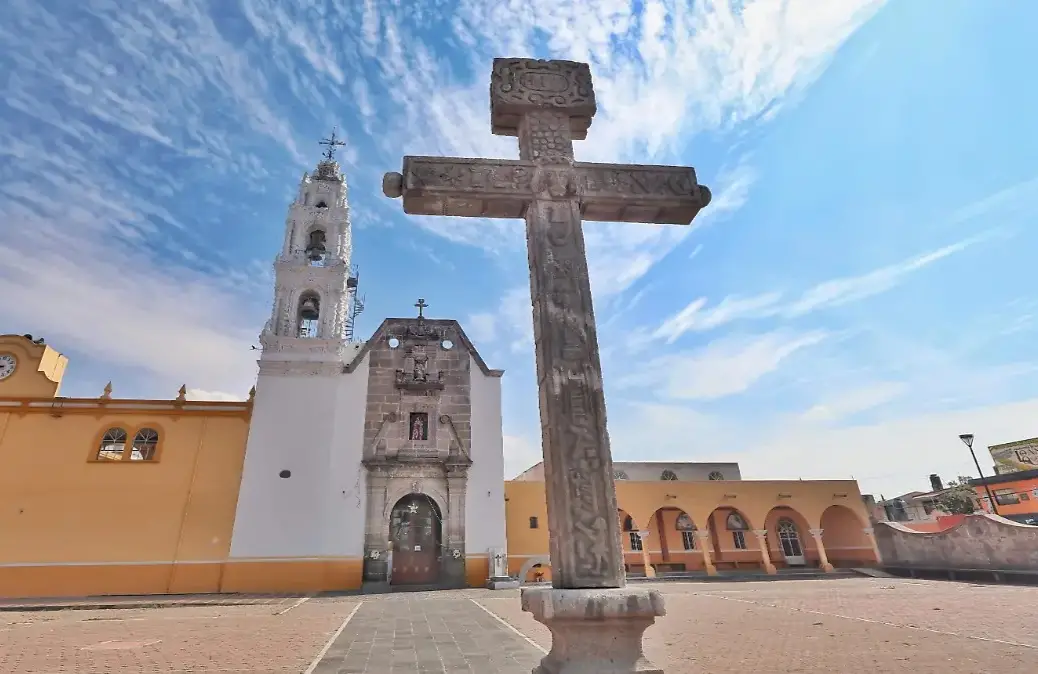

In the courtyards of old churches and convents in Tlaxcala stand enormous stone crosses, silent yet eloquent witnesses to more than four centuries of history. These are the courtyard crosses, unique monuments from the early colonial period that encapsulate one of the most complex processes in Mexican history: evangelization and the encounter—not always peaceful—between two worlds.
Tlaxcala, as the birthplace of evangelization, is a key player in this story, and like Hidalgo, Puebla, Morelos, and Mexico City, it preserves a significant number of these crosses. More than 30 courtyard crosses have been recorded in Tlaxcala, some dating back to the 16th century and others to the early 20th century.
Nazario Sánchez Mastranzo, a historian with the National Institute of Anthropology and History (INAH), notes that many of these altarpieces belonged to former Franciscan convents, while others were moved, reused, or embedded in walls and chapels over time.
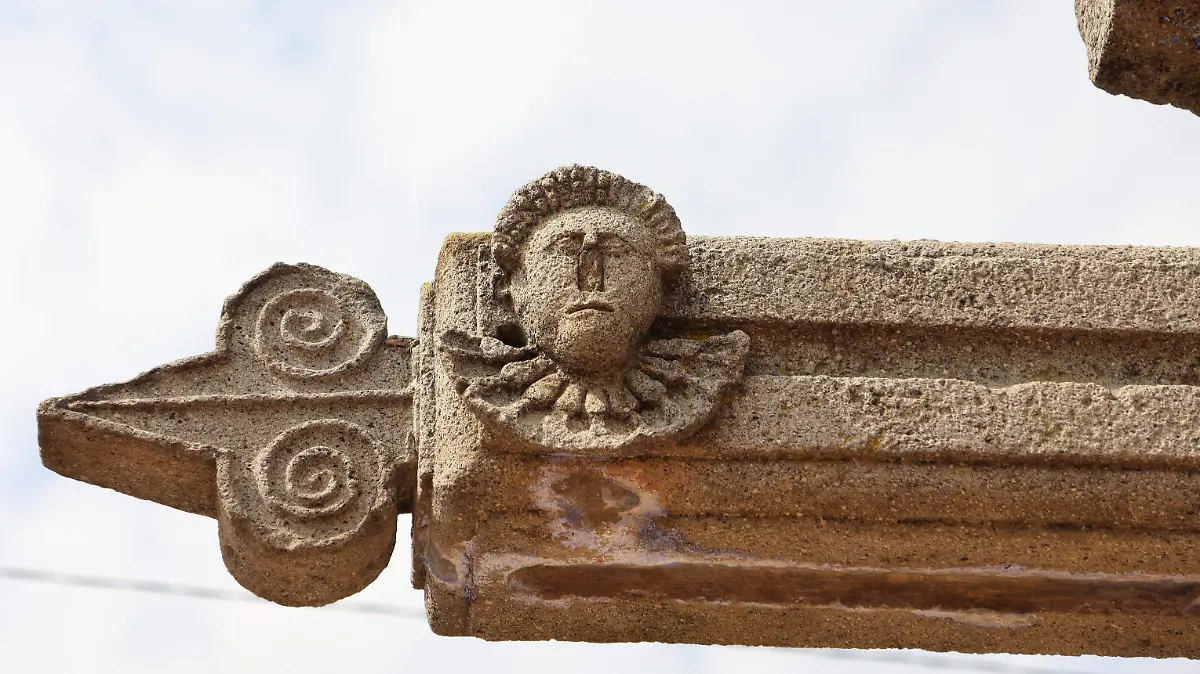
Francisco Martínez Hernández, director of the Museum of Memory in Tlaxcala, explains that after the conquest, the mendicant friars—primarily Franciscans—understood that the indigenous peoples were accustomed to worshipping in open spaces.
Thus, they demolished ancient ceremonial centers and built large atriums, a term even considered a Mesoamerican contribution to Christian architecture.
The atrium became the heart of community life: catechism was taught there, music and painting were taught, justice was administered, and the first masses were celebrated. In the center of this space stood the atrium cross, conceived as the “navel” of the atrium, the axis that sacralized the surroundings and symbolically marked the birth of Christianity in each town.
The atrium crosses do not depict the body of Christ crucified, explains Martínez Hernández. Instead, they feature his face, the inscription INRI, and the so-called instruments of the Passion (arma Christi): nails, hammer, crown of thorns, rooster, whipping post, dice, ladder, and pincers.
The museum director mentions that the absence of the body was not accidental. The evangelizers avoided representing Christ nailed to the cross so as not to evoke pre-Hispanic human sacrifices. Thus, the crosses functioned as visual catechisms, veritable “books of stone” that taught Christian doctrine to a largely illiterate population.
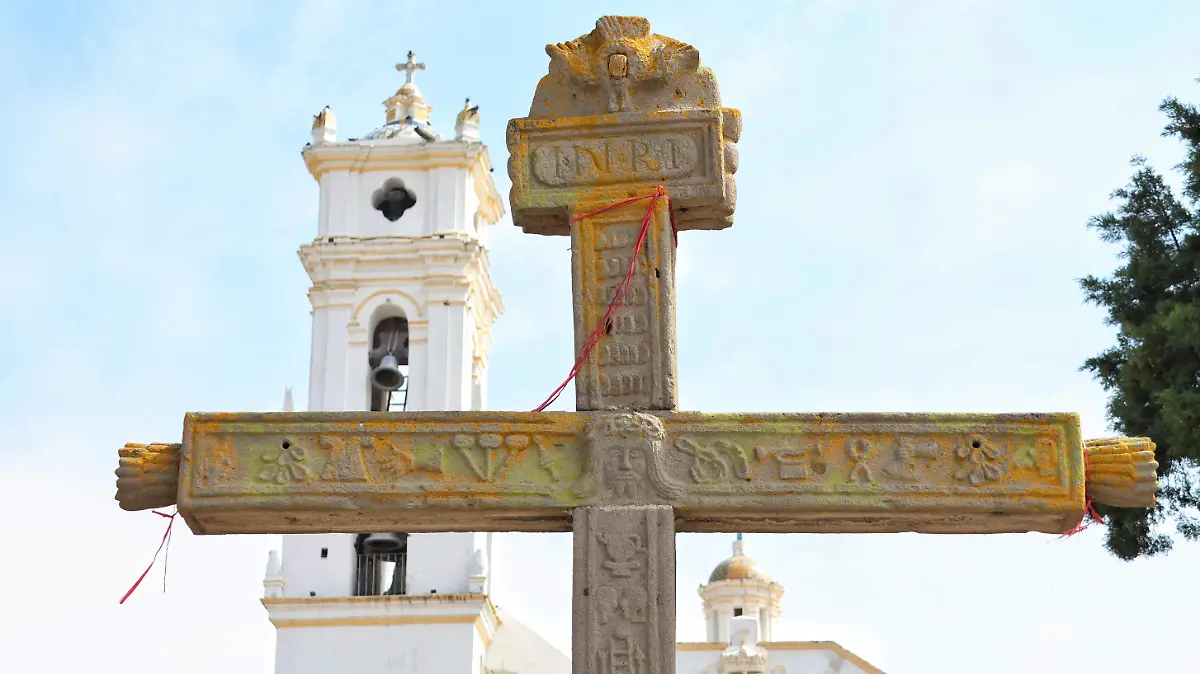
Although designed under the supervision of the friars, the crosses were carved by Indigenous artisans, who incorporated their own aesthetic sensibilities and worldview. This hybrid art is known as Tequitqui art, a term that alludes to Indigenous tribute labor under Christian rule.
Many crosses feature phytomorphic decorations, stylized flowers, bunches of grapes, vine forms, and symbolic elements that refer to both Christianity and ancient Mesoamerican beliefs. Some were carved using pre-Hispanic techniques, stone against stone, from a single core of quarry stone.
Among the most outstanding examples are:
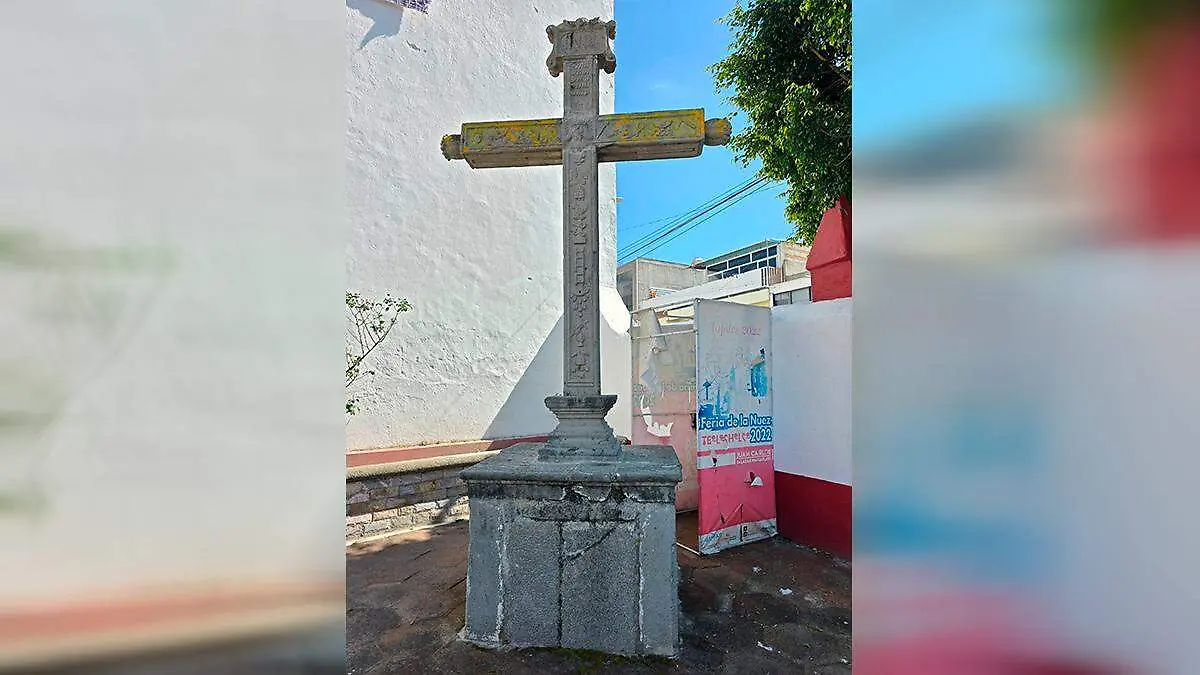
San Luis Teolocholco, whose cross incorporates the image of Tláloc, demonstrates a cultural fusion. Years ago, it was removed from its original location. Today, it is located on the south side of the atrium of the San Luis Obispo parish church.
In La Magdalena Tlaltelulco, on the cross of this place we can find on one side only stylized flowers, showing that indigenous hands were its creators, and on the other, the elements of the passion of Christ.
Source: oem