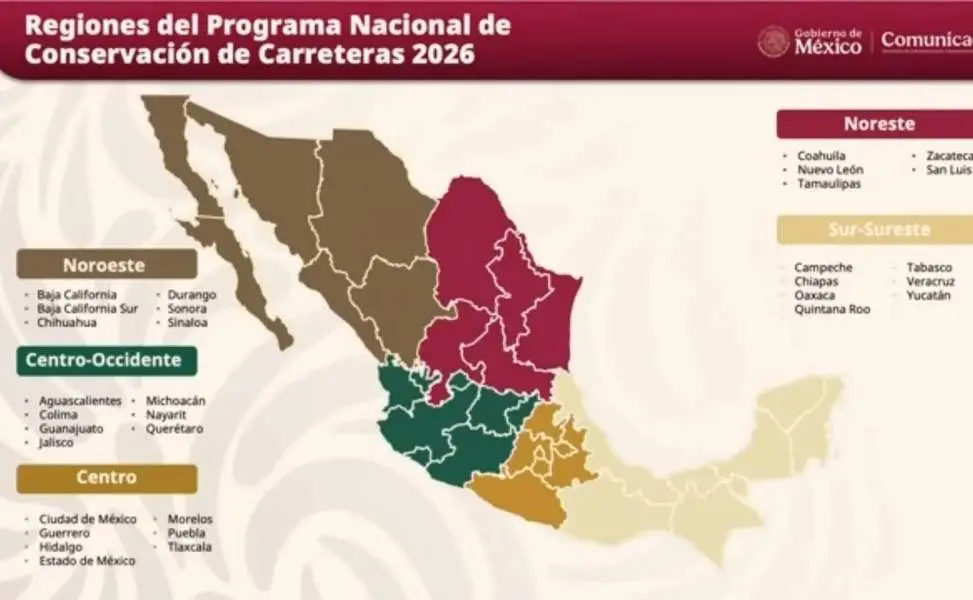

Tlaxcala has been incorporated into the 2026 National Highway Conservation Program, promoted by the Mexican government, as part of the Central Region, which also includes the states of Mexico, Guerrero, Hidalgo, Morelos, and Puebla.
The state’s inclusion is part of a preventative conservation strategy aimed at addressing the highway network before deterioration leads to risks to road safety and higher rehabilitation costs.
For the Central Region, the program includes an investment of 7.243 billion pesos and work on 1,998 kilometers of highways during 2026, with projects planned for priority corridors and routes that strengthen regional mobility.
The preventative approach prioritizes regular maintenance and conservation actions to extend the useful life of the highways, reduce accidents, and ensure the continuity of traffic on strategic routes.
In the case of Tlaxcala, its participation in this federal program will allow for anticipating potential impacts, improving road conditions, and strengthening interstate connectivity through federal highways that cross or directly affect the state, such as routes 117 (Mexico City–Tlaxcala–Puebla), 119 (Apizaco–Huamantla–El Carmen Tequexquitla), 121 (Tlaxcala–Chiautempan–Puebla), and 136 (Apizaco–Calpulalpan–State of Mexico), in addition to the strategic Mexico City–Veracruz corridor, which connects the state to the Altiplano Corridor.
These roads are essential for the daily commute of people, the movement of goods, and Tlaxcala’s economic integration with central Mexico, making their timely maintenance crucial for road safety and regional competitiveness.
Regional planning also facilitates interstate coordination that optimizes resources, intervention times, and results.
Governor Lorena Cuéllar Cisneros emphasized that this inclusion also strengthens attention to the state highway network by creating a comprehensive vision of connectivity.
“Highway maintenance is not just an infrastructure issue; it’s a matter of safety, development, and well-being for families. In this way, we reinforce the planning and maintenance of our state network so that the people of Tlaxcala can travel more safely and efficiently,” she stressed.
Tlaxcala’s inclusion in the program underscores the importance of prevention as a public policy in infrastructure: addressing issues today to avoid risks tomorrow, ensuring safe roads, and sustaining the economic and social activity that depends on a reliable highway network.

Source: lajornadadeoriente