The resurgence of measles cases in Mexico has triggered health alarms, according to the Ministry of Health, which has reported more than 7,000 cases and 27 deaths during the first two months of 2026, with a particular impact on children and people with weakened immune systems.
This situation, which jeopardizes the containment of preventable diseases, is a consequence of declining vaccination coverage, a phenomenon noted by epidemiologist Pablo Francisco Olivia Sánchez in the UAM Weekly.
The specialist points out that Mexico interrupted local transmission of the measles virus in 1995, but the progressive decline in vaccination now threatens to re-establish viral transmission chains.
Why is there a resurgence of measles? “The current outbreak cannot be understood as a sudden or isolated phenomenon; it is the result of a progressive decrease in vaccination coverage over several years,” Olivia Sánchez noted.
The epidemiologist explained to Semanario UAM that the low coverage, currently around 71%, falls far short of the 95% threshold needed for the disease to be considered under control:
“Before the 1990s, Mexico achieved coverage rates close to 95% with complete vaccination schedules; now, according to recent national surveys, they hover around 71%, well below the threshold necessary to consider a disease under control.”
One of the essential factors contributing to the country’s high case rates, argues Oliva Sánchez, is that measles is among the most contagious diseases: a single case can generate between 12 and 18 infections in susceptible individuals.
This high transmissibility necessitates maintaining high immunization rates to prevent the virus from finding susceptible populations. The epidemiologist emphasized: “When herd immunity is not achieved, the virus finds ideal conditions to spread, and that is what we are seeing.”
Epidemiological surveillance is conducted by monitoring exanthematous diseases—characterized by skin rashes—and confirming cases through laboratory tests, which allows for the identification of ongoing transmission chains. While many recent outbreaks have originated with imported cases, the greatest danger arises when the virus reaches communities with low immunity.
The specialist warned that the risk not only affects children, as infants, adolescents, and adults without complete vaccination schedules or a reliable vaccination history can also contract the disease and develop complications.
Among the serious consequences of measles are pneumonia, diarrhea, ear infections, blindness, and even encephalitis, an inflammation of the central nervous system that can cause permanent neurological damage.
Another point emphasized was the impact of misinformation surrounding vaccines. Although Mexico does not face as deeply rooted an anti-vaccine culture as some other countries, the circulation of misinformation during the COVID-19 pandemic has permeated both the general population and some healthcare workers. Oliva Sánchez stated, “Disinformation not only affects the general population; it impacts those who should be trusted figures. Combatting it requires clear communication strategies.”
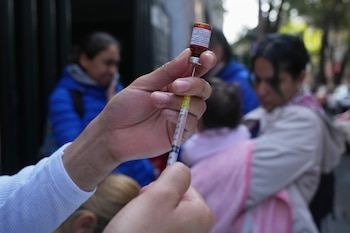
Regarding urgent actions, the researcher emphasized the need to improve the coverage of immunization campaigns uniformly, optimize vaccine distribution, increase public health funding, and strengthen the monitoring of imported cases; he also urged the population to get vaccinated.
Source: infobae