USMCA, Trump’s Tariffs, and the 2026 World Cup: North America’s New Economic Landscape
A decisive year for North America—that’s how Delia Paredes describes her vision for 2026, presented at the 15th HVS MexHIC Mexico Hotel & Tourism Investment Conference under the title “Without a Compass, Without a Referee, and Without a Net.”
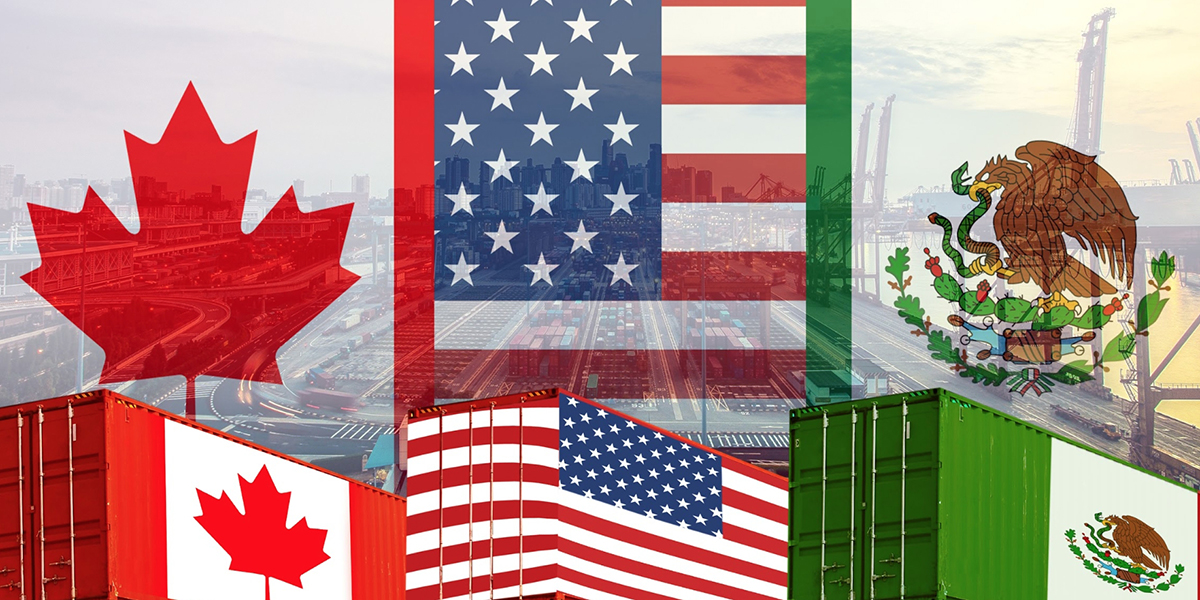
The three nations mentioned—the United States, Canada, and Mexico—will have two memorable events for their respective economies this year, coinciding around the same dates: the review of the USMCA trade agreement in July, and the World Cup (June 11 to July 19), which will take place in all three countries.
The expert commented that some believe the World Cup will not have an impact, as it will not disrupt the economy. But what they can do is postpone decisions until after the sporting competition ends. It could be delayed until the second half of the year, and this could give a little boost to the economies of the three countries—at least Mexico’s—in the first half of the year.
Professor Paredes recalled that when the USMCA was negotiated, President Donald Trump wanted it to last six years and then expire. At that meeting, they convinced him that it shouldn’t be that way, that this had to be seen as a long-term issue. “And what was done was to say, let’s put it in place for 16 years, and in the sixth year we’re going to sit down and review it, not renegotiate it. The review would be about what we’re happy with, what we’re not, and what we can do. That’s where we are now.”
“There’s been a lot of talk about this because the United States has a process in which, 180 days beforehand, it has to hold consultations, requesting feedback on how the people are doing.” The truth is, this has already started, and the feedback is positive; in other words, there’s no desire on the part of the United States to end the USMCA.”
The World Cup could give the Mexican economy a bit of a boost in terms of infrastructure, because the stadiums already exist. $12.5 million was invested in the Guadalajara stadium, $750 million in the renovation of the airport and Azteca Stadium, and $418 million in the Monterrey stadium. “While it’s not a significant expenditure or a special boost from the investment and infrastructure side, it could be a boost to consumption, such as the purchase of durable goods like televisions and dining out or gatherings to watch the matches.”
On another note, Delia Paredes continued, at the 2026 World Economic Forum in Davos, a survey was conducted among business leaders asking them what they consider to be the existing economic risks, divided into short-term and long-term. The top ten risks in both the short and long term are not economic; they are geopolitical and technological. and social issues. “And there’s no doubt we’re seeing it, the issue of geopolitical confrontation, since every day we have a new topic to discuss, to analyze.” In fourth place are extreme weather events, such as global warming and climate change.”
This year, advanced economies are expected to experience stable growth, perhaps in the United States, which could grow by 2-2.5%, especially due to technological investment. The Eurozone will grow between 1.3-1.4%, with countries in the area like Spain, France, Italy, and Germany standing out. China is moving away from the 6-7% growth rates of 5-6 years ago; now, IMF estimates are around 4.5%. Brazil experienced a slowdown in 2025 and is expected to recover.
According to the expert, Trump is using tariffs as a method to get what he wants. Tariffs have evolved, going from being tools to correct trade imbalances to being used for various purposes. And he has three arguments for imposing the tariffs.
The first is Section 232—steel, auto parts, wood products, and pharmaceuticals—which carries a 25% tariff, lower for products entering via Mexico. Mexico is in a better position compared to the rest of the world because most of the products that reach North America enter through Mexico, resulting in a lower tariff. Then there’s Section 301, which addresses unfair competition, and which is being used primarily against China.
And finally, there’s the IEEPA (International Emergency Economic Powers Act), which allows Trump to impose tariffs by declaring an international emergency. He already implemented these tariffs in April 2025.
Source: realstatemarket