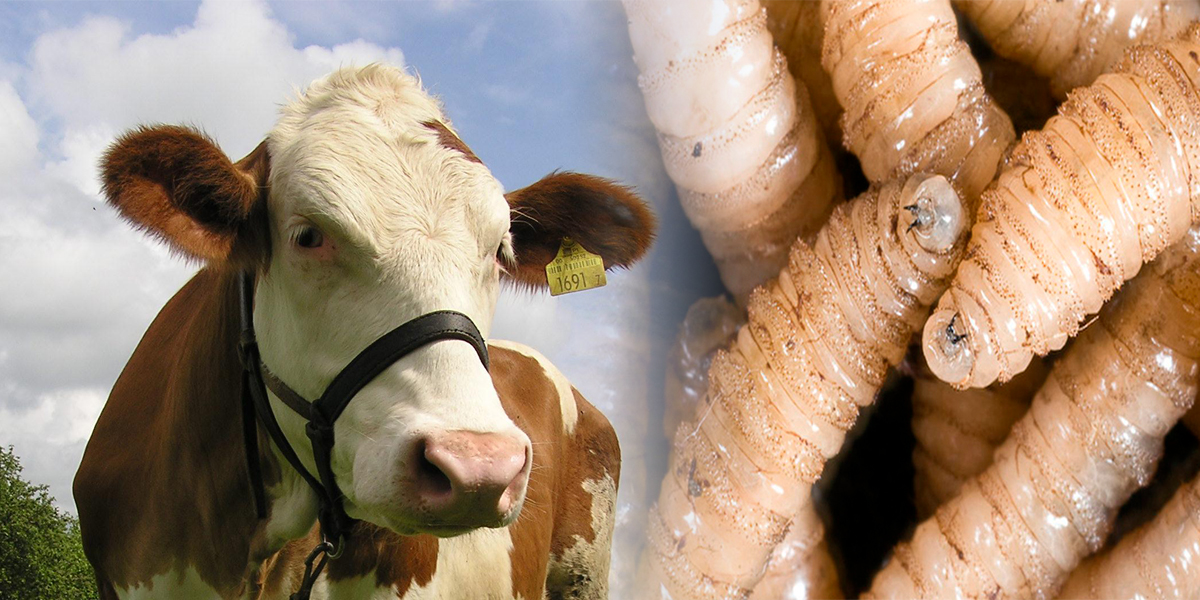

Tamaulipas, one of the states with the least screwworm presence, managed to reduce 86% of reported cases (23), reported the Ministry of Agriculture.
Tamaulipas, one of the states with the least screwworm presence, managed to reduce 86% of reported cases (23), reported the Ministry of Agriculture.
In a press release, the agency highlighted that in the state of Tamaulipas, there are only three active cases of cattle screwworm (GBG), out of a total of 23 reported in December, as a result of the health strategy implemented with livestock associations, coordination with the state government, and the population in general.
It should be noted that three states concentrate the majority of cases, with Chiapas leading the way (5,772 cases), followed by Oaxaca (2,524) and Veracruz (2,286).
The National Service of Health, Safety and Agri-Food Quality (Senasica), reported that in the monitoring and combat of the pest, consistent results were observed with a downward trend, “since in the first week of February no fertile fly was detected in the 154 traps installed, in contrast to what was reported at the end of December 2025, when 28 insect captures were recorded.”
It is important to note, the agency added, that since the detection of the first cases, sanitary brigades were deployed to actively search for affected animals in production units.
Juan Carlos Anaya, general director of Grupo de Consultores de Mercados Agrícolas, commented in this regard that “a fundamental pillar of the strategy focuses on maintaining containment in the emergency zone of the southeast. This is achieved through a series of rigorous verification and inspection measures, including the bathing of cattle and the application of ivermectin. It is crucial to note that the responsibility for this containment is distributed throughout the chain, involving the rancher, the collector, and the feeder, with the active surveillance of Senasica.
He also added that in order to strengthen eradication capacities, the urgent need to start up the plants in Metapa, in Chiapas, and Edinburgh, in Texas, has been pointed out. “The objective of these facilities is to increase the production of sterile flies for their subsequent release in the recreation centers, thus increasing the effectiveness of the sterile insect technique.”
Until February of this year, there was a record of 628 active cases with a downward trend, after 877 active cases were reported in January. The cumulative total is 15,277 cases, while there are 14,649 controlled cases.
According to data recorded as of December 2025, it is estimated that 1,207 million head of cattle have been left without the possibility of being exported, which translates into a massive loss of foreign currency amounting to 1,448 million dollars.
The impossibility of marketing the animals in the U.S. market has forced a saturation of the domestic market, causing a drastic drop in the value of the assets.
Source: El Economista