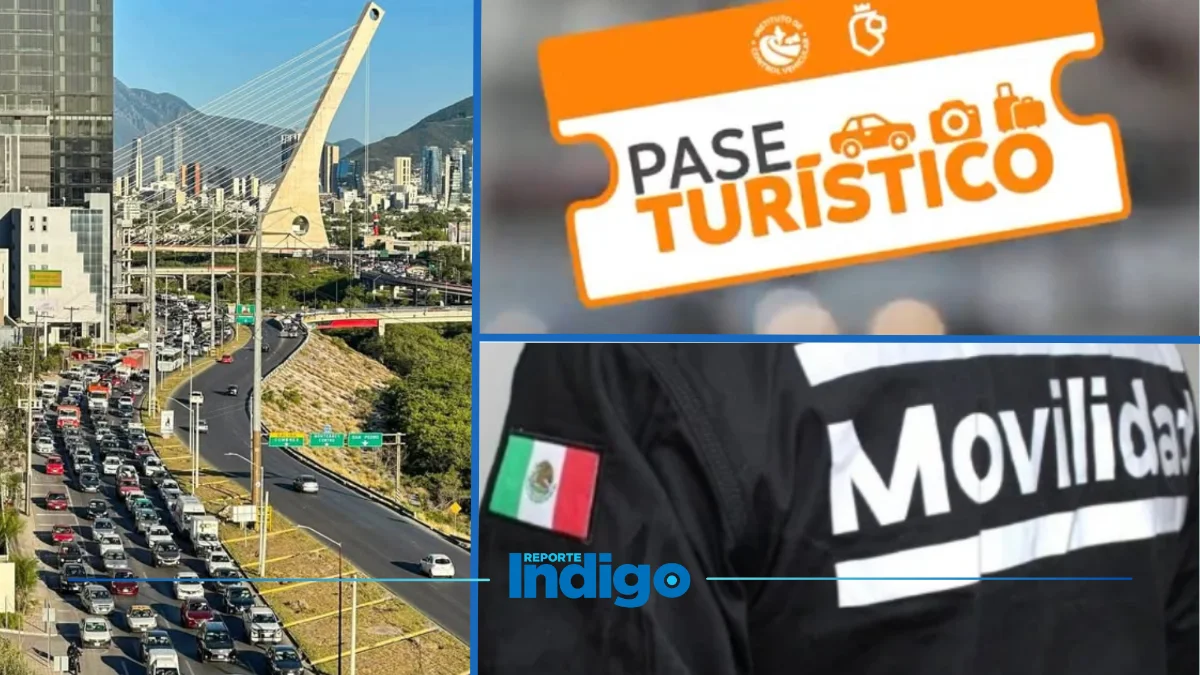

The Officialization of the ICV’s “Tourist Pass” Sparks Controversy in Nuevo León; Vehicles with Out-of-State License Plates Will Have to Apply for a Mandatory Special Permit to Circulate
Amid the controversy surrounding the implementation of the “Tourist Pass” by the Vehicle Control Institute (ICV), an initiative intended to “regularize” drivers traveling with out-of-state license plates in Nuevo León, the State Government announced the dates, requirements, and procedure for completing the application.
The Controversial “Tourist Pass” Implemented in Nuevo León
According to what was published in the State Official Gazette (POE) last Friday, September 4, those interested will be able to apply for the “Tourist Pass” online and free of charge, provided that they have a vehicle registration card, driver’s license, and insurance policy, all of which must be valid, in addition to providing a contact number and email address.
The procedure is mandatory for private automobiles to be able to circulate with out-of-state license plates in Nuevo León.
This temporary permit will have a maximum validity of 30 days, meaning that those who need to extend their stay for academic, personal, or work-related reasons will have to apply for the Prolonged Stay Vehicle Registry (RVEP), which is also available through the ICV.
Those traveling with out-of-state or foreign license plates without having the Tourist Pass or the RVEP risk being fined by state authorities and municipal traffic officers; so far, the amount of the fine is not known with certainty, or even whether repeat offenses could constitute grounds for the vehicle to be impounded, as occurs with other authorities.
The program will come into effect 45 days after its publication in the POE, that is, starting next Wednesday, October 21.
Where Does the Initiative Come From?
The idea of “containing” the circulation of out-of-state license plates in Nuevo León is not new; for a couple of years, different sectors have been considering the possibility of establishing a program to regularize the passage of automobiles from other states for security and control purposes.
In October of last year, for example, the head of the Security Secretariat, Gerardo Escamilla, anticipated a “special” review of these types of vehicles because, according to a recent analysis, a significant percentage of the high-impact crimes committed in the state involved automobiles with license plates that were not from Nuevo León.
Months later, in April 2026, the Nuevo León Congress approved the creation of the “Tourist Pass” as part of a series of reforms to the Mobility Law; despite its approval, the measure was not without controversy, as Morena lawmakers voted against it, arguing that it conflicted with the right to freedom of movement established in Article 11 of the Political Constitution of Mexico.
This point has also been supported by various sectors of the population, who view the implementation of the measure as having a merely revenue-raising intention and a certain discriminatory bias against people from other states who reside in the entity.
Source: reporteindigo