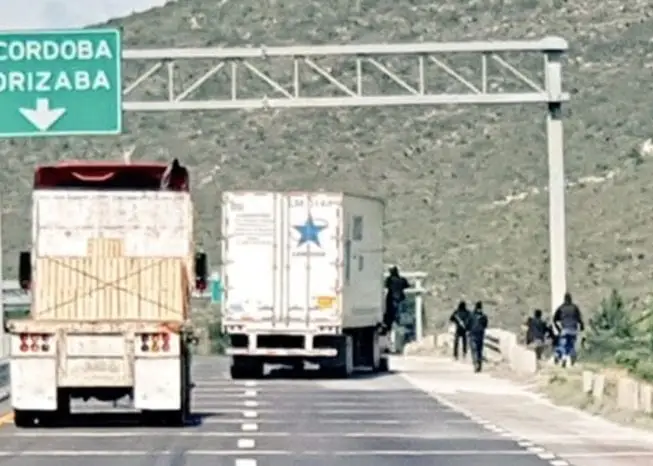

A truck driver travels along the Mexico-Querétaro highway with one unwritten rule: don’t stop, don’t let your guard down, don’t be complacent. He’s been driving for hours. Fatigue weighs heavily, but stopping could cost him his cargo… or worse.
In Mexico, transporting goods is no longer just logistics. It’s survival.
The problem begins where solutions should be found: the rest stops.
There aren’t enough safe, certified, and monitored spaces. So the driver faces an absurd decision:
stop and risk being robbed, or keep driving with accumulated fatigue.
In both scenarios, the risk is high.
The industry talks a lot about efficiency, delivery times, and route optimization. But on the road, the priority is different: arriving alive.
Along the way, it’s not just organized crime. Another unwelcome player appears: corruption.
Checkpoints, “random” inspections, and discretionary fines are all part of the journey. The driver knows it: if he doesn’t pay, he doesn’t move forward.
It’s not on the CFDI (electronic invoice). It doesn’t appear on the invoice. But it exists.
It’s just another operating cost.
One that no one boasts about… but everyone considers.
There are stretches of road where GPS not only indicates distance, but also danger:
Mexico City–Querétaro
Puebla–Veracruz
Bajío Corridors
In these areas, robberies aren’t isolated incidents. They’re patterns.
The driver learns to read invisible signals: suspicious vehicles, changes in traffic flow, areas where “something doesn’t add up.” The road speaks, and those who don’t listen, lose.
The impact isn’t always measured in stolen merchandise.
It’s measured in:
accumulated stress
extended shifts
decisions under pressure
physical and mental exhaustion
The driver doesn’t just drive. They calculate risks all the time.
And meanwhile, the industry faces another problem: fewer and fewer people are willing to get behind the wheel.
There’s no room for romanticizing this.
Insecurity is directly impacting profitability:
more expensive insurance
longer routes to avoid critical areas
loss of cargo
driver turnover
The result is simple: logistics costs rise… and someone pays for it.
Spoiler alert: it’s always the end customer.
The sector continues to react as if this were temporary. It isn’t.
Road insecurity is now structural.
And as long as it continues to be treated as a contingency, the problem will keep growing.
The question isn’t if something will happen.
It’s when.
Companies that understand the current situation are already changing their approach:
real-time monitoring with operational intelligence
risk analysis by route
clear protocols for drivers
collaboration between fleets
The driver is no longer just a driver.
Today, they are the most critical asset in the entire supply chain.
And, paradoxically, the least protected.
Source: transporte