For lovers of archaeology and the beauty of the sea, there is a site in Oaxaca that combines both elements in a truly captivating setting: Bocana del Río.
It is located within the Copalita Eco-Archaeological Park, a protected natural area that is part of Huatulco National Park, formerly known as Ricardo Flores Magón National Park.
In addition to its historical value, it stands out for being situated in a basin surrounded by tropical deciduous forest and for its stunning ocean views.
Copalita owes its name to a Nahuatl word meaning “Place of Copal.” Archaeological remains indicate that it was inhabited from the Late Preclassic period (400 BC – 200 AD), although its greatest period of prosperity occurred during the Classic and Postclassic periods.
Research by the National Institute of Anthropology and History (INAH) has suggested that the site may have functioned as a civic-ceremonial center and a hub for trade in the coastal region.
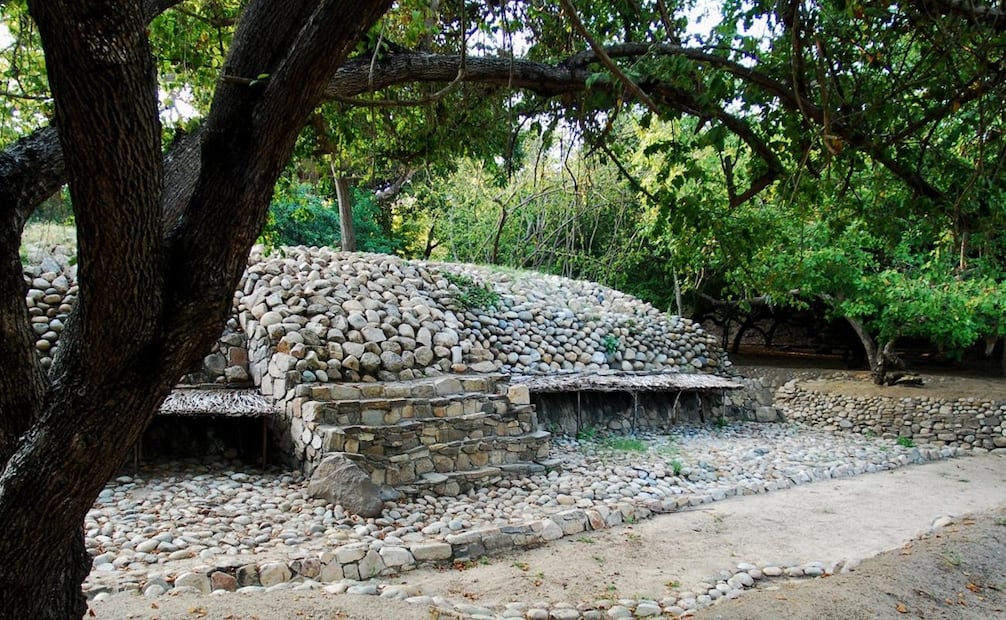
Among its main structures, the Acropolis stands out, an elevated architectural complex that archaeologists interpret as a space intended for ceremonial activities and possibly a residence for high-ranking individuals.
Another of the most representative attractions is the so-called Temple of the Serpent, a rectangular structure oriented north to south, with approximate dimensions of 9.30 meters wide by 21.25 meters long and 3.72 meters high. Its name comes from the stone fragments with reliefs alluding to serpents found at the site.
This structure is located at the entrance to the main plaza, one of the largest spaces in the archaeological complex.
The combination of cultural heritage and natural landscape makes Copalita a unique alternative for those visiting Huatulco who are looking for activities beyond the beaches.
How much does it cost to enter the archaeological zone?
Entrance to the Bocana del Río archaeological zone is free, according to the official INAH website.
Although it may vary depending on the season, as with other archaeological sites in the country, admission is free for senior citizens with an INAPAM card, people with disabilities, retirees, and pensioners.
The archaeological zone is located on the banks of the Copalita River, approximately 317 kilometers southeast of the city of Oaxaca de Juárez and about 10 minutes from downtown Huatulco.
By public transportation: Buses depart from the Oaxaca Bus Terminal to Santa María Huatulco or La Crucecita. The journey takes between 6 and 8 hours, depending on the type of service and road conditions.
By private vehicle: You can reach the site via Federal Highway 175 (Oaxaca–Pochutla) or by taking the Barranca Larga–Ventanilla highway, which significantly reduces travel time to the coast.
Once in Huatulco, the entrance to the park is well signposted and is located a short distance from the main hotel areas.
Source: oaxaca.eluniversal