The “Shield of the Americas” summit convened by Donald Trump in Miami will bring together Latin American leaders to coordinate security, migration, and strategy in the face of China. Mexico was not invited, highlighting political tensions with Washington and opening a new chapter in regional geopolitics.
On March 7, 2026, the city of Miami will host the “Shield of the Americas” summit, an initiative promoted by US President Donald Trump to consolidate a bloc of regional allies focused on continental security, combating organized crime, and strategic cooperation.
The initiative aims to strengthen a hemispheric alliance aligned with Washington’s vision, amidst growing geopolitical tensions. Analysts interpret this project as a modern update of the Monroe Doctrine, now redefined under the so-called “Trump Corollary,” aimed at reinforcing US leadership in the region.
More than a diplomatic meeting, the summit seeks to build a regional coalition with clear strategic objectives, especially in the face of the advance of extra-regional powers seeking to expand their economic and political influence in Latin America.
The White House, through its spokesperson Karoline Leavitt, confirmed the invitation to 12 Latin American leaders considered strategic partners of the United States. Among the attendees are leaders closely aligned with Washington’s agenda, such as Javier Milei (Argentina), Nayib Bukele (El Salvador), Daniel Noboa (Ecuador), and Santiago Peña (Paraguay).
Also participating will be the presidents of Bolivia, the Dominican Republic, Honduras, Panama, and Trinidad and Tobago, as well as the president-elect of Chile, José Antonio Kast, who will assume office a few days after the regional meeting.
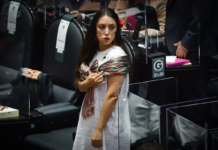
However, the list reveals a significant absence: Mexico. The government of Claudia Sheinbaum has maintained a position of sovereignty and autonomy in foreign policy, avoiding automatic alignment with the security priorities of the Trump administration, which has created political distance between the two governments.
Security, Migration, and Drug Trafficking at the Center of the Agenda
One of the central themes of the meeting will be the fight against organized crime and drug trafficking, problems that affect much of the continent. In this context, Costa Rican President Rodrigo Chaves welcomed the invitation as recognition of his country’s strategy against criminal networks.
Chaves will attend alongside President-elect Laura Fernández, emphasizing that being part of this bloc of eight to twelve allied countries represents international support for Costa Rican security policy and an opportunity to strengthen its regional leadership.
In addition to security, the summit will address irregular migration, police cooperation, and the fight against transnational criminal organizations. These discussions are taking place amid a tense regional climate, following recent U.S. actions against political actors and illicit networks in Latin America.
The geopolitical objective: to curb China’s expansion in Latin America
Beyond security, the “Shield of the Americas” summit is part of a long-term geopolitical strategy by the United States: to contain China’s growing influence in Latin America.
Washington seeks to prevent Xi Jinping’s government from expanding its presence in strategic sectors such as critical minerals, logistics infrastructure, food production, and key trade routes in the Western Hemisphere.
This strategy aims to create a “regional shield” that keeps strategic resources under US influence, thereby strengthening the continent’s economic and political security in the face of global competition.
Source: debate