What began a decade ago in Querétaro as a unified purple wave may now be showing cracks. For many women, the march has gone from being a space for catharsis and a demand for justice to a stage for internal confrontation. This phenomenon is not a lack of commitment to the cause, but rather a response to growing polarization. “I used to go with friends, cousins, and aunts; for the last two years, we decided not to go because it’s unpleasant to see the groups so divided. If you don’t do what they want, they even start saying nasty things to you. It’s sad that these divisions exist among women,” acknowledges lawyer Laura Ugalde.
Ana Gabriela Garrido García, director of the Faculty of Law at the University of London, points out that these divisions primarily affect those who march independently. From academia, the position is clear: the struggle must be comprehensive. Garrido acknowledges that the institution’s focus is on gender equity, providing psychological and legal support to both female and male students who are victims of violence or harassment, understanding that justice should not be selective but rather institutional and humane.
Outside of private institutions, the phenomenon also extends to student groups. Paulina González, co-founder of the MenstruAcción group, explains that “the younger generation of adults and adolescents don’t participate; they have fewer cognitive skills, are inhibited, less communicative… there is definitely a perceived lack of awareness that existed during the pandemic; they are showing disinterest in all areas.”
Paradoxically, safety has become the main reason for dropping out. For Graciela N., the motivation to march stemmed from tragedy: the femicide of a close friend, a case that shocked the UAQ community. However, the experience in the streets turned hostile. “At the last march, several women left fighting; we definitely won’t march this year, but we will certainly not stop raising our voices,” she affirms.
This perception of insecurity is shared by student groups, such as students from Tec de Monterrey, who, after organizing as activists, decided to stop attending. “It’s an event full of violence… women want to be free from it, and instead of feeling safe, you go in fear that the march will get out of control,” they explain, emphasizing that the fear no longer comes only from the outside, but from the dynamics of the contingent itself.
Fernanda López, project manager for the student group GenderWatch at Tec de Monterrey, Querétaro Campus, reports noticing a decrease in participation in protests compared to previous years: “In other environments where you live in discomfort, that motivates you to participate; now, those who live in comfort don’t have the initiative to do so.”
Despite their withdrawal from the streets, the numbers justify the urgency of continuing to raise their voices. According to data from the Executive Secretariat of the National Public Security System (SESNSP), Querétaro ended 2025 with a complex trend in gender-based crimes. The state has remained among the top in the nation for emergency calls related to intimate partner and family violence per 100,000 inhabitants. Meanwhile, the National Institute of Statistics and Geography (INEGI), through the National Survey on the Dynamics of Household Relationships (ENDIREH), indicates that in the state, 75.2 percent of women aged 15 and over have experienced some type of violence in their lifetime, a figure that exceeds the national average of 70.1 percent.
Sexual harassment is another unresolved issue that fuels discontent. Reports from the organization “Causa en Común” and figures from the State Attorney General’s Office indicate that complaints of harassment and sexual abuse have shown a sustained increase in the Querétaro metropolitan area, rising from 13 to 23 in January 2025. This represents a 77 percent increase compared to January 2024, according to figures from the Executive Secretariat of the National Public Security System.
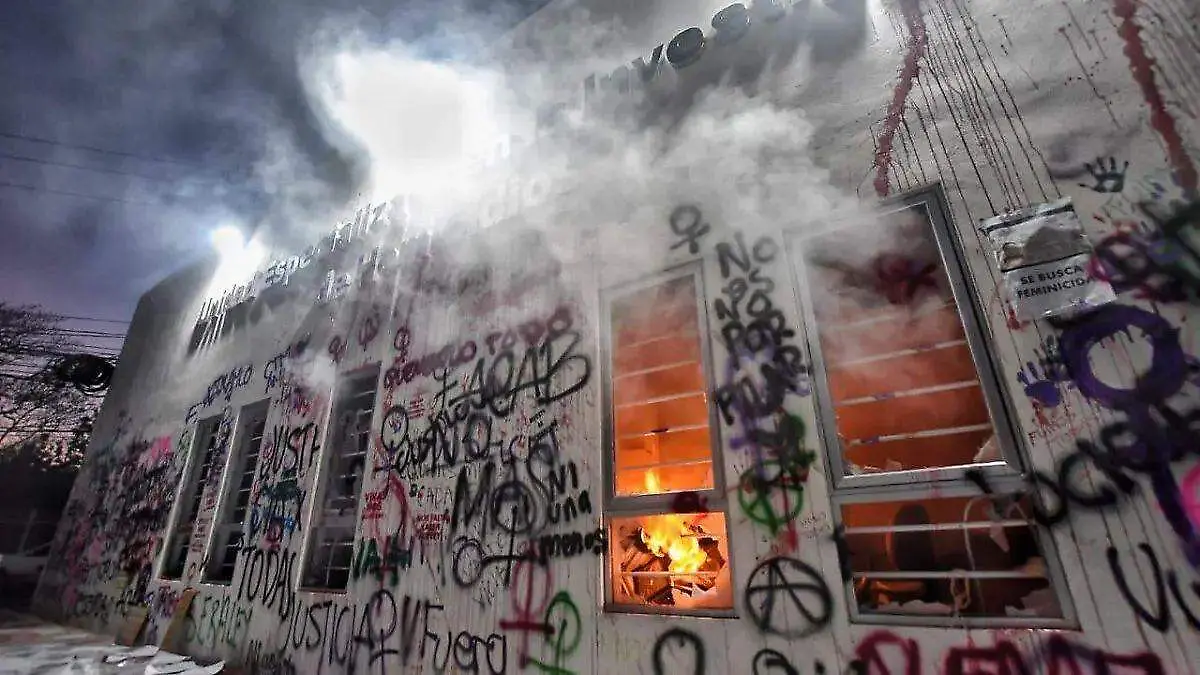
However, the gap between reporting and obtaining a conviction remains the primary driver of citizen frustration. This lack of real justice sometimes triggers iconoclasm and radicalism in protests, elements that ultimately discourage women seeking more institutional or peaceful means of demanding justice.
Source: oem