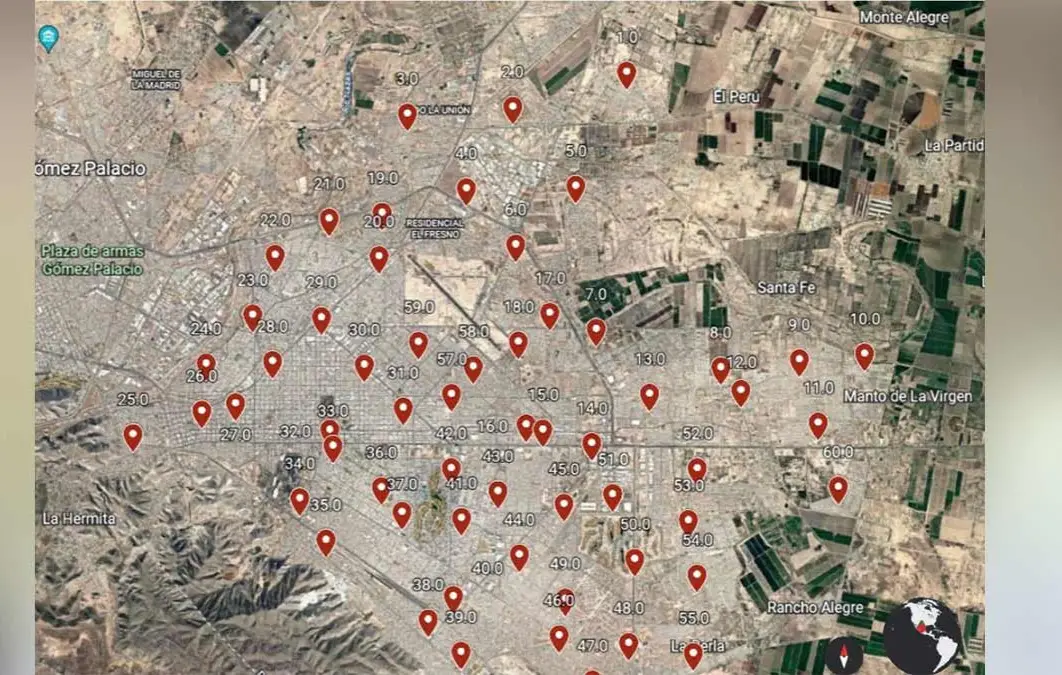

What travels on the wind is not just dust, but a passive indicator of the pollution breathed by residents of Coahuila. Researchers from the Center for Research in Applied Chemistry analyzed 391 samples in 12 municipalities of the state using high-precision technology to map the presence of toxic metals in urban dust.
The study identified pollution hotspots in different regions. In Torreón, high levels of lead, chromium, and arsenic were detected; the latter had already been found in the water supply. In Ramos Arizpe, the elements detected were copper and nickel, linked to the automotive industry. On the border, in Acuña and Piedras Negras, zinc and lead reflect the intense vehicular traffic and fuel consumption.
Coahuila’s climate plays a key role in this problem. The drought and constant gusts of wind make dust a highly dangerous vehicle.
Alejandro Lozano, from the Center for Research in Applied Chemistry in Saltillo, explained: “Drought obviously dehydrates the dust in the soil, making it more susceptible to becoming volatile because it lacks water, weighs less, and when strong gusts of wind occur, they lift this dust.”
He added that in an average gust in the state, these particles can rise to about 1.8 meters and even up to 2 meters, so “we are indeed susceptible to potentially inhaling them.”
Using color-coded maps, the researchers were able to identify not only what is being inhaled, but also where these pollutants originate, distinguishing between natural and human-caused sources. Lozano explained that, due to the region’s conditions, “this dust can travel tens of kilometers” and that, although several elements correspond to the local geology, in areas with industrial complexes or corridors they also detected materials that may be related to industrial activity.
The study also warns that the risk is not the same for everyone. Proximity to industrial zones increases the concentration of metals in inhabited areas, and the long-term effects are of greatest concern to vulnerable populations.
“In children, in general, breathing in urban dust containing toxic metals is associated with cognitive and intellectual problems,” said the specialist.
In adults, he added, it is linked to respiratory illnesses, eye allergies, and even more serious conditions such as cancer, leukemia, and skin and blood diseases. He also warned that this is a cumulative effect that can manifest itself 20 to 25 years later.
As part of the recommendations, the specialist proposed conducting these monitoring studies every two years and cross-referencing the information with the Ministry of Health to prevent the “chemical footprint” of cities from becoming an irreversible health crisis.
The project also proposes establishing the first Urban Dust Atlas in Coahuila, as a tool to measure this passive indicator and inform decisions about the environment and the future of its inhabitants.
Source: unotv