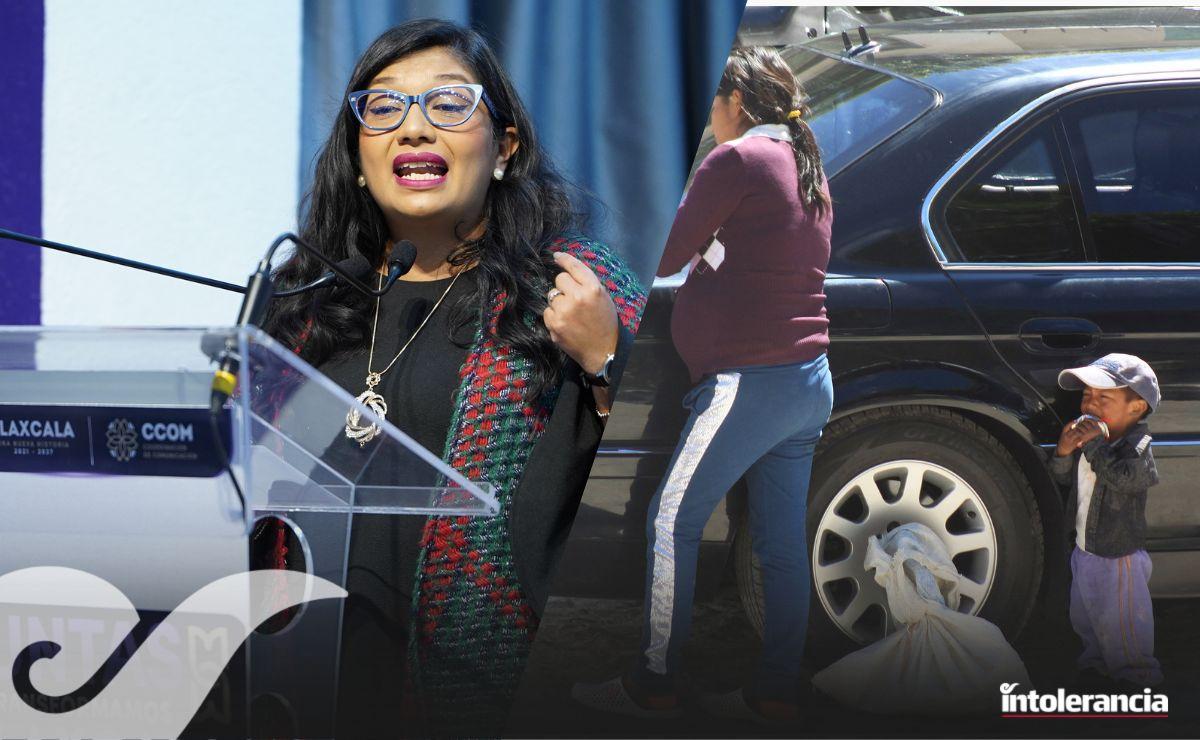
During the daily press conference, Belén Vega Ahuitzi, Executive Secretary of the National System for the Comprehensive Protection of Children and Adolescents (SIPINNA) in Tlaxcala, presented a critical overview of the situation of children in the state, emphasizing the urgent need to combat corporal punishment and the exploitation of minors in public spaces.
One of the most alarming statistics revealed by the official is the prevalence of physical and psychological abuse within families. Vega Ahuitzi reported that, according to studies coordinated with agencies such as INEGI (National Institute of Statistics and Geography) and UNICEF, “at least one in two children experiences this type of violence at home,” referring to corporal and humiliating punishment.
In response to this reality, the Secretariat is promoting the “Positive Parenting” strategy, a program designed to train parents in setting limits without resorting to aggression. She also highlighted the implementation of the SABE System, a direct reporting tool for schools:
“The SABE System is a reporting system where school administrators primarily report when they find a child or adolescent in a vulnerable situation or experiencing any type of violence.”
Regarding the presence of minors soliciting money at intersections and traffic lights, the secretary explained that operations have been carried out resulting in the removal of 18 children. Vega Ahuitzi emphasized that the primary objective is for minors to remain with their families, provided that safe conditions exist:
“We want children to continue living with their families… the vulnerability of parents leads to certain situations.”
However, in cases where the risk is persistent, the law has intervened decisively, with the children being returned to their homes. Most of the rescued minors were reintegrated with their parents or with an alternate relative under supervision.
Meanwhile, only two children have been referred to the Child Protection Center (CAS) because their parents repeatedly abandoned them on the streets after initial interventions.
Finally, the strengthening of the protection structure throughout the state was reported. Currently, 52 municipalities have their municipal protection systems formally established by their city councils. In the remaining eight municipalities, executive secretaries have been appointed and they are in the final stages of formalizing their founding documents. The official assured that the interdisciplinary committee holds operational meetings at least every two weeks to closely monitor each identified case.
Source: intoleranciadiario