Before the year ends, paying for gasoline or passing through a toll booth on the highway will no longer be possible with bills or coins. The federal government’s goal is for these transactions to be done exclusively electronically. For millions of people, this means a direct change in daily life, especially for those who still carry cash in their wallets as a backup.
Claudia Sheinbaum made the announcement at the 89th Banking Convention, in front of representatives from the financial sector, business leaders, and legislators. She explained that this measure is part of a broader plan to digitize a portion of the country’s economic activity. The intention is for electronic money to gain ground in areas where cash still holds significant sway.
The news didn’t come alone. The mayor spoke of a complicated international environment due to the escalating conflict in the Middle East. In that context, she noted that the price of fertilizers had risen 60% and that the price of a barrel of oil had surpassed $100. This scenario is affecting many economies and also putting pressure on the finances of those who depend on cars for work or travel.
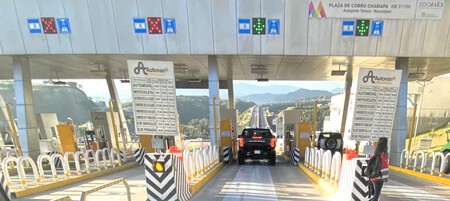
Given this situation, the government is seeking to streamline payments and procedures under a single system. In the case of gas stations and highways, the change aims to ensure that every transaction is recorded electronically. For the average driver, this translates into a new travel rule. Before hitting the road, they will have to check their card, balance, app, or payment device.
Sheinbaum presented this decision as part of a strategy to support the domestic economy during times of uncertainty. She also defended Mexico’s political stability, democracy, and improved security conditions. She even mentioned that, according to the owner of Femsa, 2025 was the year with the fewest robberies at Oxxo stores, a statistic she used to reinforce the message of greater control over commercial activity.
The official plan is not limited to fuel and tolls. The mayor also stated that by the end of this year, the federal, state, and municipal governments must have standardized procedures throughout the country. This path suggests that many processes will operate under similar rules, regardless of the entity, something that could change people’s daily interactions with public offices and services.
Along the same lines, the Banco del Bienestar (Bank of Well-being) is also undergoing a digitization process to move away from the use of cash. The underlying message seems clear: the government wants more payments, support, and transactions to move to electronic platforms. Gas stations and toll booths are just two of the most visible examples because they are part of the daily routine for millions of drivers in Mexico.
At the same time, Sheinbaum spoke about a new investment law that is already being debated in Congress. This bill allocates 5.6 trillion pesos in public and mixed resources by 2030 for energy, trains, highways, ports, health, and water. Taken together, the elimination of cash at gas stations and on highways doesn’t seem like an isolated measure. It appears to be the beginning of a new era for getting around and paying in Mexico.
Source: xataka