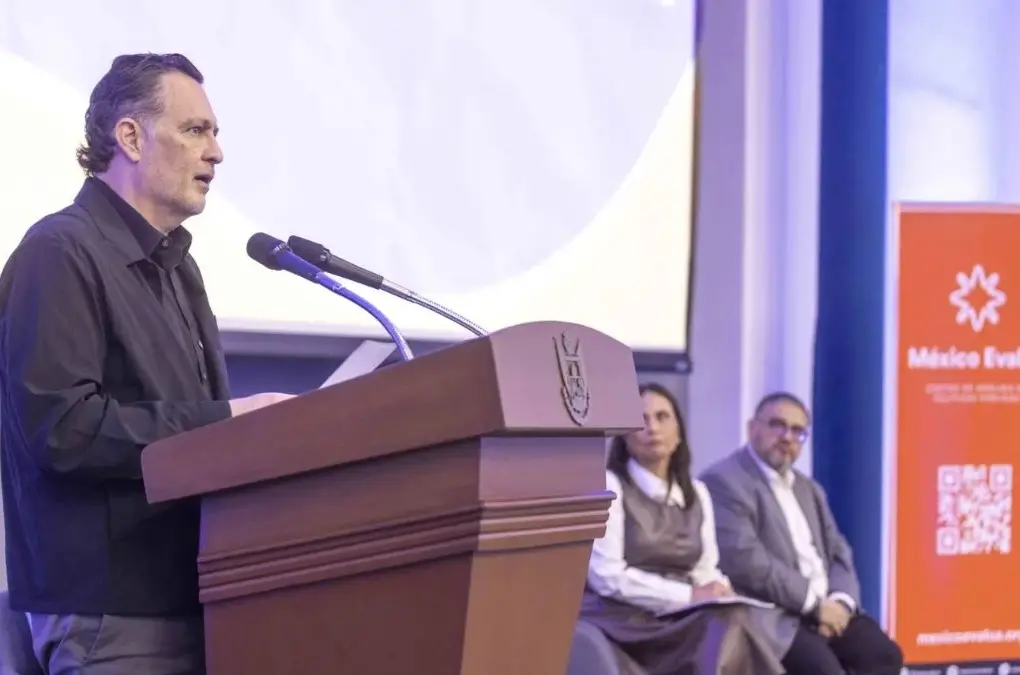

The state of Querétaro is committed to technological development, education, and competitiveness, stated Governor Mauricio Kuri González during the presentation of the study “Equal Learning in Querétaro: Lessons in Educational Strategy,” conducted by México Evalúa. He encouraged young people to be the protagonists of their own story, to take responsibility, and to become involved in their communities.
This ecosystem, comprised of public and private universities, the business sector, and the government, the governor said, has never sought to prioritize low wages, as that would condemn future generations to exploitation or indifference.
He emphasized that failing to promote education and competitiveness weakens the future of Querétaro’s residents, acknowledging that there are still challenges to overcome and much work to be done in the field of education.
However, he asserted that the state has clearly demonstrated its potential, encouraging students to dream big, aspire to more, and strive to be better every day, because ignoring school dropout rates or learning gaps reduces the competitiveness of the public sector.
The state governor emphasized the importance of consolidating strong institutions, a solid rule of law, and citizen participation, which allows young people to not leave their future in the hands of politicians. He also stressed the importance of positioning education as a competitive advantage to guarantee equal opportunities and to train educators to advance in the education sector.
“We have all the capacity and talent, and much to do,” Kuri González stated, expressing confidence in the direction Querétaro is heading and in the fact that studies like “Aprender Parejo” (Learning Equally) allow for a clear identification of what needs to be done to maintain an effective and coordinated educational strategy.
Mariana Campos Villaseñor, director general of México Evalúa, emphasized that the study aims to ensure educational strategies survive changes in administration through institutionalization, clear rules, indicators, transparency and accountability, as well as values-based education and strategic planning.
She explained that the findings reveal genuine progress that deserves recognition, challenges that require strengthening alliances and actions undertaken by the Ministry of Education, and lessons on effective coordination that yields results. She stressed that these advances are not accidental but rather the product of coordinated efforts among government agencies, academia, and the private sector.
Kuri González pointed out that the higher value added per worker in Querétaro is the result of an ecosystem that invests in human capital capable of operating in highly complex sectors such as aerospace and advanced manufacturing, where talent development is key to attracting foreign investment, ensuring quality and efficiency, and making this model replicable in other regions of Mexico.
Marco Antonio Fernández Martínez, from Tecnológico de Monterrey, emphasized that technical leadership, coordination, and the continuity of best practices are key lessons, and stressed that education must offer equity, quality, and relevance to generate social mobility and responsible citizens.
Martha Elena Soto Obregón, Secretary of Education of Querétaro, stated that education is defined by data and evidence, celebrated the state’s achievements in school enrollment and the reduction of educational lag, and mentioned that educational intervention has allowed all state universities and teacher training colleges to access resources, in addition to the fact that more than 87 percent of high schools now have new computer labs.
She highlighted that, although the federal budget per student is lower than in other states, Querétaro receives students from other states, and the coordinated institutional response has allowed for continuity in educational actions, consolidating education as an engine of competitiveness and opportunity for the people of Querétaro.
Source: reporteindigo