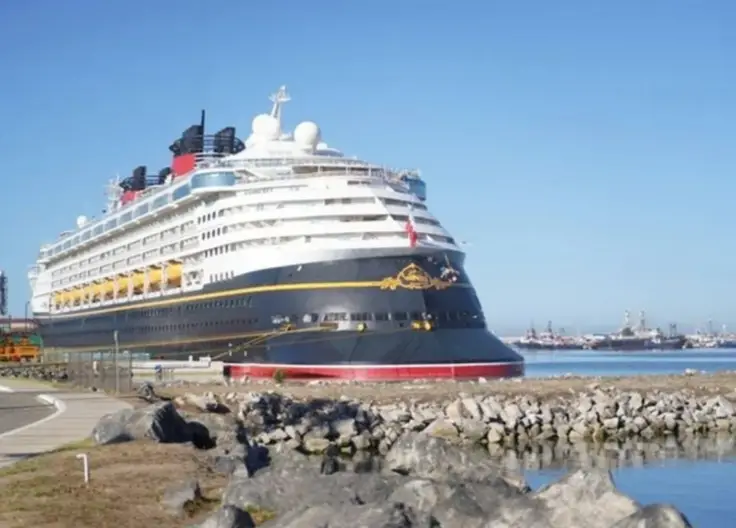

A third specialized cruise ship pier is planned to accommodate vessels up to 365 meters in length.
The project aims to boost the cruise sector’s competitiveness in Ensenada.
The Port of Ensenada plans to build a third specialized cruise ship pier to accommodate vessels up to 365 meters in length, representing the latest generation of cruise ships.
The project seeks to expand the terminal’s operational capacity and maintain the port’s position on the main Pacific cruise routes.
Currently, the Ensenada Cruiseport Village terminal has two berths: Pier 1, which accommodates ships up to 335 meters, and Pier 2, with capacity for vessels up to 350 meters.
The new Pier 3 would allow for larger ships with a greater number of passengers.
The project would cover approximately 15.98 hectares within the port area and is expected to take about 12 months to complete, with an estimated lifespan of 50 years.
The infrastructure will include:
maneuvering areas
boarding gangways
electrical installations
internal roads
parking for tourist transportation
access control system.
Dredging and leveling of the seabed to an approximate depth of 11 meters is also planned, a necessary condition to guarantee safe approach and departure operations for large cruise ships.
The Ministry of Environment and Natural Resources held a public meeting as part of the environmental consultation process.
The agency’s representative in Baja California, Ricardo Javier Cárdenas Gutiérrez, stated that these exercises aim to ensure transparency and citizen participation.
Ensenada is one of the country’s main cruise destinations. In 2025, it received more than 1.3 million passengers on approximately 360 arrivals, representing a 41.7 percent increase compared to the previous year, according to data from the Ministry of Tourism.
This influx of tourists generated an estimated economic impact of 1.2 billion pesos, equivalent to between 60 and 75 million dollars, primarily in commerce, transportation, gastronomy, and local services.
Each cruise ship can contribute between 200,000 and 300,000 dollars per port call to the city’s economy.

Source: bieninformado