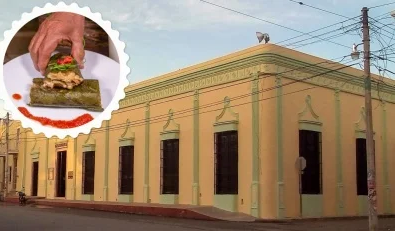

Espita is a corner of eastern Yucatán, about 51 km north of Valladolid, just over two hours from Mérida, that has everything a Mexican traveler could wish for: intact colonial architecture, picture-perfect cenotes, henequen haciendas with centuries of history, and a cuisine so deeply rooted in Mayan culture.
It was declared a Pueblo Mágico (Magical Town) in 2023, along with Tekax and Motul, and since then it has gained tourist attention without losing an ounce of its local essence. Here, time seems to have stood still: its cobblestone streets, stone houses, and 17th-century Baroque church coexist with the tranquil rhythm of traditional Yucatecan life.
What makes Espita special is not just its picturesque setting, but the wealth of authentic experiences it offers within a very accessible radius: living Mayan culture, nature, history, and flavors you won’t find anywhere else.
The first landmark you’ll see upon arrival is the Church of San José, built by the Franciscans in the early 17th century and rebuilt in the 18th century after a fire. Its style is both austere and imposing, and it’s no coincidence that it stands on what was once a Mayan ceremonial center: the conquistadors often built their temples atop sacred indigenous buildings to impose the new faith.
Across from it, Melchor Ocampo Park, with its central kiosk and leafy trees, is the town’s natural meeting place. On Sundays, locals stroll, grandparents chat on the benches, and children run freely. That unhurried pace, dear tourist, is priceless.
And if you’re a fan of photos with a story, don’t miss the Old Train Station, dating back to 1888 and partially covered by vegetation, which has become one of the most photogenic and melancholic spots in the area.
The Henequen Haciendas: When Yucatán Sold Its Goods to the World
Between 1860 and 1910, Yucatán was one of the richest states in Mexico thanks to henequen, nicknamed “green gold.” Its natural fibers were used for yarn, fabrics, sacks, and industrial ropes that were exported worldwide, and the haciendas surrounding Espita were part of that industry.
Hacienda Santa Teresa Kancabá, just 6 km from the town center, is today one of the most vivid remnants of that era. Its name in Mayan means “water in red earth,” and in addition to its impressive architecture, it offers:
Tours of its historic facilities
Access to a private cenote on the property
Lodging options in a completely rural and tranquil setting
After the Mexican Revolution, the lands were expropriated, and by 1930 almost all the haciendas had disappeared or fallen into ruin. That Kancabá is still standing and open to visitors is, frankly, a heritage miracle.
As a true Yucatecan destination, Espita boasts its cenotes. The area has several accessible cenotes that are less crowded with tourists, making them a much more intimate experience than the famous cenotes of the Chichén Itzá–Tulum Corridor.
The most outstanding are:
Cenote Hats-uts: accessible from the Ya-axche Senderos Celestes nature trails, ideal for swimming in clear waters surrounded by lush vegetation.
Cenote Dzonotoch: perfect for peaceful family visits.
Private cenote at Hacienda Kancabá: the most exclusive and historically contextualized experience.
If you combine a swim in a cenote with a visit to the hacienda and a freshly made kots’ob tamale, you have the perfect day out in eastern Yucatán.
The Kots’ob, the most unique tamale you’ll ever eat
Okay, here’s the most important part. If you only do one thing in Espita, make it try the Kots’ob (also called xmakulan uaj). This tamale is the town’s signature dish, and you won’t find anything like it anywhere else in Mexico.
Its name comes from the Mayan word k’ots’, which means “to roll” or “to wrap,” and the recipe has been passed down for centuries among the women of Espita.
What’s in the Kots’ob?
Corn masa as a base
Ibes (tender white beans), a key and local ingredient
Ground pumpkin seeds
Fresh scallions
Habanero pepper to taste
Everything is wrapped in xmakulán leaves (hoja santa), which gives it a unique and unmistakable herbal aroma. And the most fascinating thing: it can be prepared in four different ways, each with its own character: boiled, fried, baked, or in a pib (buried in an earth oven, the most ancient and ceremonial preparation).
The gastronomy of Espita goes far beyond kots’ob. Here are the must-try dishes for a complete culinary tour:
Espita-style tripe stew: one of the highest-rated in the entire state
Venison pipián: a pre-Hispanic stew with pumpkin seeds and chili peppers
Cochinita pibil, regional style, cooked in an earth oven
Papadzules: tortillas in pumpkin seed sauce filled with hard-boiled egg
Chaya with egg: a humble, nutritious, and delicious breakfast
Beans with pork. It’s eaten on Monday, as Yucatecan tradition dictates.
Panuchos and salbutes are the must-try snacks on any visit to Yucatán.
The best place to eat authentic Kots’ob is at the stalls in the municipal market or during the December Fair, where the town’s women prepare them by hand.
Aside from this, the best-rated options on TripAdvisor and Google Maps for those visiting the town are:
Casona Los Cedros: Mexican and Latin cuisine in an impeccable colonial setting; it’s the #1 restaurant in the municipality on TripAdvisor.
Café Estación 1888: artisanal coffee, snacks, and pizza in the iconic railway building; 4.1-star rating.
Juicebar and Grill El Jardín: a fusion concept with fresh juices. 4.5-star rating, ideal for plant-based travelers
Cocina de Humo Restaurant, Herencia de Melchor: traditional Mexican cuisine with an emphasis on artisanal techniques
Hacienda Ticuch Restaurant: authentic Yucatecan cuisine in a rural setting; 4.2-star rating and a highly recommended country experience
How to get to Espita from nearby cities
From Mérida: By car, travel a little over two hours on the federal highway or toll road towards Valladolid and then north towards Espita. An alternative is to take the Maya Train to the Chichén Itzá station and then continue by taxi.
From Valladolid: The most convenient and fastest option because it is less than an hour north on the free road, and you can also get there by taxi at affordable rates.
From Cancún: This location is approximately 2.5 hours away on the toll highway to Valladolid and then towards Espita.
Source: guacamole.radioformula