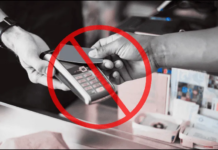

Making bank transfers has become a very common and completely normal practice for millions of Mexicans, but did you know that doing so this way could result in a fine?
Starting in 2026, this common habit could become a red flag for the Tax Administration Service (SAT) as it seeks to have greater control.
What changed with bank transfers?
2026 brings a host of economic adjustments, such as the increase in the minimum wage, new tax criteria, and now, stricter oversight of electronic transfers.
This has raised many concerns among taxpayers who fear receiving a fine for a simple banking error.
It’s important to clarify that the SAT will not collect a direct tax on electronic transfers.

Since 2008, there has been a Cash Deposit Tax (IDE), which applies only to cash deposits exceeding 15,000 pesos per month.
Electronic transfers, transfers between accounts, and checks are exempt from this tax.
The difference is that, in 2026, the SAT (Mexican Tax Administration Service) will strengthen its mechanisms for detecting unusual transactions, undeclared income, or movements that do not correspond to the taxpayer’s tax activity.
In other words, if money comes in, it must have a clear explanation; otherwise, there will be problems.
Electronic Transfers That Could Cause Fines
Although not all transfers are grounds for penalties, certain transactions can trigger tax alerts.
Among the main cases that could result in fines are:
Cash deposits exceeding 15,000 pesos per month: if you cannot justify their origin, the fine can reach up to 34,000 pesos.
Undeclared Income: receiving a transfer and not including it in your monthly or annual tax return can lead to audits. Unjustified deposits or transfers: When there are no invoices, contracts, or receipts, the SAT (Mexican Tax Administration Service) may consider them undeclared income.
Use of third-party accounts: Moving money through family or friends’ accounts without legal backing can be interpreted as an attempt to hide income.
Failure to issue tax receipts: If your tax regime requires it and you fail to issue an invoice for a received transfer, your account may be audited.
Loans without a contract: If someone transfers money to you and there is no signed contract, the SAT will consider it taxable income.
What you should keep in mind is that your bank transactions must match what you declare and the type of activity you carry out.

How to avoid SAT fines?
Avoiding problems with the SAT isn’t that complicated. The main recommendation is to maintain order and transparency in your finances.
Just follow these recommendations:
Keep receipts for all significant transfers.
Formalize loans with signed contracts.
Issue invoices when your tax regime requires it.
Verify that your declared income matches the deposits in your account.
Include all income on your annual tax return, which in 2026 is due by April 30th.
The SAT (Mexican Tax Administration Service) does not seek to impose penalties without cause, but rather to identify irregularities that, over time, could become a bigger problem.

Source: chicmagazine