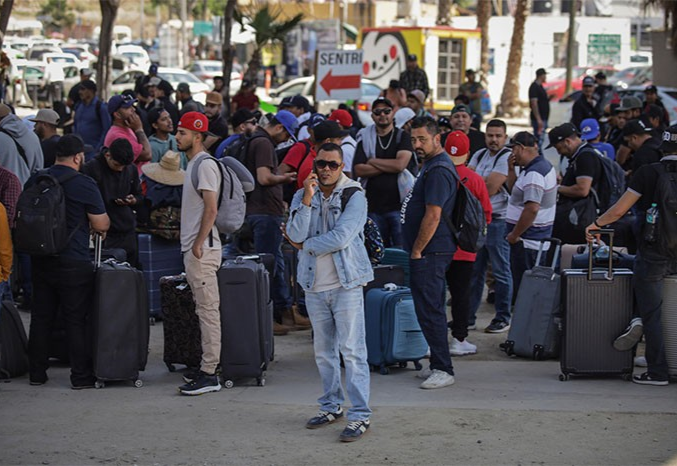

Workers arrive independently or in small groups to participate in temporary work programs that allow them to enter the United States legally.
Tijuana. Amidst increasingly stringent immigration policies in the United States and a rise in deportations, thousands of Mexican farmworkers continue to legally cross the border to work the harvest season, driven by the need for employment and under a climate of uncertainty.
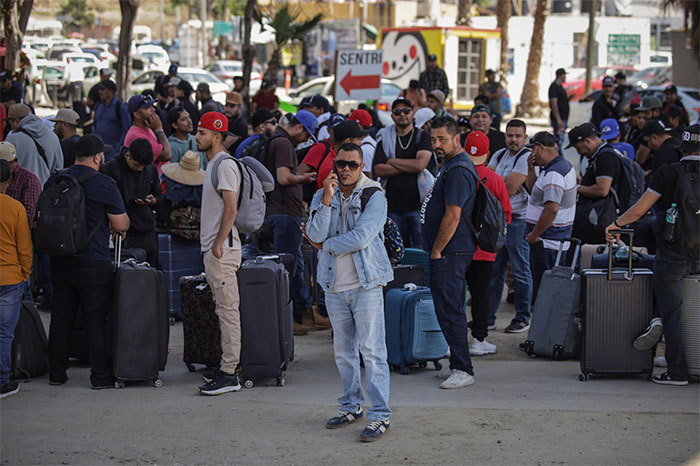
Hundreds of men gather daily near the San Ysidro border crossing in Tijuana, suitcases in hand and documents ready to cross into the United States, where they will work during the spring harvest season, especially picking strawberries, peaches, lettuce, or asparagus.
Coming from the central states of Puebla and Guanajuato, and Oaxaca in the south, the workers arrive independently or in small groups to participate in temporary work programs that allow them to enter the United States legally.
Although they avoided openly discussing the situation due to concerns about potential consequences, they told EFE that their main destinations are agricultural fields in the states of California, Washington, and Florida, where they will remain for periods of approximately three months.
According to anthropologist Víctor Clark Alfaro, a professor at San Diego State University, this influx is part of a labor program that the United States has implemented for years to address the labor shortage in agriculture.
“It allows Mexican farmworkers to work legally for periods of approximately three months, and at the end, return to their country without legal problems,” he explained.
The specialist detailed that this program, which responds to the structural need for agricultural workers, has grown steadily, currently involving more than 200,000 Mexican farmworkers, a figure that reflects the increased demand for labor in the U.S. agricultural sector.
At the U.S. Consulate in Tijuana alone, he said, they assist an average of 200 people a day interested in joining this program.
Immigration Tightening
Since the beginning of President Donald Trump’s administration in January 2015, raids and stricter policies against undocumented immigrants have generated an atmosphere of fear, particularly in sectors such as agriculture and services. This led to absenteeism in the first few months, which raised concerns among U.S. agricultural businesses.
“The lack of workers even began to impact product prices in the markets,” Clark Alfaro noted.
Faced with this situation and despite the risk, many undocumented workers gradually returned to agricultural work, driven by the need for income.
Even so, the demand for labor persists. Vacancies have not been fully filled, which maintains the U.S. agricultural sector’s dependence on Mexican workers.
In this scenario, day laborers participating in legal programs face a complex environment: while their status allows them to cross and work without problems, the tightening of immigration policies and the increase in deportations fuel an environment of uncertainty that does not fully distinguish between those who have permits and those who do not.
Source: adnmichoacan