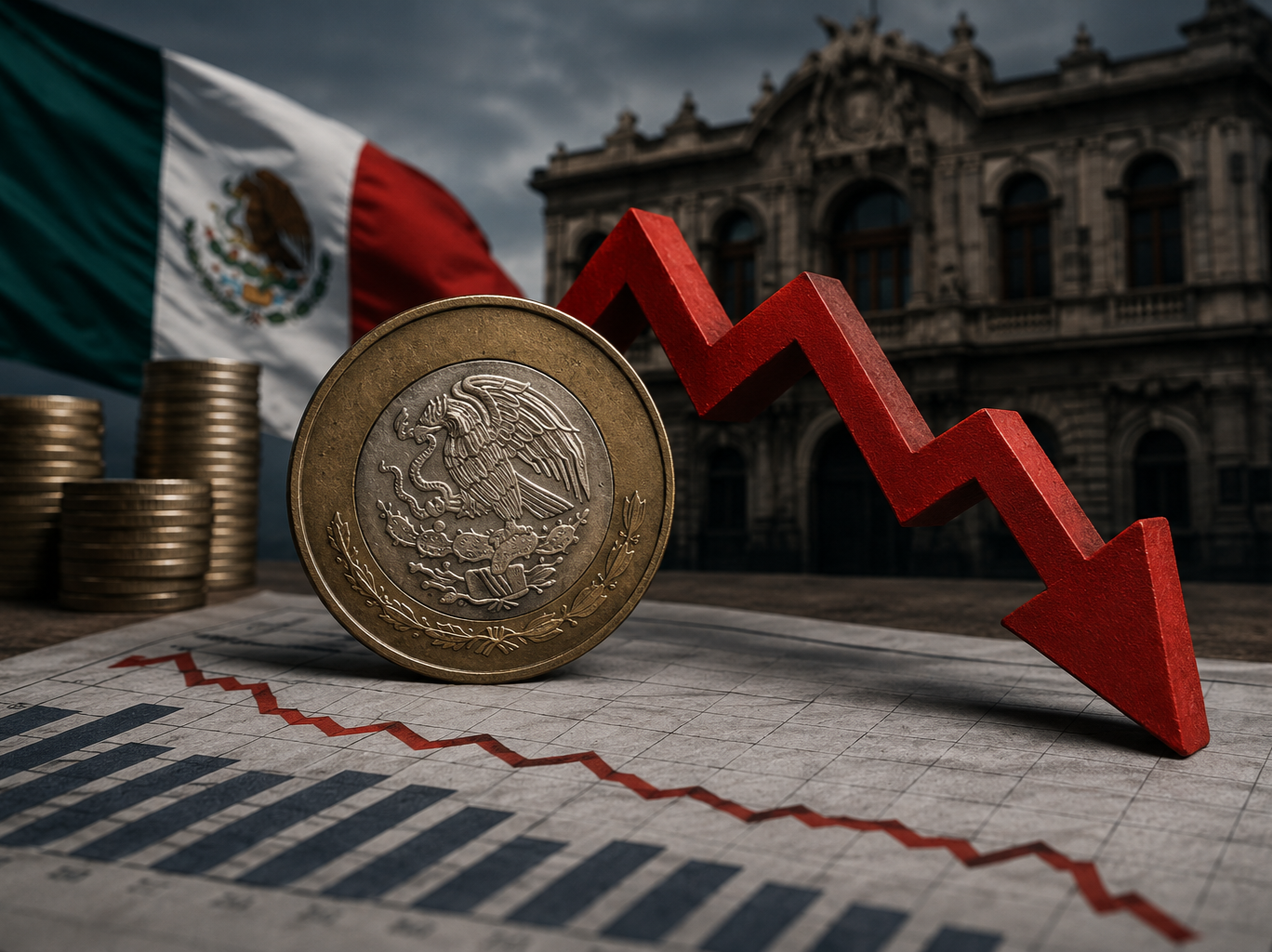

The Bank of Mexico’s recent decision to reduce the benchmark interest rate to 6.50% has reignited the debate about the true direction of national monetary policy. In an environment characterized by low economic growth, a contraction in productive activity, and persistent inflation, the country is dangerously approaching a scenario of stagflation: a combination of economic stagnation with high levels of inflation, one of the most complex and delicate phenomena in modern macroeconomic theory.
The central bank’s own statement acknowledges that the Mexican economy contracted during the first quarter of 2026 and that significant inflationary risks persist, particularly due to geopolitical conflicts, cost pressures, and international volatility. However, despite this context, the Governing Board decided to continue the rate-cutting cycle that began in 2024.
The contradiction is evident; From the perspective of classical and monetarist macroeconomic theory, when an economy faces high inflation and unanchored inflation expectations, the technical priority should be to preserve price stability through a restrictive monetary policy. In other words, combating inflation should prevail, even at the cost of temporarily lower growth; this has historically been the fundamental principle of autonomy for modern central banks.
However, the signal sent today by the Bank of Mexico seems to respond more to political pressures and the need to artificially stimulate economic activity than to strict technical logic. Reducing interest rates may temporarily alleviate the government’s financial burden and create a perception of support for growth, but it also increases the risk of weakening the inflation anchor at a time when inflation remains far from the 3% target.
Even more worrying is that the decision reveals an internal division within the Governing Board itself. Two members voted to maintain the rate at 6.75%, reflecting concerns about the pace of monetary easing.
Mexico faces a structural problem today that cannot be solved solely with lower interest rates. Weak production, international uncertainty, low investment, and a loss of industrial dynamism require comprehensive policies, not just monetary stimulus.
Source: revistaespejo