
Mexico faces an opportunity that rarely appears so clearly: to become one of the world’s 10 largest economies by leveraging nearshoring, greater integration with North American trade, and the growing interest of foreign companies in investing in the country.
However, it’s not all rosy, as BBVA Mexico’s message was far from triumphalist. The bank warned that the country could squander this golden opportunity if it fails to resolve the structural problems that continue to hinder investment.
During the 2026 National Meeting of Regional Advisors, Eduardo Osuna Osuna, Vice President and CEO of BBVA Mexico, asserted that the country has the potential to become the tenth largest economy in the world. Nevertheless, he pointed out that to break the cycle of growth below 2% annually, it will be essential to offer legal certainty, strengthen security, and accelerate infrastructure projects.
The executive explained that Mexico benefits from favorable conditions stemming from its trade relationship with the United States and Canada, especially due to the integration of the USMCA (United States-Mexico-Canada Agreement). However, he cautioned that economic growth will not come solely from inertia or the phenomenon of companies relocating or nearshoring.
According to information published by La Jornada, Osuna considered the main challenge to be generating clear rules for investors and avoiding constant changes in regulatory or tax criteria. From BBVA’s perspective, uncertainty remains one of the factors that most affects investment decisions by both domestic and foreign companies.
Furthermore, he acknowledged that although there has been progress in security, problems that directly impact economic activity persist. Among these, he mentioned the increase in disappearances and extortion, particularly against small businesses, crimes that continue to affect the perception of the country.
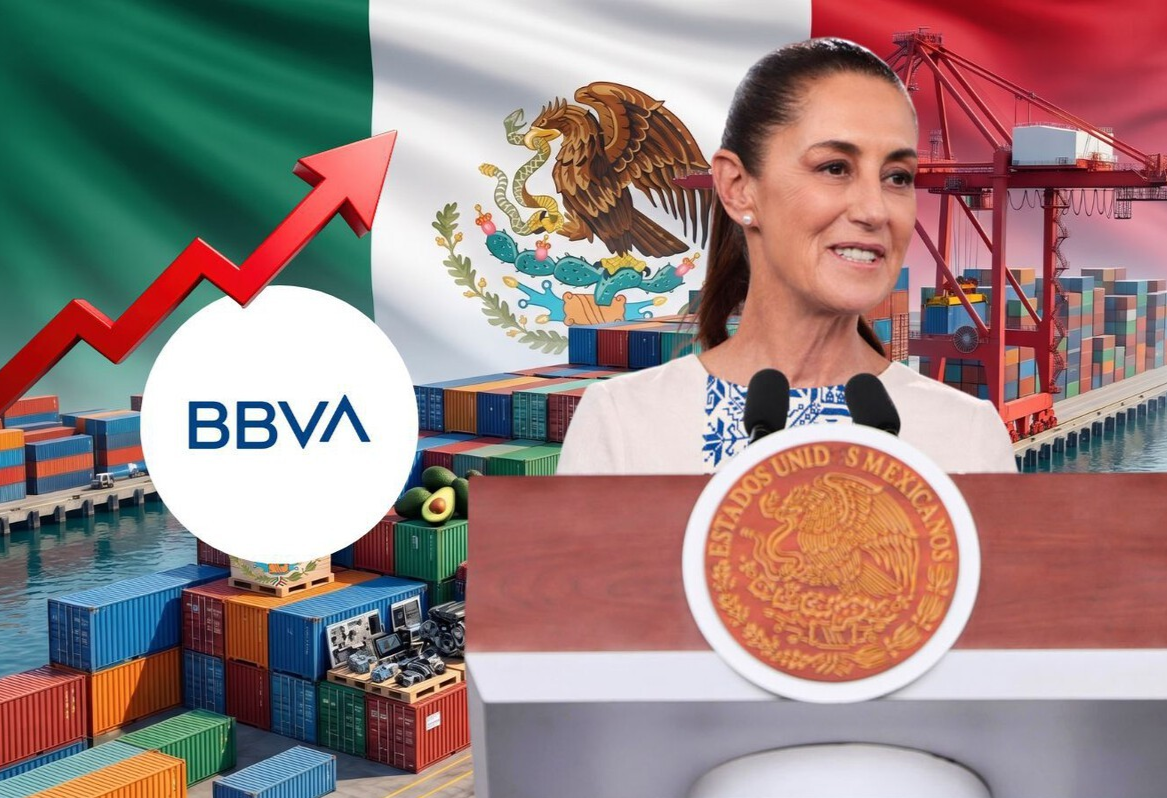
In this context, the federal government presented new measures to facilitate private investment within the framework of the so-called Plan México. Mayor Claudia Sheinbaum stated that the strategy seeks to reduce bureaucratic obstacles and expedite authorizations for new investment projects.
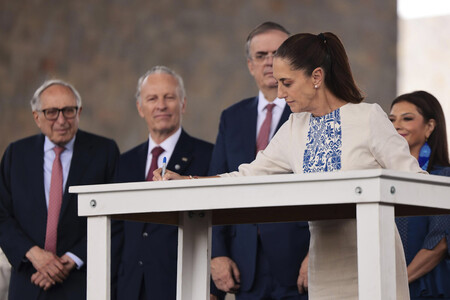
Claudia Sheinbaum presented new measures under the Mexico Plan to accelerate investment and simplify procedures during a meeting with business leaders on May 4 at the National Museum of Anthropology.
Among the announcements were a single window for foreign trade, streamlined procedures at Cofepris (Federal Commission for Protection against Sanitary Risks), and more agile processes for approving investments in less than 90 days. New infrastructure projects and highway tenders promoted by Banobras (National Bank of Public Works and Services) were also presented.
According to the Tax Administration Service (SAT), companies involved in foreign trade currently face more than 700 procedures spread across various government agencies, a situation that complicates operations and increases administrative costs.
Although the economic discourse maintains an optimistic tone, BBVA’s message suggests that the challenge for Mexico is not only attracting investment but also sustaining conditions that allow for long-term growth.
For now, factors such as security, infrastructure, digitalization, and financing for small businesses continue to emerge as key outstanding issues. Furthermore, the upcoming review of the USMCA and political tensions with the United States are keeping some investors cautious, especially in the industrial and manufacturing sectors.
Even so, both business leaders and government officials agree that Mexico is experiencing one of the most crucial moments in recent decades to redefine its global economic position. The difference, according to BBVA, will lie in how quickly it can translate that potential into sustained growth.
Source: xataka