
Here is the English translation with promotional lines and advertising-style elements removed:
Thousands of Cubans Deported from the United States to Mexico Left in Legal and Humanitarian Limbo
Thousands of Cubans deported from the United States to Mexico have been left in a legal and humanitarian limbo: without documents, stable housing, access to medication, and, in many cases, without a realistic possibility of returning to Cuba.
A report by Human Rights Watch (HRW), published on May 27, 2026, documents how this deportation system operates and what happens to those sent from U.S. immigration detention centers to cities in southern Mexico.
“You don’t know what it’s like to come here by bus from the United States. It’s inhumane,” said Harold, a Cuban deported to Tapachula in February 2026. He described a journey lasting several days with little more than bread and water, severe pain, and swollen feet after being shackled for much of the trip.
The report, titled “They Leave Us Here to Die”: Deportations from the United States to Mexico of Cubans and Other Third-Country Nationals, includes interviews with 53 deported individuals.
How Deportation to Mexico Works
According to HRW, migrants are transported from U.S. immigration detention centers to the Mexican border, often while restrained with shackles on their feet, hands, and waist.
Human Rights Watch identified four main deportation routes:
- Nogales, Sonora (Arizona)
- El Paso–Ciudad Juárez (Texas)
- Port Isabel–Matamoros (Texas)
- San Ysidro–Tijuana (California)
At the border, Immigration and Customs Enforcement (ICE) agents hand deportees over to Mexican immigration authorities. Some have their fingerprints taken, while others are placed directly onto buses without any verification of identity.
Andrés, who was deported after nearly 20 years in the United States, stated that no Mexican official checked who he was.
From there, another transfer begins. Buses escorted by Mexico’s National Guard transport deportees to southern Mexico, mainly to Tapachula, Chiapas, and Villahermosa, Tabasco. Palenque and Tenosique in Chiapas were also identified as destinations.
These trips typically last two to three days. Interviewees reported receiving very little food and being unable to leave the buses.
Fernando, deported through Nogales, recalled seeing an elderly Cuban man “naked and tied up” on the bus. According to his account, Mexican paramedics refused responsibility for the man upon arrival at the border.
“They Left Us to Fend for Ourselves”
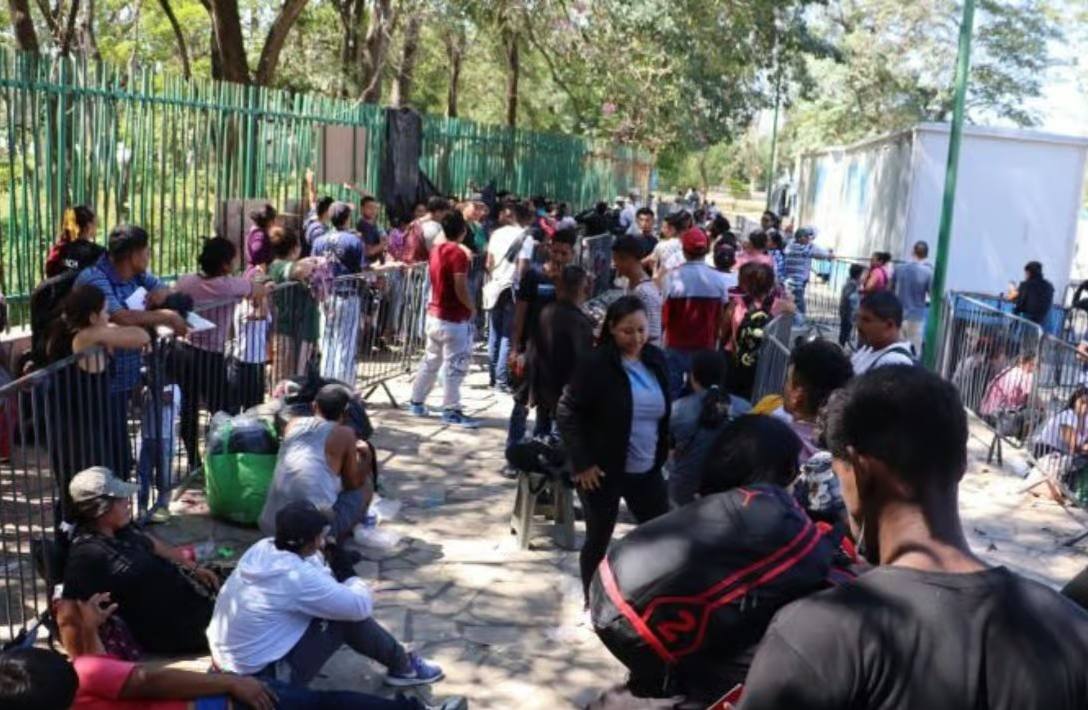
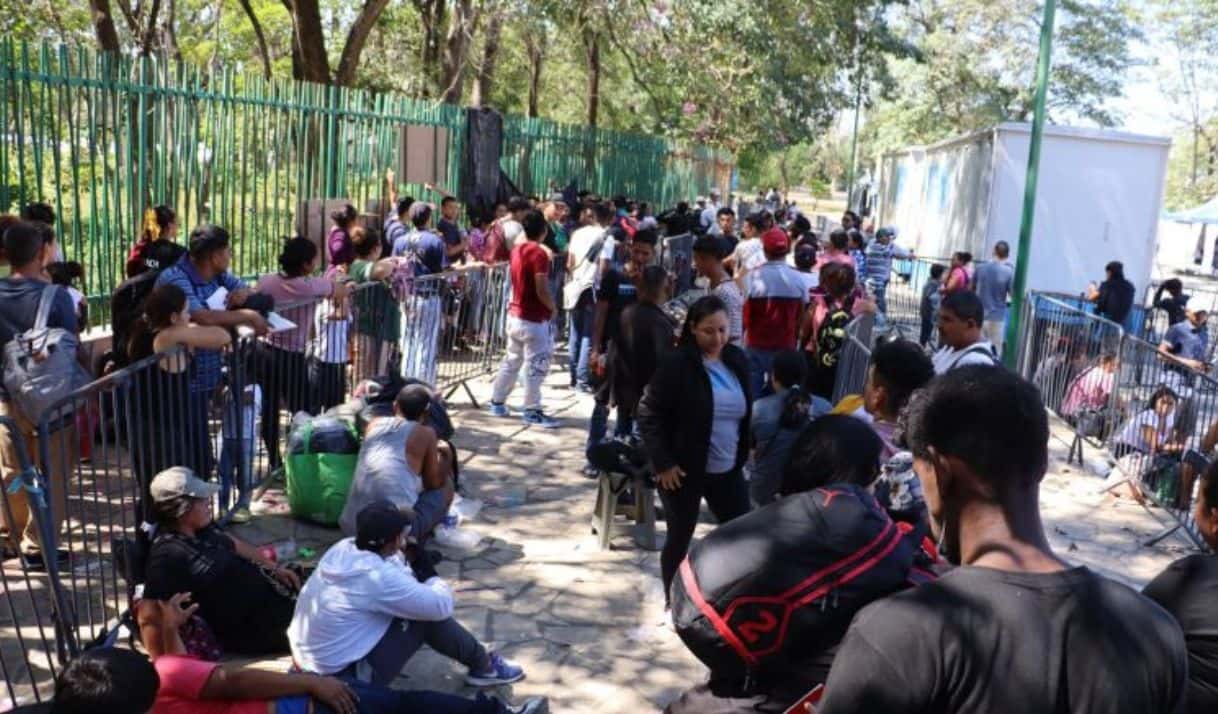
Upon arrival in southern Mexico, many Cubans are held for a few hours in immigration facilities and then released. Some are not even admitted to the centers and are simply left on the street when they get off the bus.
The deportees described receiving almost no guidance from Mexican authorities. They were not informed where to sleep, find food, or obtain medical care.
One interviewee summarized the treatment this way: “Like dogs thrown into the street.”
In Tapachula, the Siglo XXI immigration center is located far from shelters and basic services. In Villahermosa, the only migrant shelter is nearly a three-hour walk from the detention center.
According to HRW, Mexico has not established reception infrastructure for foreign deportees despite accepting thousands of transfers from the United States.
Rubén, deported to Villahermosa, asked: “How am I supposed to integrate into society if I have nowhere to eat or sleep?”
Eleven interviewees said they slept on the streets after deportation.
Javier, who suffers from vision problems caused by diabetes, described building a makeshift shelter beside a gas station:
“I shake out my shirt, put cardboard on the ground… I’m sleeping on the street. Like a dog.”
Without Documents, Jobs, or Medication
Most deportees reported that U.S. authorities confiscated their phones, documents, and personal belongings before deportation.
In Tapachula, some received an “exit document” issued by Mexico’s National Migration Institute (INM). The document instructs them to regularize their immigration status within ten days but does not serve as official identification or grant legal residency.
In Villahermosa, many did not even receive this document.
The lack of documentation affects nearly every aspect of daily life:
- They cannot open bank accounts.
- They have difficulty receiving money transfers.
- They cannot easily obtain formal employment.
- They face obstacles in accessing healthcare.
Harold summarized the situation:
“I’m out on the street with nothing. If a police officer stops me, what am I supposed to tell him?”
The report also documents numerous cases involving elderly and chronically ill individuals.
At least 20 of the 41 Cubans interviewed reported health problems, and 14 suffered from chronic illnesses. Nine had diabetes and seven had hypertension.
Miguel Ángel explained that he stopped taking insulin because he could not afford it in Mexico. As a result, he began losing his vision.
“If I go blind, who will take care of me? I have no family here. I have nobody.”
Fernando, who requires medication after having his thyroid removed, explained that he lost access to Medicare and Medicaid after deportation.
“I’m going to have to choose between paying rent and paying for my medication.”
Violence, Organized Crime, and Recruitment Risks
HRW notes that both Tapachula and Villahermosa are areas affected by organized crime.
In Chiapas, the Sinaloa Cartel and the Jalisco New Generation Cartel compete for territory linked to migration routes and drug trafficking. Violence also increased significantly in Tabasco during 2024.
Josué Leal, director of the Amparito shelter in Villahermosa, told HRW:
“Migrants are merchandise for organized crime.”
Criminal groups know that many deportees have relatives in the United States who can send money, making them targets for extortion and kidnapping.
Two deportees reported being pressured to work for criminal organizations.
Emiliano, deported to Villahermosa in June 2025, said he was dropped off at night without any assistance. Days later, men he identified as cartel members offered him work and money.
Can They Return to Cuba?
According to the report, the answer remains uncertain.
Nearly all interviewees said U.S. officials told them they were being sent to Mexico because “Cuba will not accept them.”
HRW cites testimony from a Mexican lawyer familiar with these cases who stated that Cuba often refuses the return of individuals who left the island before 2017.
Miguel Ángel said he sought help at a Cuban consulate in Mexico but was told that Cuba would not accept him because he had lived outside the country for more than 40 years and had been deported.
The report concludes that many deported Cubans are left in a situation of “de facto statelessness”: they are outside Cuba but unable to effectively obtain protection from Mexico.
Refugee Status as the Only Option
In practice, most deportees have only one realistic path to legal status: applying for refugee protection through Mexico’s Commission for Refugee Assistance (COMAR).
However, the process presents significant obstacles.
Applicants must first complete an online pre-registration process, requiring a cell phone and an email address—two things many lost during deportation.
Pedro, a homeless Cuban in Tapachula, said COMAR refused to assist him because he lacked both a phone and an email account.
The process can also take more than a year.
While waiting, applicants must regularly report to immigration offices and sign in. Missing a single appointment can result in the closure of their case.
For elderly or ill individuals, meeting these requirements can be extremely difficult.
Felipe, a 70-year-old man with diabetes, described the physical challenge of traveling to immigration offices, walking long distances, standing in lines, and waiting without places to sit.
“Here, we are prisoners,” Harold said, referring to the practical impossibility of leaving southern Mexico without documentation.
“We are here to die.”
Source: eltoque