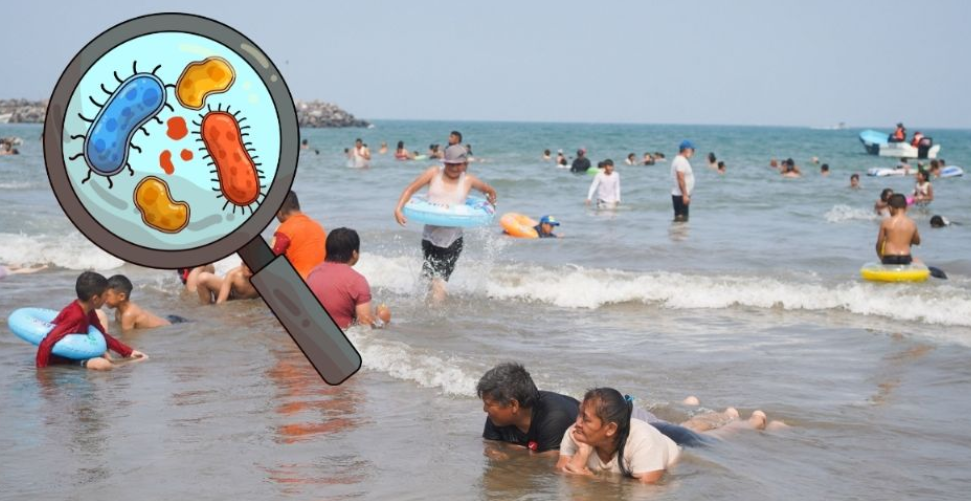

Mexico’s Federal Commission for the Protection against Sanitary Risks (Cofepris) announced that two beaches in the port of Veracruz failed water quality tests conducted before the 2026 summer vacation season. As a result, they have been classified as unsafe for recreational activities involving direct contact with the water, such as swimming.
The affected beaches are José Martí and Tumbao II, both of which recorded bacteriological contamination levels above the limit established by health authorities.
According to the results published by Cofepris, José Martí Beach registered 978 MPN/100 mL (Most Probable Number of enterococci per 100 milliliters of water), while Tumbao II Beach recorded 202 MPN/100 mL. Both values exceed the maximum permitted limit of 200 MPN/100 mL, established in accordance with the World Health Organization (WHO) guidelines.
In contrast, all other monitored beaches in the Veracruz–Boca del Río–Alvarado metropolitan area were classified as safe for recreational use, including:
- Antón Lizardo
- Santa Ana
- Mocambo
- Gaviota
- Pelícano
- La Bamba
- Villa del Mar
- Playón de Hornos
- Regatas
Only Five Beaches Nationwide Failed
In a statement, Cofepris reported that 98.3% of the 289 beaches evaluated across Mexico meet sanitary standards and are suitable for visitors during the 2026 summer vacation season.
As part of the Clean Beaches 2026 Program, between June 15 and July 1, authorities analyzed 2,279 seawater samples collected from 393 sampling sites across 76 tourist destinations in Mexico’s 17 coastal states.
Of the 289 beaches monitored:
- 284 were classified as safe for recreational use.
- Only five exceeded the permitted microbiological contamination limits:
- Tijuana Beach, Tijuana, Baja California
- Cuale Beach, Puerto Vallarta/Bahía de Banderas, Jalisco
- Principal Beach, Puerto Escondido, Oaxaca
- José Martí Beach, Veracruz
- Tumbao II Beach, Veracruz
Cofepris Recommendations
The health authority advised the public not to swim or engage in recreational activities involving direct contact with the water at José Martí and Tumbao II beaches because of the health risks posed by elevated bacteria levels.
Cofepris also announced that it is working with state and municipal authorities, as well as the Clean Beaches Committees, to implement sanitation measures, reduce contamination levels, and restore both beaches to a condition suitable for recreational use.
The agency conducts water quality monitoring before each vacation season to ensure that beach water does not pose a health risk to residents or tourists.
Source: lasillarota