
Between pristine beaches, endless deserts, and five-star hotels, this exotic corner at the tip of the Baja California peninsula is one of Latin America’s most luxurious destinations.
They say George Clooney always jokes about the names he wanted to give his children: Casa and Amigo. Just like that, in Spanish. His wife, Amal, obviously refused, but the actor used the combination of the words, Casamigos, to name the spectacular twin mansions he built with his best friend, Rande Gerber, husband of model Cindy Crawford, in Los Cabos, the paradisiacal destination in the Mexican state of Baja California Sur synonymous with luxury, glamour, natural beauty, and a relaxed lifestyle. There, between the Pacific Ocean and the Sea of Cortez, in the exclusive community of El Dorado, surrounded by golf courses designed by Jack Niklaus (the greatest golfer of all time), Clooney built these residences designed for close quarters.
Hence its shared lobby and open kitchen with a central bar, perfect for chatting for hours, tequila in hand. However, they didn’t find any that truly captivated them, so they reused the Casamigos name to create their own, which quickly became a multi-million dollar brand.
Well, the protagonist of Ocean’s Eleven serves to illustrate the high standard of living in Los Cabos, the southernmost enclave of the Baja California peninsula—”the edge of the Earth,” as it’s known—and the one with the highest concentration of ultra-luxury hotel and villa rooms in all of Latin America: more than 3,000 (with prices up to €50,000 per night) out of the 19,000 offered by this municipality of 350,000 inhabitants, where private jets are commonplace. Moreover, this sector has grown by 80% in recent years, according to the Tourism Trust.
This is the case with the long list of celebrities who, like Clooney, frequently visit Los Cabos or live here. From Britney Spears (an official resident) to Shakira, Nicole Kidman, Madonna, Leonardo DiCaprio, Justin Bieber, Jeff Bezos, and the Kardashians, whose reality show was partly filmed in “Cabo,” as Beyoncé calls it. Jennifer Aniston celebrated New Year’s Eve here, and Selena Gomez had her bachelorette party here.
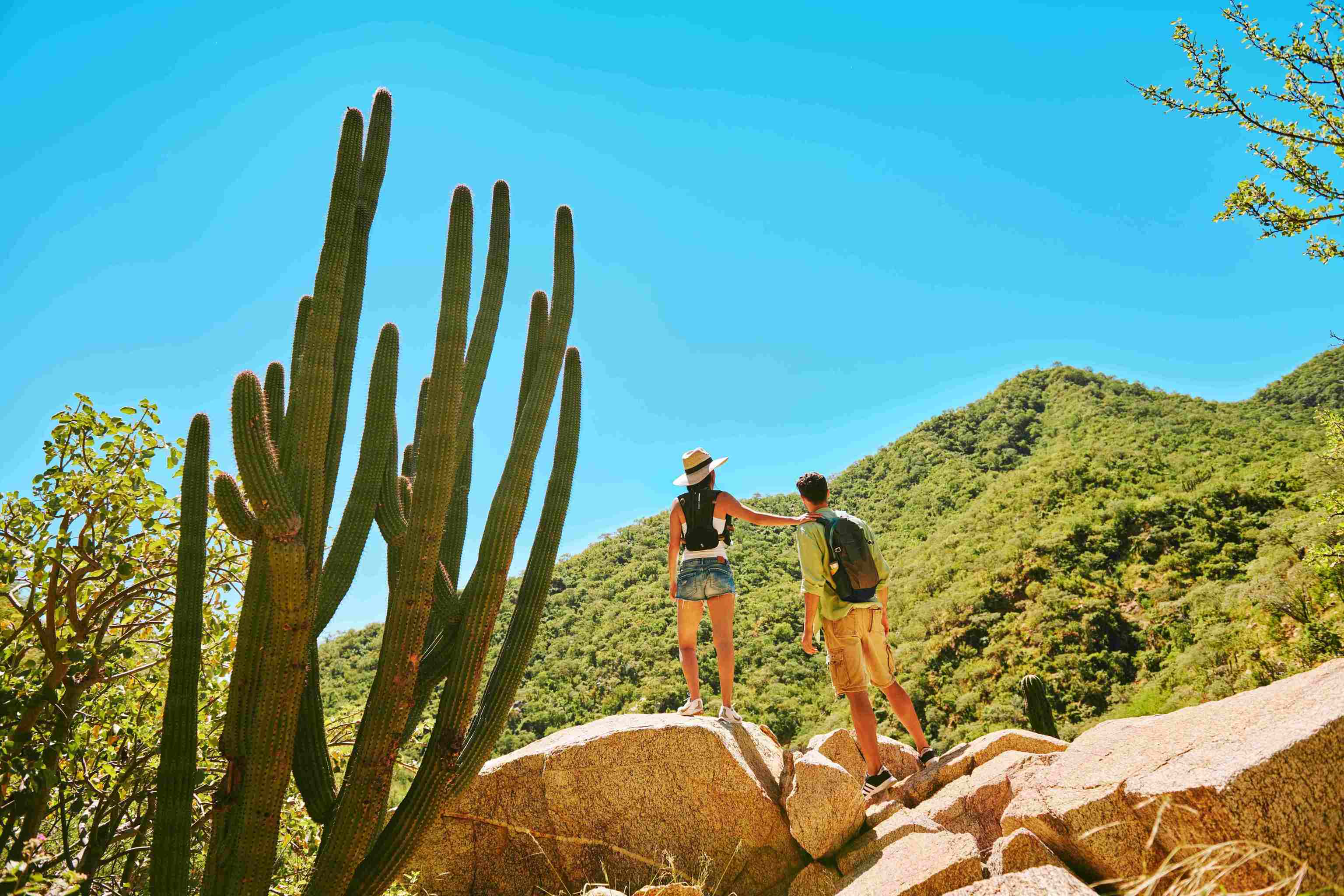
The passion of celebrities is nothing new. Hollywood actors of the 1950s were the first to arrive in this wild refuge, straddling the Tropic of Cancer, with its 355 days of sunshine a year, a privileged microclimate (temperatures hover around 25°C), turquoise beaches, endless deserts, breathtaking sunsets, and a seabed teeming with turtles, humpback whales, marlin (it’s the world capital of this fish), manta rays, and 900 other species. Jacques Cousteau himself called it “the aquarium of the world.”
Cabo Pulmo, in particular, is a UNESCO World Heritage national park still largely untouched. You explore it by jeep through a desert teeming with cholla cacti—the local cactus, hence the name “choyeros” for the inhabitants—which leads to pristine beaches where surfing and diving reach new heights. It’s no wonder it comprises 42% of the state’s protected territory.
The credit for the discovery of this wild California belongs to Lucille Bremer, the American actress who triumphed on the silver screen dancing with Fred Astaire and who married Abelardo Rodríguez Jr., son of the former Mexican president of the same name, which meant she spent a lot of time here. She was the one who first brought John Wayne, Bing Crosby, Steve McQueen, Liz Taylor, James Dean, and other friends from the film industry and beyond, such as writers Ernest Hemingway and John Steinbeck—whose novel The Pearl is set here—President Dwight D. Eisenhower, and Conrad Hilton, founder of the Hilton hotel chain.
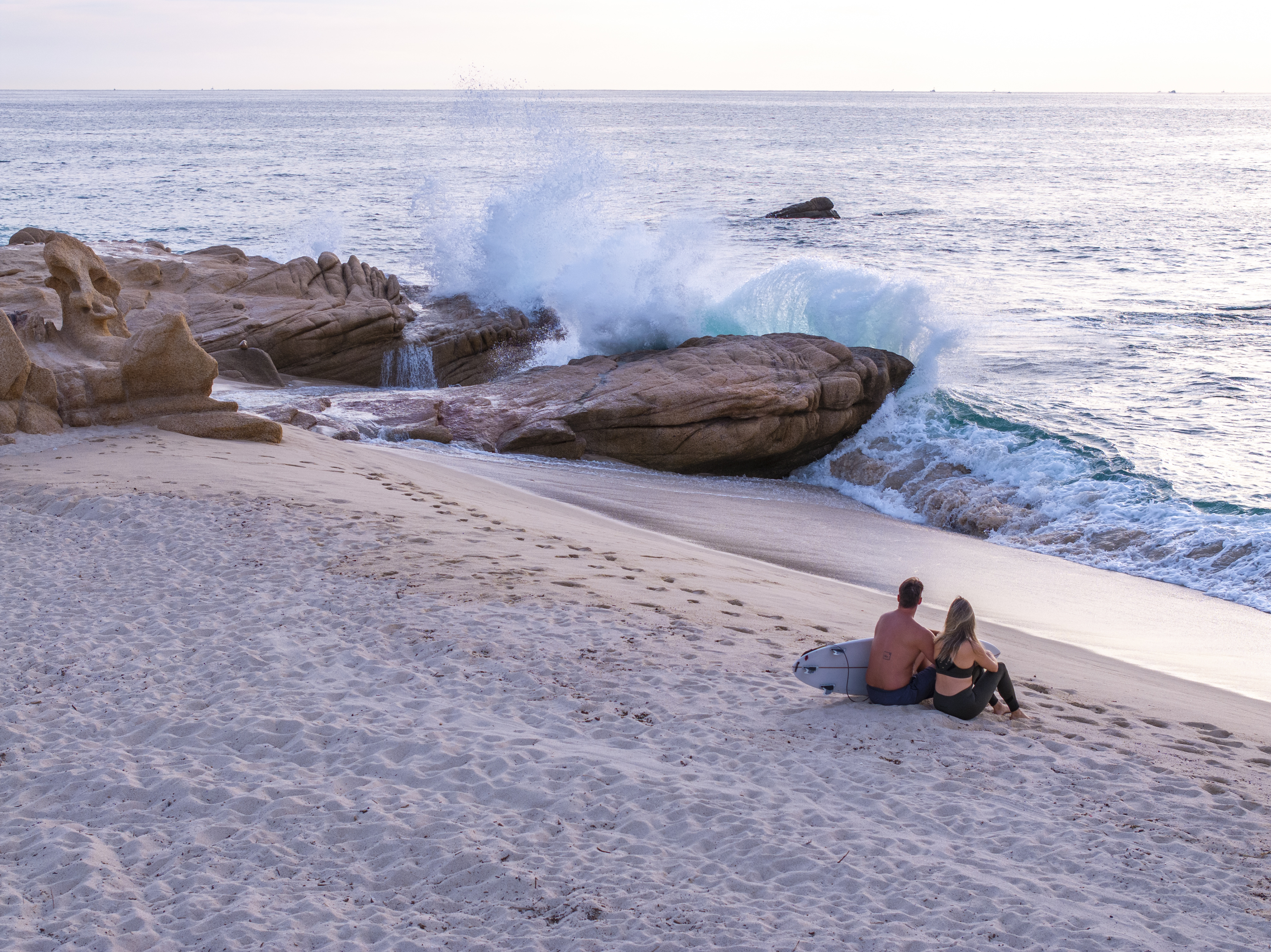
They were all promised an oasis of sun, relaxation, and privacy just a short jet ride from Los Angeles. “Rodríguez himself was a pilot and, moreover, the owner of the hotel where they stayed, Las Cruces Palmilla, now transformed into the five-star One & Only Palmilla, a favorite among today’s celebrities,” recalls Diana Rodríguez, a local guide. After a few days of oysters and the sea—most loved fishing, making it a mecca for the sport, a status it still enjoys—they returned delighted, setting in motion the efficient word-of-mouth machine.
Thus, little by little, tourism began to arrive in the authentic California, the first one, the one named by the conquistador Hernán Cortés, recalling the 15th-century chivalric romance Las sergas de Esplandián, by the author Garci Rodríguez de Montalvo, “who was inspired by the popular medieval work Amadís de Gaula, mentioned in Don Quixote,” our guide points out. In his account, he spoke of Isla California, located “to the right of the Indies, near one side of the earthly paradise. Populated by Black women, with not a single man to be found there. Their weapons were made of gold, as were the harnesses of the beasts they tamed to ride, because on the entire island there was no other metal but gold,” the guide reads. Cortés’s troops encountered something similar, although in his California there were indeed fiercely warlike men, the Pericú and Guaicura indigenous people. And gold, which is what they were after. They, and pirates like Francis Drake and Edward Cooke.
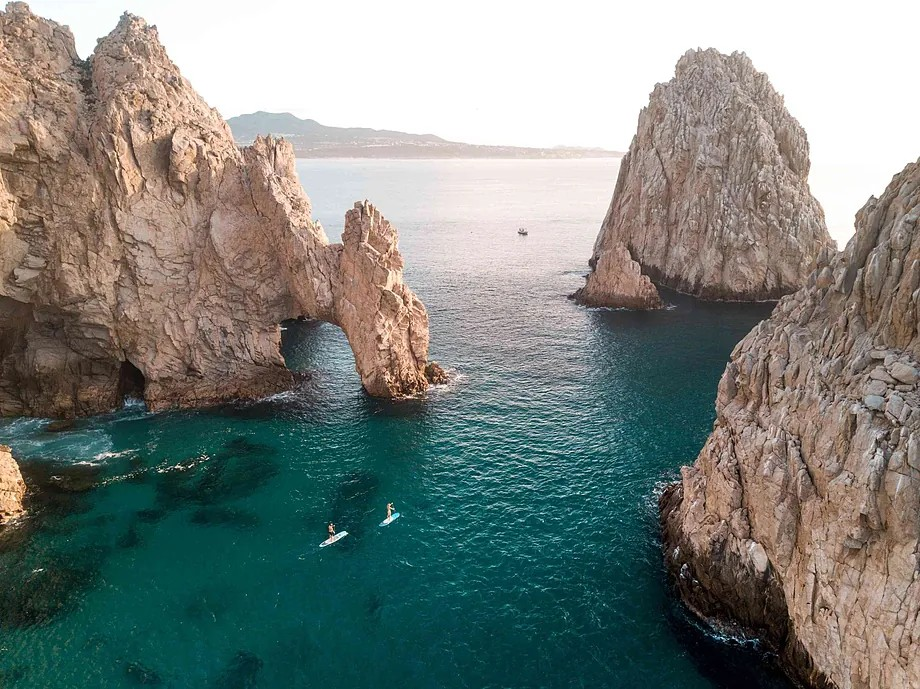
The exact spot where the colonizers arrived was the rock formation of El Arco (draw that shape), known as “Land’s End” because of its location at the tip of the peninsula, of which it is the main icon, as well as one of the most used screensavers in the world. It is also believed that the underwater caves still hold the treasures hidden by the privateers that Cortés so desperately coveted. There are even tales of the powerful, teeming earth forces that flow through the area.
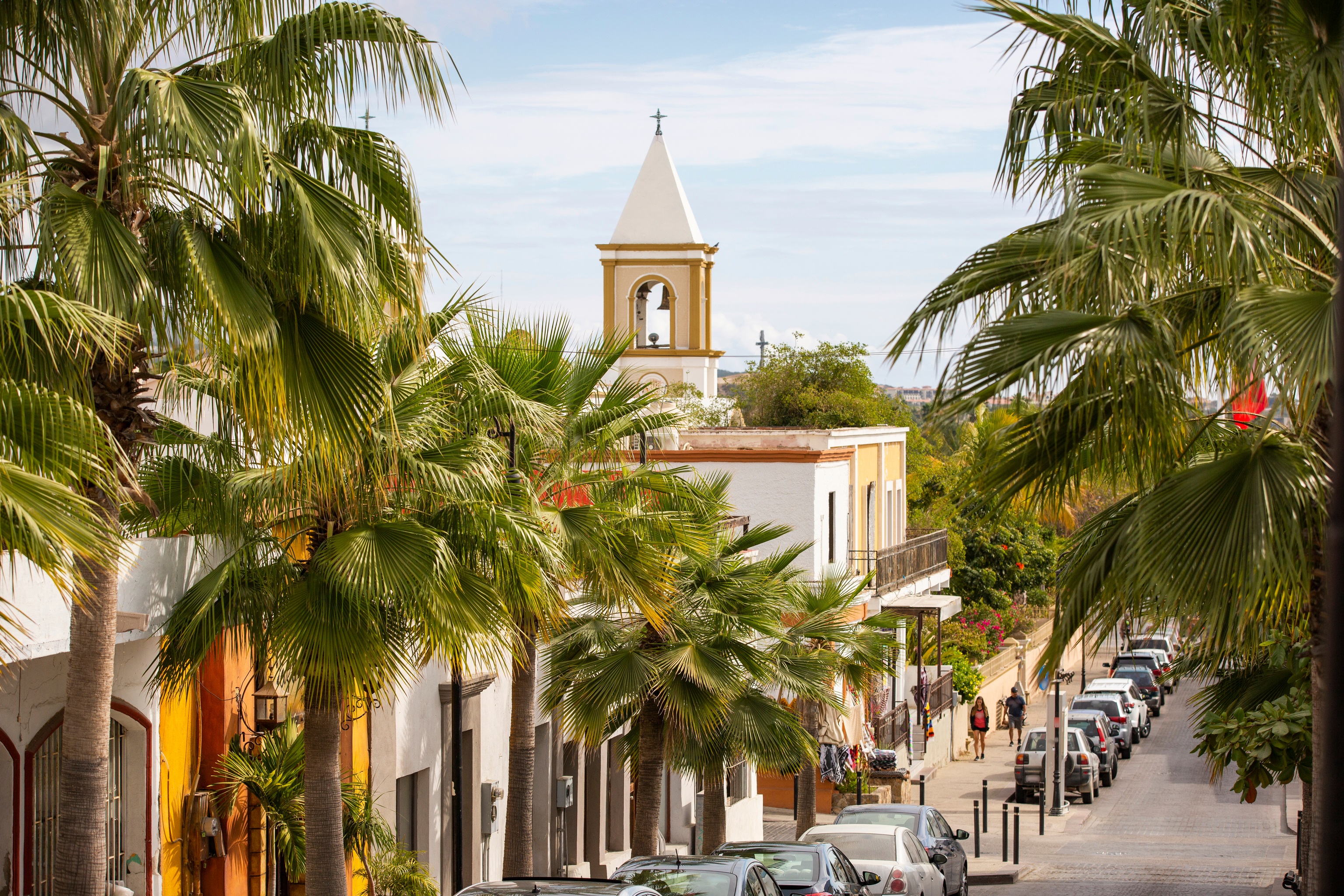
The best way to discover it is on a cruise through the bay of Cabo San Lucas, the largest town in the municipality, with 200,000 inhabitants. From its port, teeming with pelicans and where sea lions can already be spotted, yachts, sailboats, and catamarans depart, offering stops for swimming, snorkeling, paddleboarding, and scuba diving. Humpback whales, sharks, and dolphins accompany the route, dotted with beaches of pristine sand: El Amor, Santa María, Gavilancito, Chileno, and Faro Viejo, where the movie Troy was filmed, incidentally. Meanwhile, incredible mansions perched precariously on the cliffs come into view. It’s no wonder this is considered one of the best sailing experiences in the world, according to TripAdvisor.
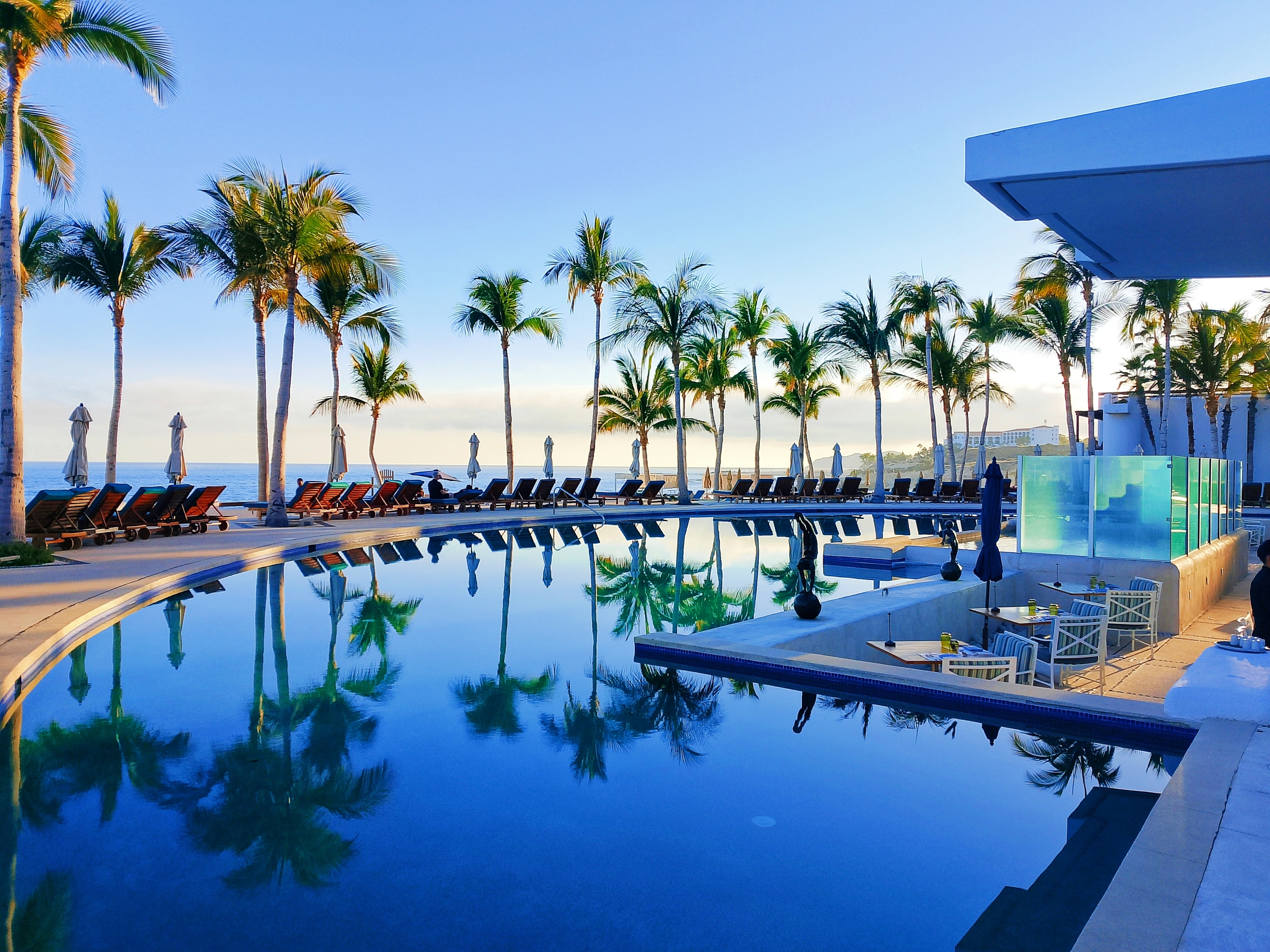
Back in town, be sure to explore the artisan markets, the Natural History Museum, the luxury boutiques at the Puerto Paraíso shopping center, the vibrant nightlife (it’s the ultimate party destination), and urban beaches like El Médano, one of the 25 Blue Flag beaches in Los Cabos. If you’re looking for an adrenaline rush, try jet skiing or parasailing, this is a great spot. Inquire at the Bahía Hotel’s beach club about signing up for a session before enjoying ceviche and margaritas on their lounge chairs. The hotel also makes a perfect base for exploring the area. Similarly, Marquis Los Cabos, a five-star, adults-only resort located on the Tourist Corridor, a 35-kilometer stretch of idyllic beaches lined with the finest hotels and residences.
For lunch or dinner, there are countless options, as the region is one of the world’s trendiest culinary destinations. From the homemade tacos with live music at La Lupita to the “contemporary Mexican cuisine” of chef César Pita, who offers “a sensory journey crafted with soul and intention” at his restaurant Fénix, located high in the Pedregal neighborhood, one of the most exclusive. The cuts of meat cooked over an open fire—the wood-fired grills and brick ovens are right there in front of the diners—and the fresh seafood and fish are the stars, as are the views of the bay. The most beautiful sunset, however, can be enjoyed from Sunset Monalisa, a lookout point for seeing and being seen. The exact moment of sunset is announced by the sound of a conch shell. Afterward, two tenors perform operatic pieces that accompany the Mediterranean dishes with local touches.
Source: elmundo.es