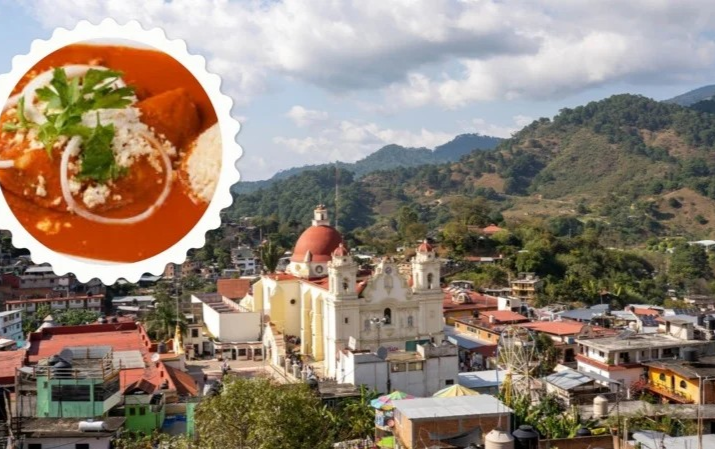

There are magical towns in Mexico that captivate with their architecture or their cuisine, but there’s one in Oaxaca that touches your soul: Santa Catarina Juquila. Nestled more than 1,500 meters above sea level in the heart of the Sierra Sur mountains, this destination welcomes over a million visitors each year who climb to its cobblestone streets guided by faith, the scenery, and, of course, a cuisine that tastes of pure Oaxacan tradition.
Unlike other magical towns that win you over at first sight with their vibrant colors or bustling markets, Juquila has something difficult to explain: an energy that envelops you from the moment you begin climbing the mountain road. Perhaps it’s the scent of copal incense mingled with the fragrance of the pines, or perhaps it’s seeing entire families walking for miles carrying flowers for the Virgin.
The designation as a Pueblo Mágico (Magical Town) simply recognized what millions of Mexicans already knew: Juquila is not just any destination; it’s a place where spirituality, nature, and gastronomy come together to form a single, cohesive experience.
The Sanctuary of the Immaculate Virgin of Juquila is the most important Catholic church in all of Oaxaca and the fifth most important in all of Mexico.
The central image, carved in wood, is said to have survived a fire in 1719, and since then, devotion to it has continued to grow. Its architecture reflects the late Spanish Baroque style, modest in size but immense in significance. One detail that makes it unique: the church has no pews, and there’s a powerful reason for this: it allows more worshippers to venerate the Virgin at once.
Pilgrimages arrive in every way imaginable:
On foot, from communities in Oaxaca, Guerrero, Chiapas, and beyond.
By bicycle, covering multi-day routes.
With torches, in nighttime processions that create a breathtaking spectacle.
The most important date of the year is December 8th, the Feast of the Immaculate Conception, when the town is literally filled with color, music, copal incense, and thousands of families united by faith.
Juquila did not begin with the arrival of the Spanish. It is the territory of the Chatino people, an indigenous culture that inhabited these mountains centuries before colonization. That heritage remains very much alive today:
The wood carving and Chatino embroidery workshops produce unique handcrafted pieces worth taking home as souvenirs.
The Santa María Amialtepec temple, nestled in the mountains, is an ideal space for reflection away from the hustle and bustle.
The Path of Faith, a 3.8 km trail through vegetation, streams, and chapels, connects the town entrance to the Sanctuary and is perfect for hiking.
The mountains, waterfalls, and rivers are not to be missed.
Beyond religious tourism, Juquila is a natural paradise that few know about. Its pine-oak forests, canyons, and crystal-clear rivers are ideal for those seeking respite from urban chaos.
The town’s must-see natural attractions:
Chorro Conejo Waterfall. A 30-meter-high waterfall with three natural pools surrounded by pine forest. The perfect spot for a picnic or a day out.
Olla River. A natural hot spring with cool waters where only birdsong can be heard.
Cascada Siete Honduras. Just 20 minutes from the Sanctuary, a place of mythical energy where locals make offerings to their deities.
Lagunas de Chacahua National Park. A few hours away, a coastal ecosystem of lagoons and mangroves, perfect for extending your trip to the Oaxacan coast.
Let’s be honest: in Mexico, travel is also experienced through the stomach. And in Juquila, you won’t be disappointed.
Oaxacan Tamales
Here, tamales are wrapped in banana leaves (not corn husks like in the rest of the country), giving them a softer texture and a unique smoky flavor. You’ll find them filled with mole negro, mole colorado, chileajo, or chepil. The must-have accompaniment: hot chocolate or blue corn atole.
Mole Negro
The jewel of the seven Oaxacan moles. Its preparation can take an entire day and includes ingredients like chile mulato, chilhuacle negro, chipotle, Oaxacan chocolate, plantain, and tomato. The result is a dark, deep, and aromatic sauce that typically covers pieces of turkey or chicken. If you’re only going to order one dish in Juquila, make it this one.
Enchiladas de Coloradito
Coloradito is the second most popular Oaxacan mole: lighter in color than negro, it’s made with ancho chiles and tomatoes, giving it a fruity and slightly sweet flavor. Enchiladas (also called enmoladas) covered in coloradito are the most popular lunch in town, finished with crumbled queso fresco and sliced red onion.
Other flavors you should try
Chicatanas with chili and lime: Toasted flying ants, a seasonal Chatino delicacy
Pickled pig’s feet: A fairground snack that abounds at the Sanctuary’s stalls
Nanacates: Wild mushrooms perfect for vegetarian diners
Wood-fired sweet bread and jamoncillo candies: The town’s artisanal specialties to take home as souvenirs
Where to eat in Juquila: local and visitor favorites
According to the most recent visitor reviews on TripAdvisor, these are the top-rated restaurants in Santa Catarina Juquila:
Aurelia: The undisputed number one. Its breakfasts are legendary among visitors who have arrived after a long pilgrimage
La Tradición de Juquila: Restaurant and bar with regional cuisine and a relaxed atmosphere; Ideal for a good lunch after visiting the Sanctuary
Mc Nino’s Café Juquila: The perfect spot for a break with hot drinks during your visit
Erwin Bakery: A must-visit for Oaxacan bread baked in a wood-fired oven
La Toscana Coffee Shop: A versatile option for any time of day
How to get to Santa Catarina Juquila?
Among all of Mexico’s magical towns, few combine faith, mountain scenery, and a cuisine that alone justifies the trip with such originality. In Santa Catarina Juquila, you don’t need to be a pilgrim to be welcomed; you just need the desire to discover one of those corners of Oaxaca that still retains its magic intact.
From Oaxaca City: By car, the trip takes about 5 hours on Federal Highway 131 via Zimatlán de Álvarez, Sola de Vega, and El Vidrio. There is also public transportation that departs from Galeana Street 412, Col. Centro (Líneas Unidas de Juquila) for approximately 300 pesos per person.
When to go?
Best religious season: First week of December (especially December 8th) and Holy Week — more intense atmosphere but also more crowded.
Best time for nature: October to February — cool weather, clear skies, forest colors at their peak.
Important: Book your accommodations well in advance if you are traveling during pilgrimage season; hotels and inns fill up quickly.
Source: guacamole.radioformula