
After three days without food and walking through the mountains with what little they could carry from their homes, a group of nearly 100 Mexicanero indigenous people arrived in Durango. They had fled their communities in Nayarit amidst insecurity that forced them to flee.
Women, children, men, and the elderly traveled on foot, driven by fear and uncertainty. They left their homes without a clear route, seeking refuge in Durango territory, in the area bordering Nayarit.
The governor of Durango, Esteban Villegas Villarreal, stated that these are “the last” of this community, referring to the size and condition of the group, without elaborating on what had happened in their place of origin. He noted that the departure was abrupt and under adverse conditions.
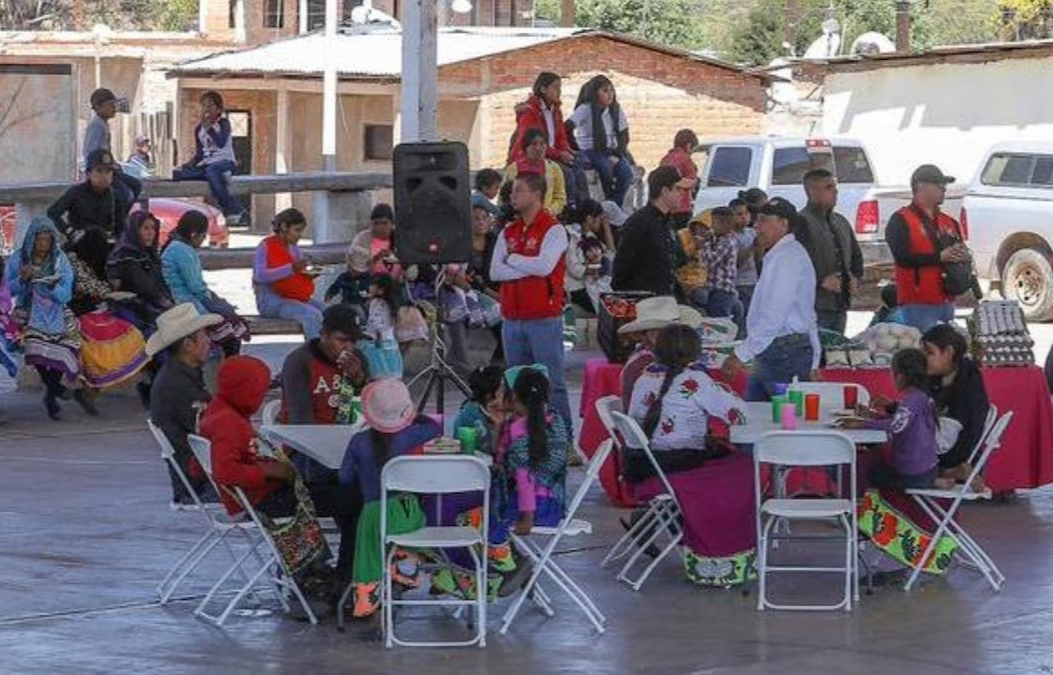
The families arrived in the municipality of Mezquital, a remote region historically home to indigenous communities. There, they were cared for at a shelter set up by the state government, where they received food, medical attention, and a place to rest after their journey.
During the initial medical examination, cases of dehydration and malnutrition were detected, as well as some cases of measles among members of the group, who were treated immediately.
So far, all are reported to be in good health and under medical supervision.
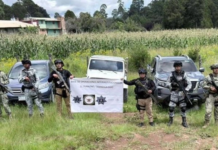
Simultaneously, an operation was deployed with the presence of the National Guard, the Ministry of National Defense, and state agencies, with the objective of reinforcing security in the region and preventing risks to the displaced population.
The state governor reported that coordination is already underway with the National Institute of Indigenous Peoples (INPI). Representatives from the INPI visited the area over the weekend and prioritized ensuring the safety of the community.
As part of the agreements, the Federal Government, through the INPI, will be responsible for providing food, while the Government of Durango will maintain the operation of the shelter and provide on-site support.
It has not yet been determined whether the families will return to Nayarit. The reasons for their departure have not been specified, and there is no clarity regarding the conditions in their communities of origin, which leaves open the possibility that they will remain in Durango.
In this context, Villegas Villarreal indicated that the state could offer them accommodation if there are no guarantees for their return. The decision will depend on what the families themselves determine and on the evaluation by federal authorities.
In addition to providing immediate assistance, efforts are underway to develop educational alternatives for the children, with the goal of ensuring the continuity of their education despite their displacement.
The situation is not limited to the group that managed to reach Mezquital. There are reports of other members of this community who left their towns and dispersed along the way. There are reports of dozens of people whose whereabouts have not yet been confirmed, which broadens the scope of the problem.
The displacement is occurring in a region historically inhabited by the Mexicanero population, located between Nayarit and Durango, and considered one of the least populated areas in the country. The president himself described them as “among the last,” in a context where the displacement and dispersal of the group opens a risk scenario for its permanence.
Source: nacion321